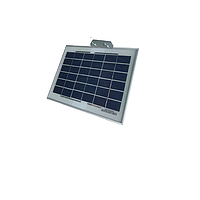
Solar Panels & Solar Cells
Reliable off-grid power often starts with the right energy harvesting component. In compact electronics, remote sensing, educational development, and low-power industrial systems, Solar Panels & Solar Cells are used to convert available light into usable electrical energy for charging, maintaining, or directly supporting a load.
This category brings together small-format photovoltaic devices suited to design work, prototyping, and embedded power applications. Whether you are selecting a panel for a battery-backed device, evaluating a solar input for a low-power controller, or building a self-sustaining system, the key is to match the panel to the electrical architecture of the application rather than choosing by size alone.
Where solar panels and solar cells fit in a power system
In practical designs, a solar element is rarely used as a standalone part. It typically works as the front end of a broader power management chain that may include charging electronics, energy storage, voltage regulation, and load protection. That is why panel selection should always be considered alongside downstream components such as battery charger solutions and suitable power supplies where system conversion or backup power is required.
For low-power systems, harvested energy may be stored gradually and used intermittently. In other designs, the panel helps extend runtime, maintain charge, or reduce battery replacement intervals. This makes solar especially relevant for distributed devices operating in locations where wired power is inconvenient or unavailable.
Typical applications for small photovoltaic devices
Solar panels and solar cells in this category are commonly considered for compact, low-current applications rather than large-scale generation. Typical use cases include wireless sensor nodes, environmental monitoring units, portable instruments, demonstration projects, educational kits, and light-powered embedded electronics.
They are also relevant in designs that use storage devices to smooth intermittent energy input. When sunlight or ambient light varies throughout the day, pairing solar input with energy buffering can improve stability. In some architectures, supercapacitors can be part of that approach when fast charge-discharge behavior and long cycle life are important.
How to choose the right solar panel or solar cell
The best selection process starts with the load, not the panel. Designers should estimate daily energy demand, operating voltage range, charging requirements, expected light conditions, and available installation area. A panel that performs well in direct light may behave very differently in partial light, indoor light, or changing orientation.
It is also important to think about integration details such as electrical connections, mounting constraints, and how the solar source interacts with the regulator or charging stage. If the application includes rechargeable storage, the panel should be chosen with enough margin to support charging under realistic conditions, not only ideal test scenarios.
For mobile and transport-related electronics, solar input may be one part of a broader electrified design strategy. In those cases, adjacent categories such as eMobility components can provide useful context for how harvested energy, storage, and power conversion work together in compact systems.
Representative product options in this category
This range includes several compact photovoltaic products from Littelfuse and PHOENIX CONTACT that can serve as reference points when comparing form factor and application intent. Examples include the Littelfuse XOD17-12S, XOD17-24, XOD17-24S, XOD17-36, XOD17-36S, XOD17-48, XOD17-48S, XOD17-250, and XOD17-340 series, along with the PHOENIX CONTACT 5605942.
Some listed products are identified as solar panels, while others are described as high efficiency solar bits. In practice, this suggests a category that supports both straightforward panel-based implementations and more specialized photovoltaic building blocks for integration into custom assemblies. The exact fit depends on whether your project needs a finished panel format or a component intended for a more tailored electrical and mechanical design.
Why manufacturer context matters
Even within a focused category, manufacturer experience can shape how a product is used in real projects. Littelfuse appears prominently in this range, making it a practical starting point for engineers who want to compare multiple related options from a single source. PHOENIX CONTACT is also relevant where system integration, connection strategy, and industrial design context are part of the buying decision.
Looking at products by manufacturer can simplify evaluation when you need consistency across multiple builds or want to stay within an existing approved vendor ecosystem. It also helps procurement teams compare alternatives while keeping documentation and sourcing more manageable.
Design considerations before ordering
Before finalizing a selection, confirm the intended operating environment. Outdoor exposure, panel orientation, shading risk, and seasonal light variation all influence real-world output. For indoor or mixed-light applications, the expected illumination profile is especially important because available energy may be far lower than in direct sunlight.
You should also review how the panel will connect into the rest of the system, including cable routing, connector style, and the presence of protective circuitry. In many cases, success depends less on the solar device alone and more on how well it is matched with charging, storage, and load-control elements elsewhere in the design.
Finding the right fit for your application
Choosing from a range of solar panels and solar cells is easier when the application goal is clearly defined: continuous trickle charging, intermittent energy harvesting, battery maintenance, or support for a low-power autonomous device. Once that objective is clear, it becomes much easier to narrow the options by electrical behavior, physical format, and system compatibility.
This category is best used as a starting point for building a dependable small-scale solar power path. By comparing photovoltaic options alongside the rest of your power architecture, you can create a more balanced and realistic design for field devices, portable electronics, and embedded systems.
Get exclusive volume discounts, bulk pricing updates, and new product alerts delivered directly to your inbox.
By subscribing, you agree to our Terms of Service and Privacy Policy.
Direct access to our certified experts