
Modulator / Demodulator
Reliable wireless links depend on how efficiently a signal is translated between baseband information and an RF carrier. In practical design work, that usually brings engineers to Modulator / Demodulator devices, which sit at the core of communication paths in test equipment, embedded radio hardware, industrial telemetry, and many other RF systems.
On this category page, you can explore components used to encode, convert, recover, and condition RF signals within broader RF integrated circuits designs. Whether the task involves signal conversion, IF/RF processing, or supporting a compact wireless front end, this range helps narrow down suitable parts for development, maintenance, and production sourcing.
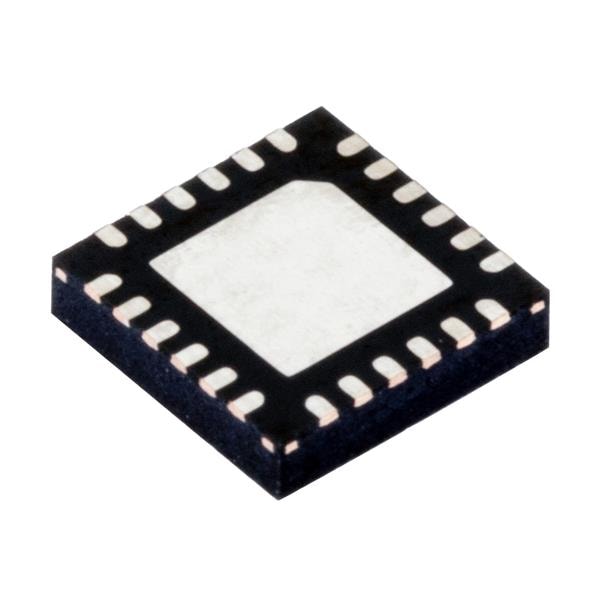
Where modulator and demodulator ICs fit in RF design
A modulator applies information to a carrier signal, while a demodulator extracts that information at the receiving side. In real systems, these functions may appear as standalone building blocks or as part of a more integrated RF signal chain that also includes filtering, gain stages, switching, and phase control.
These devices are relevant in applications such as wireless communication modules, instrumentation, sensor networks, and signal distribution equipment. Designers often evaluate them alongside related signal-chain components such as phase detectors and shifters when phase accuracy, conversion behavior, or beamforming-related control must be considered together.
Typical functions covered in this category
Although products may be grouped under one category name, the actual parts can support different RF tasks. Some are used for analog signal processing, some for frequency translation, and others for broader RF module roles where modulation or demodulation is one part of a larger internal architecture.
That is why you may see examples such as the Analog Devices AD630ARZ-RL, Analog Devices HMC6305LP6CE, or Analog Devices HMC6303LP6CETR represented here. Certain items are listed as other RF modules rather than narrowly labeled modulators, but they still belong in the design context where signal conversion and RF path handling are essential.
Representative manufacturers and product examples
This category includes parts from established suppliers used in RF and wireless development. Analog Devices is especially prominent in this range, with examples such as HMC935LP5E, HMC1010LP4ETR, and the HMC644ALC5TR digital phase shifter, which may be relevant when modulation functions interact with controlled phase behavior in microwave designs.
Additional examples in the broader selection include Fujikura XFPM-115KPAR, Infineon BGSA14M3N10E6327XTSA1, and Maxim Integrated MAX2411AEEI+T. These products illustrate how the category can span from highly specific RF IC functions to supporting modules used in more complex transmit and receive architectures.
How to choose the right part
Selection usually starts with the signal path requirement: are you transmitting, receiving, translating frequency, or recovering data from an incoming RF signal? Once that is clear, engineers typically compare operating frequency range, signal type, integration level, package constraints, and whether the design needs analog behavior, digital control, or a mixed-signal approach.
It is also useful to think about surrounding circuitry. A modulator or demodulator rarely works in isolation, so matching with switching, filtering, and routing devices matters. In designs where multiple RF paths must be managed, related categories such as RF multiplexers can become part of the same sourcing process.
Integration with the wider RF front end
In many systems, modulation and demodulation performance depends on the quality of the entire front end rather than on one IC alone. Isolation, routing losses, interference control, and board-level layout can all influence signal integrity, especially at higher frequencies or in dense embedded designs.
For that reason, engineers often review this category together with supporting RF building blocks. Components like couplers may be used for monitoring or splitting signal paths, while shielding and careful interconnect design help preserve performance in compact assemblies.
What to look for in industrial and B2B sourcing
For industrial buyers, choosing the right RF IC category is not only about function. It also involves package suitability for assembly, long-term availability, documentation quality, and how well the part aligns with existing design standards or qualification workflows. This is particularly important in low-volume specialized equipment as well as repeat production environments.
When reviewing options, it helps to shortlist parts that are close to the target architecture rather than selecting purely by name. For example, an item labeled as an RF module may still be the practical choice if it reduces external circuitry, while a more discrete IC may be preferable when board space, tuning flexibility, or BOM control is a priority.
Finding suitable parts in this category
Because RF terminology can vary between manufacturers, browsing by application intent is often more effective than relying on a single keyword. If your project involves transmit/receive conversion, IF processing, analog modulation behavior, or mixed RF signal handling, this category is a relevant starting point for narrowing the search.
You can use the listed products as reference points for package style, integration approach, and manufacturer ecosystem. If your design also needs additional protection against interference or enclosure-level signal containment, it may be worth comparing complementary options such as RF shields in parallel with active RF components.
Conclusion
Choosing a modulator or demodulator component is ultimately about matching the device to the real signal chain, not just the category label. A careful review of function, frequency behavior, integration level, and related RF support components will lead to a more reliable shortlist for design and procurement.
This category brings together relevant devices for engineers and buyers working with wireless and RF systems, from focused IC functions to broader RF modules. If you are building or maintaining an RF front end, it provides a practical base for comparing parts and identifying the right next step in the overall architecture.
Get exclusive volume discounts, bulk pricing updates, and new product alerts delivered directly to your inbox.
By subscribing, you agree to our Terms of Service and Privacy Policy.
Direct access to our certified experts
![Ezurio RM186-SM-02 Intelligent LoRa/BLE Module [868MHz LoRa for Europe] smartBASIC, Module](/images/no-image-medium.png)