
Phase Detectors / Shifters
Accurate phase control is fundamental in RF design, especially when engineers need to align signals, steer beams, compare timing relationships, or stabilize frequency conversion paths. In these applications, Phase Detectors / Shifters play a practical role inside wireless infrastructure, test setups, radar subsystems, microwave front ends, and other high-frequency signal chains.
This category brings together devices used to detect phase differences or apply controlled phase shifts across RF and microwave paths. Depending on the design objective, that may mean selecting a compact digital phase shifter for integration on a dense PCB, or choosing a phase-frequency detector for clocking and synchronization functions. The result is a more focused starting point for engineers evaluating RF control components by function rather than by part family alone.
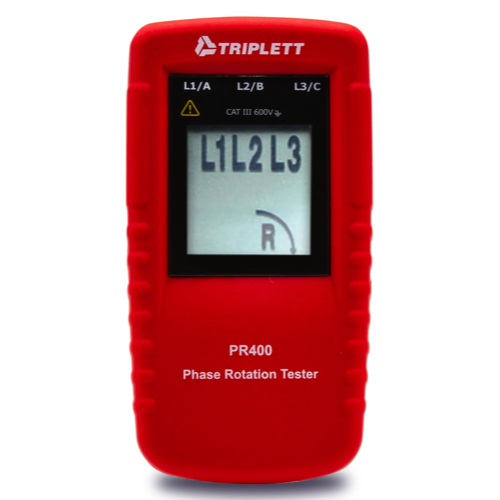
Where phase detectors and phase shifters fit in RF systems
Although they are grouped in the same category, phase detectors and phase shifters solve different but closely related problems. A phase detector is typically used to compare two signals and indicate their phase relationship, while a phase shifter intentionally changes the phase of a signal path by a defined amount.
These functions appear in many RF architectures. Designers may use them in beamforming networks, phased-array signal paths, local oscillator control, timing alignment, and feedback loops where phase information directly affects system stability or signal quality. In broader RF lineups, they are often evaluated alongside devices such as couplers and modulator / demodulator ICs, depending on how the signal chain is partitioned.
Typical product types in this category
This range includes digital phase shifters, general phase shifter devices, and phase-frequency detectors intended for RF or mixed-signal applications. Some parts are optimized for microwave bands, while others target lower-frequency timing and detector functions. Package style also matters, with many listed products designed for SMD/SMT assembly to support compact board-level integration.
Representative options include the Qorvo QPC2110SR digital phase shifter for X-band use, as well as several devices from Analog Devices, such as the HMC936ALP6ETR, HMC648ALP6ETR, HMC649ALP6E, and HMC543ALC4B. For phase-frequency detection, examples in the category include the onsemi MC100LVEL40DWG and the MACOM PD-120-PIN. There are also board- or module-oriented entries such as the MACOM MAPS-011007-001SMB and products from Quantic X-Microwave that can be useful in evaluation or specialized RF assembly workflows.
How to choose the right device
The first filter is the intended function. If the design requires comparison between two signals for synchronization or loop control, a phase detector or phase-frequency detector is typically the correct path. If the design needs controlled phase adjustment in a signal path, a digital or analog-style phase shifter is more appropriate.
Next, review the operating frequency range, control method, supply voltage, mounting format, and integration level. For example, some products in this category are clearly aimed at microwave bands, while others are intended for lower-frequency detector applications. Engineers should also consider whether the application needs fine digital step control, broad phase range, compact SMT implementation, or compatibility with surrounding RF ICs such as RF multiplexers in switched signal paths.
Examples of selection logic by application
For microwave beam steering or phase alignment, digital phase shifters are often preferred because they support repeatable control states and easier system calibration. Devices such as the Qorvo QPC2110SR or Analog Devices HMC-series phase shifters may fit this kind of evaluation when the design targets RF or microwave frequency bands and requires board-level integration.
In timing comparison or loop-oriented circuits, a phase-frequency detector can be more relevant than a standalone shifter. The onsemi MC100LVEL40DWG, for instance, represents the detector side of the category, while the MACOM PD-120-PIN extends that comparison-oriented use case into RF-focused designs. For engineers building or testing modular microwave assemblies, Quantic X-Microwave phase shifter products can also be relevant where interconnect flexibility or subsystem prototyping is part of the workflow.
Leading manufacturers in this category
Several established RF component suppliers appear prominently here, each with strengths in different parts of the phase-control landscape. Analog Devices is strongly represented with multiple digital phase shifter options and microwave-oriented parts. Qorvo is also notable for high-frequency RF solutions, including X-band phase shifting devices.
Other important names include MACOM for detector and sample-board related offerings, Mini-Circuits for compact RF components, pSemi for integrated RF control devices, and Quantic X-Microwave for modular microwave implementations. Depending on the surrounding design, engineers may also evaluate shielding and layout support with related products such as RF shields, especially in dense high-frequency assemblies where unwanted coupling can affect phase-sensitive performance.
Design considerations beyond the datasheet headline
In practical RF implementation, phase-related performance is influenced by more than nominal frequency coverage. PCB layout, grounding, control interface integrity, insertion loss, packaging, and thermal behavior can all affect real-world results. This is particularly important in phased-array, test, and microwave signal-routing applications where small phase errors can accumulate across the system.
It is also useful to distinguish between parts intended for direct production integration and those that serve more of an evaluation or subsystem-building role. Sample boards and module-based solutions can accelerate validation, while compact SMT devices are usually better aligned with volume design. Looking at the broader system context early helps narrow the field and avoid selecting a part that is electrically suitable but mechanically or architecturally inefficient.
Finding a better fit for your RF phase-control requirement
This category is best approached by starting with the system objective: phase comparison, phase adjustment, synchronization, or microwave path control. From there, frequency range, control granularity, package type, and integration method usually narrow the shortlist quickly. Using representative parts from Analog Devices, Qorvo, MACOM, onsemi, Mini-Circuits, pSemi, and Quantic X-Microwave can help frame the trade-offs between compact IC integration and more specialized RF implementation styles.
When phase accuracy directly affects signal integrity, loop behavior, or beamforming performance, selecting the right component family matters as much as choosing the right frequency band. A focused review of the products in this Phase Detectors / Shifters category can make that process faster and more technically consistent with the rest of the RF design.
Get exclusive volume discounts, bulk pricing updates, and new product alerts delivered directly to your inbox.
By subscribing, you agree to our Terms of Service and Privacy Policy.
Direct access to our certified experts