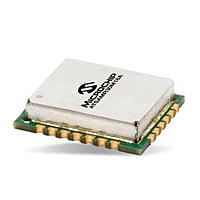
Phase Locked Loops PLL
Stable frequency generation is a core requirement in RF design, whether the goal is clean local oscillator control, reliable clock distribution, or fast signal synchronization inside communication and embedded systems. In these applications, Phase Locked Loops PLL devices help align frequency and phase relationships so the wider circuit can operate with better timing consistency and lower sensitivity to drift.
Within RF and timing-oriented designs, PLL-related components are often selected to support synthesizers, clock generators, jitter attenuation stages, and frequency control blocks. This category brings together parts used in those functions, making it easier to compare solutions for output format, frequency range, supply voltage, package style, and channel count across a broad range of design needs.
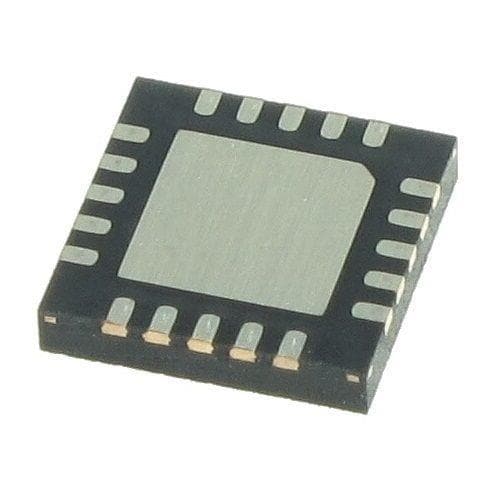
Where PLL devices fit in RF and timing architectures
A phase-locked loop is commonly used to synchronize an output signal with a reference in frequency and phase. In practical hardware, that can support frequency synthesis, clock cleanup, signal recovery, or generation of multiple timing outputs for downstream ICs. This is especially relevant in RF systems, digital communication platforms, industrial electronics, and mixed-signal boards where timing accuracy affects overall performance.
Depending on the design objective, engineers may look for a compact PLL clock generator, a programmable clock source, or a device focused on jitter attenuation. Some applications prioritize flexible outputs, while others need low-voltage operation, extended temperature capability, or support for signaling standards such as LVCMOS, LVDS, LVPECL, or HCSL.
Typical product types found in this category
The range of devices associated with PLL applications is broader than a single part style. In many designs, the selected IC may be described as a clock generator, frequency synthesizer, or jitter attenuator rather than simply “PLL,” even though the underlying function is closely related to phase locking and frequency control.
For example, the Microchip DSC612PA3A-01EQ is positioned as a PLL clock generator for designs that need compact packaging and a practical output range. The Infineon CY22150FZXI illustrates the programmable clock generator approach, where multiple outputs can be useful in systems that must feed several logic or interface domains from one timing source. For applications focused on signal cleanup, devices such as the Microchip PL903167UMG TR or PL902165USY show how jitter attenuation can become a key selection factor.
Key selection criteria for engineers and buyers
When narrowing down parts, the first step is usually to match the device to the required frequency plan. That includes reference input type, target output frequency, number of outputs, and whether the system needs a fixed, synthesized, or programmable clock architecture. Output signaling is equally important because the wrong logic standard can create interface issues even when the frequency range appears suitable.
Electrical and mechanical requirements also matter. Supply voltage range, operating temperature, and package format can directly affect board compatibility and qualification. In more demanding environments, it may be necessary to consider automotive or industrial suitability, as seen in parts such as the AEC-Q100 qualified Microchip DSC612PA3A-01EQ.
Another practical consideration is system integration. A small SOT-23 device like the Microchip PL611-01-F93TC-R may suit compact designs, while higher-performance timing architectures may call for more complex packages and broader output support, such as the Microchip ZL30791LFG7. Selection should always reflect the actual timing tree, not just the headline maximum frequency.
Representative manufacturers and solution coverage
This category includes products from widely used semiconductor suppliers in timing and RF-related design. Microchip appears prominently in the available examples, covering PLL clock generators, synthesizers, and jitter attenuators across compact and higher-frequency options. Designers evaluating programmable timing paths may also consider solutions from Infineon, while Diodes Incorporated offers clock generator and synthesizer devices that can fit cost-sensitive or general-purpose designs.
For signal chains requiring different output structures or logic families, additional options in this category can support CMOS, LVDS, LVPECL, ECL, and related standards. The onsemi MC100EP139DTR2G, for instance, reflects the type of device that may be relevant when ECL-oriented timing distribution is part of the system requirement.
How PLL-related parts are used in real applications
In RF equipment, PLL devices are often used to derive local oscillator frequencies, maintain channel spacing, or stabilize reference timing for transceiver sections. In digital and mixed-signal boards, they may generate multiple synchronized clocks for processors, converters, networking devices, or interface ASICs. The design objective is not always just “generate a frequency,” but to do so with acceptable phase noise, startup behavior, and timing integrity for the full signal chain.
These devices also interact naturally with neighboring RF building blocks. For example, a PLL-based timing path may sit alongside a modulator / demodulator stage in communications hardware, or work with phase detectors / shifters in architectures where phase alignment and control are critical. In compact RF layouts, supporting elements such as RF shields may also be relevant to reduce interference around sensitive timing circuitry.
Practical comparison points across listed devices
Even among parts that seem similar at first glance, the design trade-offs can be significant. Some devices emphasize high maximum output frequency, such as the Microchip PL903167UMG TR or ZL30791LFG7, while others are better aligned with lower-frequency or multi-output clocking tasks. A device with wide output format support may simplify interface design, but a smaller part with fewer outputs can be more attractive where board space and power are tightly constrained.
It is also useful to distinguish between clock generation and clock cleanup roles. A programmable generator like the Infineon CY22150FZXI can help create flexible timing schemes, while a jitter attenuator such as the Microchip PL902167USY is better suited when the incoming reference already exists but needs conditioning before distribution. This distinction helps avoid selecting a part that is technically compatible yet functionally mismatched to the application.
Choosing the right category path for your design stage
If your project is already centered on frequency synthesis, synchronized clock generation, or phase alignment, this is the right place to compare PLL-related ICs directly. Buyers can filter by package, output count, voltage range, and manufacturer, while engineers can use the product details to shortlist parts for deeper schematic and timing-tree evaluation.
For broader RF signal-chain work, it can also be useful to review adjacent categories when the design problem extends beyond timing alone. That is especially true in wireless and mixed-signal systems where clock quality, phase control, modulation, and layout protection all influence final performance.
Final considerations
Choosing among Phase Locked Loops PLL products is usually less about finding a generic part and more about matching the timing function to the architecture of the full system. Output standard, programmability, jitter behavior, voltage compatibility, and package constraints all shape the best fit.
By comparing established options from suppliers such as Microchip, Infineon, Diodes Incorporated, and onsemi, engineers and procurement teams can build a more focused shortlist for RF, communications, and high-speed embedded designs. A careful review of the intended clocking role will usually lead to a better choice than comparing frequency numbers alone.
Get exclusive volume discounts, bulk pricing updates, and new product alerts delivered directly to your inbox.
By subscribing, you agree to our Terms of Service and Privacy Policy.
Direct access to our certified experts