RF Microcontrollers
Wireless embedded design often starts with a practical question: should the radio, control logic, and communication stack be integrated into one device, or split across multiple chips and modules? For many compact, power-sensitive, and connected products, RF Microcontrollers provide a highly efficient path by combining processing capability with wireless communication functions in a single platform.
In industrial electronics, smart devices, and connected control nodes, this integration can simplify board design, reduce component count, and streamline development. That makes this category relevant for engineers evaluating wireless architectures for sensing, control, telemetry, and short-range data exchange across embedded systems.
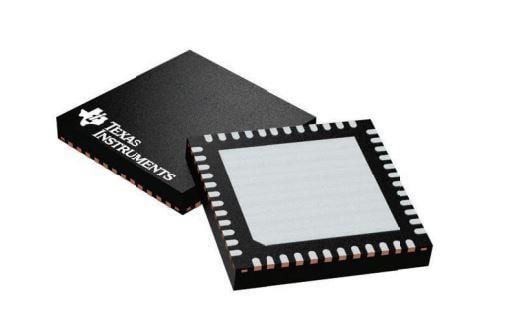
Where RF microcontrollers fit in embedded wireless design
An RF microcontroller typically brings together a microcontroller core and radio functionality so the device can process local data while also transmitting or receiving it over a wireless link. This approach is especially useful when space, power budget, and system complexity matter as much as raw performance.
Within a broader RF design flow, these devices sit between discrete radio building blocks and higher-level communication subsystems. In some designs, engineers may still pair them with related RF components such as modulator / demodulator devices or supporting front-end parts, depending on signal-chain requirements and network architecture.
Why engineers choose integrated RF control platforms
The main advantage of this category is system integration. By combining control and wireless communication, RF microcontrollers can help shorten development time, reduce routing complexity, and simplify firmware coordination compared with architectures built from separate processors and radio ICs.
They are often considered in products that need reliable short-range wireless links, periodic data reporting, low-power operation, or compact PCB layouts. Typical selection priorities include protocol support, processing resources, memory needs, power strategy, peripheral availability, software ecosystem, and how easily the device fits into the broader embedded platform.
Common application scenarios
RF microcontrollers are widely associated with connected sensing and control tasks. In practical terms, they are a good fit for wireless sensor nodes, smart building devices, portable instruments, asset monitoring, human-machine interfaces, and distributed industrial electronics where local intelligence and wireless connectivity must work together.
They can also support gateway-adjacent or edge-oriented roles when the system only needs moderate local processing while maintaining efficient radio communication. For more advanced networking paths, some projects may combine low-power wireless endpoints with higher-level communication processors such as the NXP ecosystem, where devices like the S32G233AABK0CUCR or S32G254AABK0CUCR illustrate how network-focused processing fits into a larger connected architecture.
Examples of products in this category context
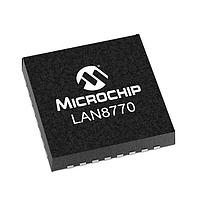
The product mix shown here highlights how wireless integration can appear in different forms across the RF and embedded landscape. For example, the Microchip Technology ATZB-S1-256-3-0-C represents an 802.15.x LR-WPAN module approach, which can be valuable when faster integration and known wireless building blocks are priorities.
Several Amphenol entries, including ACJC9VL BULK, ACJC5V BULK, AX4FB4M-AU, and ACJC6AVLBULK, further reflect the practical ecosystem around low-rate wireless personal area networking. While modules are not identical to standalone RF microcontrollers, they are closely related in real design workflows because engineers often compare module-based integration against chip-level wireless control solutions when balancing certification effort, layout complexity, and time to market.
How to evaluate the right RF microcontroller
Choosing the right device starts with the wireless task itself. Engineers should first define communication range, network topology, throughput expectations, latency tolerance, and power profile. Once those constraints are clear, it becomes easier to assess whether a compact integrated device is enough or whether the design needs more external RF support, shielding, or processing layers.
From there, review the embedded side of the design: firmware complexity, memory footprint, interface needs, security expectations, update strategy, and operating environment. In denser RF layouts, supporting hardware such as RF shields may also become relevant for noise management and signal integrity, especially in compact industrial or multi-radio products.
RF microcontrollers versus modules and network processors
This category is easiest to understand when compared with adjacent device types. A standalone RF microcontroller is generally attractive when the design team wants tight hardware control and direct firmware ownership. A wireless module can be more convenient when integration speed and implementation simplicity take priority.
At the other end of the spectrum, network processors such as NXP S32G398ASCK1VUCT or S32G378AACK1VUCT address a different class of problem. Those parts are more aligned with high-level data routing, service-oriented communication, and network-centric embedded systems rather than compact endpoint wireless control. Understanding that distinction helps teams avoid overdesigning or underdesigning the communication layer.
Broader RF ecosystem considerations
RF microcontroller selection should not happen in isolation. Real-world performance depends on antenna strategy, PCB layout, coexistence planning, power regulation, enclosure effects, and nearby RF circuitry. In some systems, engineers may also need supporting signal-management devices such as RF multiplexers to handle switching or signal-path optimization in more complex wireless hardware.
Supplier ecosystem also matters. Brands such as Microchip Technology, NXP, Amphenol, Analog Devices, Broadcom, and Infineon are often part of broader design evaluations because component availability, documentation depth, software support, and long-term platform fit can be just as important as the radio specification itself.
Choosing with application fit in mind
The best path is usually the one that matches the application rather than the one with the longest feature list. A battery-powered sensing node, an industrial monitor, and a networked control gateway all place different demands on wireless hardware, firmware structure, and integration effort. Reviewing RF microcontrollers in that context helps narrow the field more effectively than comparing part numbers alone.
For teams building embedded wireless products, this category is a practical starting point for evaluating integrated control-and-radio solutions alongside related modules and RF support components. A careful review of communication needs, system constraints, and surrounding RF circuitry will lead to a more reliable and maintainable design decision.
Get exclusive volume discounts, bulk pricing updates, and new product alerts delivered directly to your inbox.
By subscribing, you agree to our Terms of Service and Privacy Policy.
Direct access to our certified experts