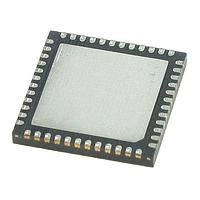
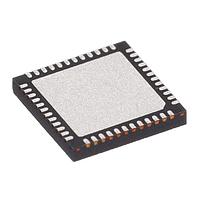
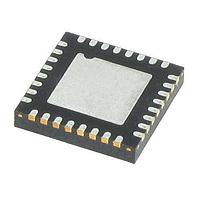
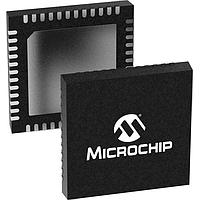
RF Transceiver
Wireless system design often comes down to one core requirement: transmitting and receiving data reliably within the same RF path. In applications such as short-range connectivity, automotive communication, sensing, telemetry, and embedded radio links, selecting the right RF transceiver affects signal integrity, power use, integration effort, and overall system complexity.
This category brings together devices used to handle both transmit and receive functions in compact RF designs. Depending on the architecture, an RF transceiver may support low-power ISM communication, 2.4 GHz radio links, automotive networking, or mmWave sensing front ends, helping engineers build more integrated and scalable wireless products.

Where RF transceivers fit in modern electronic design
An RF transceiver combines transmitter and receiver functionality into a single device or highly integrated IC. This approach reduces board space and can simplify matching, control, and interface design compared with building a radio chain from multiple discrete blocks.
These components are used across a wide range of embedded systems, from wireless sensor nodes and industrial control links to automotive infotainment and radar-related signal chains. In some designs, the transceiver is the main radio device; in others, it works alongside related RF building blocks such as modulator / demodulator solutions or switching and routing stages elsewhere in the front end.
Typical transceiver use cases across frequency ranges
The products in this category span multiple frequency bands and application styles. At 2.4 GHz, transceivers are commonly selected for low-power wireless communication in embedded systems, monitoring devices, and short-range industrial links. Examples include the NXP NXH3670UK, the Microchip AT86RF232-ZXR, and the Nordic Semiconductor NRF24LE1-F16Q48-R, each representing compact radio integration for wireless connectivity.
Lower-frequency ASK / FSK devices support simple sub-GHz communication where range, penetration, and straightforward protocol implementation are important. The Infineon TDK5110GEG and Microchip ATA8401C-6AQY-66 are examples of transmitter-oriented RF devices used in this broader ecosystem, while the Microchip ATA5276M-PGPW shows how antenna driver functions can support specialized LF or RF interface architectures.
At the higher end, mmWave devices such as the Infineon BGT24ATR11E6327 and Infineon BGT24MTR12E6327XUSA1 illustrate how RF transceiver technology is also relevant in 24 GHz sensing and radar-oriented designs. These devices are typically considered when compact integration and operation in a defined high-frequency band are important to the application.
How to evaluate an RF transceiver for your design
The first selection factor is frequency band compatibility. The intended operating band must align with the target wireless standard, regional requirements, antenna design, and propagation needs. A short-range 2.4 GHz link has very different design tradeoffs from a sub-GHz telemetry node or a 24 GHz sensing platform.
The second factor is integration level. Some parts focus on core transceiver functionality, while others are closer to complete radio subsystems or specialized front-end devices. Designers should also review package type, pin count, power supply range, and surrounding circuit requirements, especially in compact embedded platforms where layout and thermal constraints matter.
It is also useful to consider whether the design may need adjacent RF functions such as shielding, signal routing, or phase handling. In more complex front ends, supporting categories like RF multiplexers or phase detectors / shifters can become relevant depending on channel architecture and signal-processing requirements.
Examples of devices in this category
For automotive Ethernet and in-vehicle communication, the Broadcom BCM89884A0BWMLG stands out as a PHY solution supporting 1000BASE-T and 100BASE-T1. While different from a conventional short-range wireless radio, it reflects the broader role of transceiver technology in high-speed signal transmission and reception within connected systems. Engineers looking for related supplier options can also browse Broadcom components directly.
For embedded wireless communication, the NXP NXH3670UK and Microchip AT86RF232-ZXR fit applications where low-power operation and compact packaging are priorities. The Nordic Semiconductor NRF24LE1-F16Q48-R is also relevant where an ISM-band transceiver is needed in tightly integrated electronic designs.
In high-frequency sensing and radar front ends, several Infineon devices in this category provide 24 GHz to 24.25 GHz operation, including the BGT24MR2E6327FUSA1 IQ Receiver MMIC and the BGT24ATR11E6327 transceiver MMIC. These products are often evaluated in systems where RF front-end integration and a compact mmWave implementation are key design goals.
Key design considerations beyond the datasheet headline
A suitable part is not chosen by frequency alone. Engineers typically evaluate modulation method, receive sensitivity, transmit power strategy, interface compatibility, external component count, and how easily the device fits into the firmware and PCB workflow. For B2B design teams, availability and long-term platform fit are just as important as raw electrical capability.
PCB layout is especially important in RF work. Grounding, antenna routing, impedance control, and shielding strategy can strongly influence performance once the design moves from prototype to production. In dense boards, complementary components such as RF shields may help reduce interference and improve repeatability during validation.
Choosing by application instead of by part number alone
Many engineers begin with a frequency target, but a better approach is to define the full application context first. Consider range, data throughput, latency tolerance, power budget, antenna constraints, environmental conditions, and whether the system is intended for consumer, industrial, or automotive deployment.
That process usually narrows the field quickly. A low-power 2.4 GHz network node, a sub-GHz transmitter stage, and a 24 GHz radar front end all require different tradeoffs in integration, supporting circuitry, and compliance planning. Reviewing transceivers through the lens of the end application helps reduce redesign risk later in the project.
Supporting procurement and engineering teams
For technical buyers, this category is useful not only for sourcing parts but also for comparing architectures across established semiconductor manufacturers such as Broadcom, Infineon, Microchip, NXP, and Nordic Semiconductor. The available range supports both focused replacement sourcing and early-stage component selection for new product development.
Whether the requirement is a compact wireless IC, a specialized RF receiver or transmitter path, or a high-frequency transceiver for advanced sensing, this category helps engineering and purchasing teams assess suitable options within a broader RF design workflow. A careful review of operating band, integration level, package constraints, and system role will usually lead to a more efficient shortlist and a more robust final design.
Get exclusive volume discounts, bulk pricing updates, and new product alerts delivered directly to your inbox.
By subscribing, you agree to our Terms of Service and Privacy Policy.
Direct access to our certified experts