
Tuners
Reliable reception starts long before signal processing or audio output. In many RF designs, the tuner is the stage that selects the wanted band, helps reject unwanted signals, and prepares the signal path for the rest of the receiver chain. For automotive radio, satellite reception, broadcast systems, and other embedded wireless platforms, choosing the right tuner IC has a direct impact on sensitivity, selectivity, integration level, and overall system complexity.
This Tuners category focuses on RF integrated circuits used to receive and condition radio-frequency signals across applications such as AM/FM car radio, HD Radio, automotive TV, and satellite or L-band reception. The range includes highly integrated silicon devices for compact SMT assembly, with many options suited to space-constrained and automotive-oriented designs.
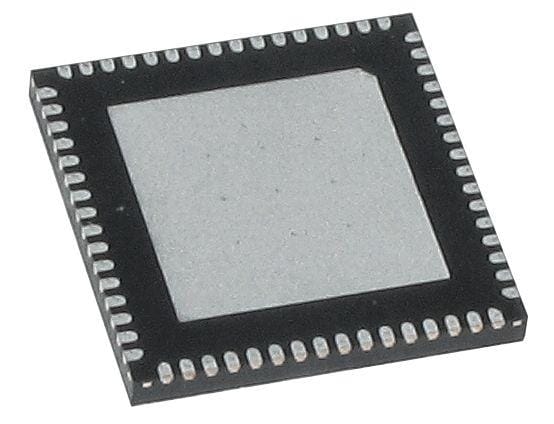
Where tuner ICs fit in an RF receiver design
A tuner is typically responsible for selecting a target frequency range and converting or conditioning the incoming signal so downstream circuitry can process it more effectively. Depending on the architecture, this may involve direct conversion, low-IF handling, channel selection, and support for specific broadcast or communication standards.
In practical designs, tuners work alongside other RF building blocks such as modulator / demodulator devices, filtering networks, shielding, and signal-routing components. In dense RF layouts, system performance depends not only on the tuner itself but also on how the complete receive path is partitioned and protected from interference.
Typical applications covered in this category
The products in this category are particularly relevant for automotive radio and broadcast reception platforms. Several listed devices are qualified to AEC-Q100, which makes them suitable for vehicle-oriented designs where temperature range, reliability, and long-term availability matter.
You will also find devices intended for satellite and L-band reception. For example, the Analog Devices MAX2112ETI+ and MAX2121ETI+T illustrate tuner solutions for direct-conversion receiver designs, while automotive-focused parts such as the STMicroelectronics TDA7708CB, TDA7705TR, and TDA7786 address AM/FM receiver integration in car infotainment systems.
Representative manufacturers and product examples
This category includes tuner solutions from well-known semiconductor suppliers such as Analog Devices, NXP, and STMicroelectronics. Different manufacturers tend to address different receiver architectures, integration targets, and end-market requirements, so the right choice often depends on the intended band, interface requirements, and regulatory or automotive constraints.
Among the examples shown here, STMicroelectronics devices such as TDA7708SCB and TDA7786MTR are aligned with automotive AM/FM reception, while Analog Devices parts including MAX2120CTI+ and MAX2112ETI+ point to direct-conversion satellite tuner implementations. The NXP TEF7094AHN/V205K is another example often considered when evaluating tuner options in embedded radio platforms.
How to compare tuner ICs for a new design
When narrowing down a tuner, start with the target frequency band and reception standard. A tuner for terrestrial AM/FM radio is not evaluated the same way as a part for satellite or L-band reception. Modulation support, conversion architecture, supply voltage, package style, and system interface all influence integration effort and final receiver performance.
For embedded and automotive platforms, it is also important to review qualification status, operating temperature range, and assembly method. Many products in this category use SMD/SMT mounting and silicon-based integration, which supports compact PCB design and automated manufacturing. If the application is exposed to a harsh environment, automotive-grade qualification can be a key filter early in the selection process.
Design considerations beyond the tuner itself
A tuner rarely operates in isolation. Front-end matching, antenna switching, signal splitting, shielding, and multiplexing can all affect real-world sensitivity and coexistence. In more complex RF paths, related components such as RF multiplexers may be part of the signal-routing strategy, especially where multiple bands or antenna paths must be managed within one platform.
PCB layout and EMI control are equally important. High-density automotive and wireless designs often benefit from careful partitioning and physical protection, which is why supporting elements like RF shields can become relevant at the board level. A well-chosen tuner can simplify the receiver chain, but stable field performance depends on the surrounding RF implementation as much as on the IC selection.
What to look for in automotive tuner selection
Automotive applications place added emphasis on durability, noise resilience, and reception consistency across varying operating conditions. Devices such as the STMicroelectronics TDA7708CB, TDA7705TR, TDA7786, and Analog Devices MAX2136AETJ/V+T or MAX2170ETL/V+T show how this category supports vehicle radio and infotainment development with parts aimed at automotive use cases.
For these projects, engineers typically review qualification level, supported radio bands, supply requirements, and how much external circuitry is still needed. Integration level matters because it can reduce BOM count and board area, but system architects also need to confirm software control, tuning behavior, and compatibility with the broader receiver chain.
Choosing the right category for your RF workflow
If your main task is receiving and selecting incoming radio signals, this Tuners category is the right place to compare integrated receiver front-end options. It is especially useful for engineers working on automotive entertainment systems, broadcast receivers, and compact RF platforms where integration, SMT assembly, and dependable signal acquisition are priorities.
For broader RF design work, tuners are often just one part of the signal chain. Reviewing related categories can help when you are also defining routing, conversion, or interference-control requirements. With the right device selection and system context, a tuner can become the foundation of a more stable and efficient receiver design.
Whether you are refining an existing automotive platform or evaluating parts for a new RF receiver, this category provides a practical starting point for comparing integrated tuner solutions by application, architecture, and implementation needs.
Get exclusive volume discounts, bulk pricing updates, and new product alerts delivered directly to your inbox.
By subscribing, you agree to our Terms of Service and Privacy Policy.
Direct access to our certified experts