upDown Converters
Frequency conversion is a core function in many RF signal chains, whether the goal is to move a received signal down to an intermediate frequency for easier processing or translate a baseband or IF signal upward for transmission. In practical design work, engineers often look for compact, repeatable solutions that simplify this stage without compromising integration with the rest of the front end. That is where upDown Converters become especially relevant for wireless, communication, and RF subsystem development.
Within RF integrated circuits, this category supports designs that need controlled signal translation across different frequency stages. Depending on the architecture, these devices may be used in receivers, transmitters, transceivers, microwave links, IF processing paths, and other RF modules where conversion accuracy, usable frequency range, and system-level integration all matter.
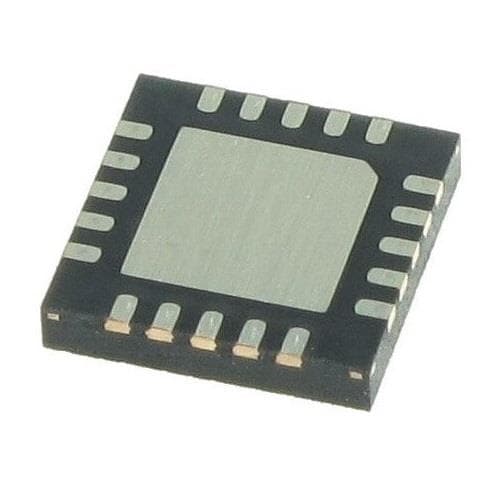
Where up/down conversion fits in an RF design
An up/down converter is typically used to shift a signal from one frequency range to another by combining it with a local oscillator. In receiver paths, downconversion helps move an RF signal to an IF or lower frequency where filtering, amplification, and demodulation can be handled more efficiently. In transmit paths, upconversion performs the reverse role, preparing signals for RF transmission.
This function is rarely isolated. It usually works alongside gain stages, oscillators, filters, shielding, and switching elements. For projects that also require related RF building blocks, engineers may compare adjacent solutions such as modulator / demodulator devices or frequency-management components used elsewhere in the signal chain.
Typical device forms in this category
The category can include different levels of integration. Some parts are primarily RF mixers intended for frequency translation, while others combine mixer and oscillator functions in a single package to reduce external circuitry and simplify layout. This matters in applications where board space, routing complexity, and BOM control are important.
Examples from this range illustrate that variety. The Qorvo CMD178C3 Up/Down Conv Mixer 21GHz 12-Pin SMD targets high-frequency conversion use cases, while NXP devices such as the TFF1018HN/N1,115 and TFF1014HN/N1,115 integrate mixer and oscillator functions for microwave-frequency designs. At lower frequency ranges, devices such as the NXP SA606D/01,112 and SA606D/01,118 support FM IF mixer applications, showing that the category spans both broadband RF work and more application-specific frequency conversion stages.
Representative manufacturers and product options
Design teams often evaluate parts by both architecture and supplier ecosystem. In this category, recognized manufacturers include NXP, Qorvo, Renesas Electronics, ROHM Semiconductor, Microchip, and STMicroelectronics. These brands are commonly considered when engineers need RF ICs that fit established sourcing and qualification workflows.
Several listed products help show the range of available approaches. STMicroelectronics STW82101BTR, STW82102BTR, and STW82103BTR RF Mixer ICs provide examples of mixer-focused devices with common low-voltage supply operation. Renesas Electronics F1102NBGI is positioned as an RF-to-IF downconverting mixer, while ROHM Semiconductor BA4116FV-E2 represents a related IF-stage device that may appear in signal-processing chains around mixer-based designs. Microchip MIC4576-5.0WU is not a converter itself, but it highlights the broader reality that stable supporting power circuitry can be important in RF implementations.
How to choose the right converter for your application
The right selection usually starts with the signal path architecture. Engineers should confirm whether the design needs pure upconversion, pure downconversion, or a bidirectional frequency conversion stage. From there, it is useful to check the intended RF, LO, and IF operating ranges, packaging constraints, supply rails, and the amount of external support circuitry the design can accommodate.
Integration level is another key factor. A standalone mixer may offer more flexibility when the local oscillator is generated elsewhere in the system, while an integrated mixer-oscillator device can reduce design complexity in compact modules. Package style and board-level implementation also matter, especially in dense layouts where isolation and routing quality influence overall RF performance.
It is also sensible to evaluate how the converter will interact with neighboring RF functions. If the design includes signal distribution or routing stages, related categories such as RF multiplexers may be part of the wider solution. In compact or noise-sensitive hardware, shielding strategy can be just as important as the IC itself, which is why some projects also consider RF shields during system planning.
Application contexts engineers commonly consider
Up/down converters are relevant across a broad set of RF and wireless applications. Common examples include receiver front ends, satellite-related frequency blocks, IF conversion stages, communication modules, and custom RF boards where a signal must be translated before filtering or further processing. The exact implementation depends on frequency plan, channel bandwidth, and system partitioning.
In many designs, the converter is chosen not only for its frequency capability but also for how well it supports the overall architecture. A highly integrated part may reduce external oscillator requirements, while a more modular mixer approach may suit designs that already use dedicated LO and phase-control circuitry. That tradeoff becomes especially important in multi-stage systems where each block must fit a defined gain, isolation, and routing strategy.
Why category-level comparison matters
Browsing this category at the component-family level can be more efficient than searching only by part number. It allows engineers and sourcing teams to compare package formats, integration styles, and product families before narrowing to a specific device. That is particularly useful in early-stage design, second-source planning, and redesign projects where technical fit and supply continuity both matter.
It also helps identify whether a project really needs a dedicated up/down converter or whether an adjacent RF IC category may better match the intended function. For example, some signal-processing tasks may be better addressed through mixer-oscillator combinations, while others connect more naturally with modulation, phase management, or switching-related devices within the broader RF IC ecosystem.
Supporting informed RF component selection
This category is most useful when approached as part of a complete RF design workflow rather than as an isolated list of parts. Looking at conversion direction, frequency plan, integration level, package, and supporting circuitry will usually narrow the field quickly. From there, comparing representative options from NXP, Qorvo, STMicroelectronics, Renesas Electronics, and other listed manufacturers can make shortlist creation more practical.
For engineers building or maintaining RF signal chains, up/down converters provide a fundamental path to moving signals where the rest of the system can process them effectively. A careful review of device role, surrounding architecture, and implementation constraints will lead to a more suitable selection for both prototyping and production-oriented designs.
Get exclusive volume discounts, bulk pricing updates, and new product alerts delivered directly to your inbox.
By subscribing, you agree to our Terms of Service and Privacy Policy.
Direct access to our certified experts