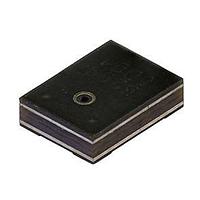
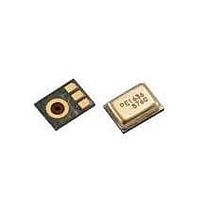
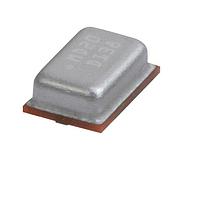
MEMS
Compact acoustic sensing has become a core requirement in modern electronics, from portable devices and voice interfaces to industrial monitoring and embedded edge systems. In these applications, MEMS audio sensors are widely used because they support small form factors, repeatable performance, and easier integration into dense electronic designs.
Within the broader audio sensing landscape, this category focuses on components built with micro-electromechanical systems technology for sound detection and signal capture. For engineers, buyers, and product developers, the value of MEMS-based devices often lies in balancing package size, interface type, environmental robustness, and the needs of the target application.
Why MEMS audio sensors are widely used
MEMS technology enables the sensing structure and related circuitry to be integrated in a very compact package. That makes these devices especially suitable where board space is limited, such as wearables, mobile electronics, handheld equipment, smart building devices, and distributed sensing nodes.
Another important advantage is manufacturing consistency. Compared with larger traditional acoustic parts, MEMS-based solutions are often selected when a design needs stable performance across production volumes, good compatibility with automated assembly, and predictable behavior in multi-unit arrays.
Typical applications and design scenarios
MEMS audio sensors appear in a wide range of products that need reliable acoustic input. Common examples include voice-enabled consumer products, remote controls, smart speakers, conferencing endpoints, alarm and intercom systems, portable medical equipment, and embedded monitoring devices used in commercial or industrial environments.
In product development, the application context matters as much as the component itself. A near-field voice interface may prioritize speech pickup and low-profile integration, while a monitoring node may focus more on robustness, power considerations, and stable operation over time. In more complex systems, buyers may also compare MEMS devices with other microphone technologies to determine which approach better fits the acoustic, mechanical, and cost constraints of the project.
Key selection criteria for engineers and buyers
Choosing the right part usually starts with the electrical and mechanical requirements of the end product. Designers typically review mounting style, package dimensions, signal output type, and the expected integration path with the host processor, codec, or data acquisition circuit.
It is also important to consider the operating environment. In practical terms, the right choice depends on factors such as ambient noise conditions, enclosure design, port orientation, long-term reliability expectations, and whether the device will be used in a portable, fixed, or exposed installation. Looking at the broader audio sensor ecosystem can help clarify whether a MEMS solution is the best fit for the system architecture.
Analog and digital integration considerations
One of the main design decisions in this category is whether the application is better served by an analog-output or digital-output device. Analog options may be preferred in designs that already include suitable signal-conditioning stages, while digital variants can simplify routing and improve compatibility with modern embedded platforms that process audio data directly.
System-level integration should also account for PCB layout, shielding, power supply quality, and acoustic path design. Even a well-chosen component can underperform if the enclosure, venting, or placement introduces unwanted resonances or limits the sound path to the sensor inlet.
Manufacturers commonly considered in MEMS audio design
Procurement and design teams often evaluate parts from established semiconductor and audio component suppliers with experience in miniaturized sensing. Brands such as Analog Devices, Infineon, Knowles, STMicroelectronics, and TDK InvenSense are commonly reviewed when consistency, integration support, and long-term sourcing matter.
Depending on the product type, teams may also compare offerings from PANASONIC, Same Sky (formerly CUI Devices), PUI Audio, Pro Signal, and SparkFun. The right manufacturer is not simply the one with the broadest portfolio, but the one whose device characteristics and supply profile align with the intended production volume and application environment.
How MEMS fits into a broader sensor strategy
In many embedded systems, acoustic sensing is only one part of a larger design. MEMS-based audio components are often deployed alongside motion sensing, environmental monitoring, wireless connectivity, and local processing to create devices that respond intelligently to human interaction or machine conditions.
This is one reason the category remains relevant across both prototyping and scaled manufacturing. Whether the project is a compact consumer device or a distributed industrial node, acoustic input can play a role in event detection, voice control, anomaly monitoring, or user feedback workflows. If you need to explore the category from a component technology angle, you can also review related MEMS sensor options in the broader catalog context.
What to evaluate before placing an order
For B2B purchasing, device selection should go beyond basic fit and footprint. Teams usually benefit from checking expected lifecycle, assembly compatibility, documentation availability, and whether the chosen part matches the acoustic design assumptions already built into the enclosure and PCB layout.
It is also helpful to align engineering and procurement early. That reduces the risk of selecting a component that looks suitable on paper but creates avoidable challenges in sourcing, qualification, or production transfer. A well-matched MEMS audio sensor can simplify downstream integration and support more consistent product performance across manufacturing batches.
Final thoughts
When space efficiency, scalable manufacturing, and modern electronic integration are priorities, MEMS-based audio sensing is often a practical direction. This category is intended to support component selection for designs that need compact, dependable acoustic capture without adding unnecessary complexity to the system.
By comparing package constraints, interface needs, environmental conditions, and supplier fit, buyers and engineers can narrow the field more effectively and move toward a more reliable design decision.
Get exclusive volume discounts, bulk pricing updates, and new product alerts delivered directly to your inbox.
By subscribing, you agree to our Terms of Service and Privacy Policy.
Direct access to our certified experts