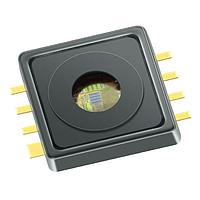
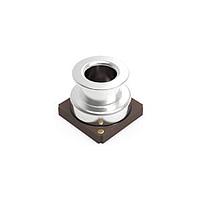
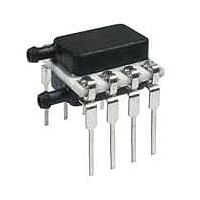
Board Mount Pressure Sensors
Pressure data often sits at the center of modern electronic design, whether the goal is monitoring airflow, tracking liquid levels, managing pneumatic systems, or adding compact sensing to industrial and embedded devices. In these applications, board mount pressure sensors are used when engineers need pressure measurement in a form factor that integrates directly onto a PCB and fits into space-constrained assemblies.
This category is intended for design, sourcing, and technical teams looking for components that support reliable pressure detection in OEM equipment, control boards, and electronic instruments. Rather than treating every device the same, it helps to compare sensing range, output method, package style, media compatibility, and the operating conditions of the final system.
Where board mount pressure sensors fit in electronic systems
Unlike larger field-mounted transmitters, board-level devices are selected for integration inside equipment. They are commonly used in compact systems where the sensor becomes part of the electronics architecture, allowing pressure to be measured close to the control logic, signal conditioning stage, or embedded processor.
Typical use cases include air pressure monitoring, pneumatic control, appliance design, medical electronics, HVAC-related controls, portable instruments, and fluid management systems. In many designs, they work alongside other sensing components such as environmental sensors or board mount temperature sensors to provide a broader picture of system conditions.
Common sensor types and measurement approaches
Selection usually begins with the pressure reference type. Depending on the application, engineers may look for devices intended for absolute, gauge, or differential pressure measurement. Each approach serves a different purpose, from tracking sealed chamber pressure to comparing pressure between two points in an airflow or fluid path.
Another key distinction is output behavior. Some devices are designed for straightforward electrical integration on a PCB, while others are chosen for tighter control over signal conditioning and calibration strategy within the host design. For applications involving airflow characterization or duct analysis, related technologies such as flow sensors & pitot tubes may also be relevant depending on whether direct pressure or derived flow information is needed.
Key factors to evaluate before choosing a part
A practical comparison goes beyond pressure range alone. Engineers should consider the expected media, the pressure connection style, mounting constraints, electrical interface, supply requirements, and the accuracy needed across the real operating temperature range of the product.
Mechanical integration is especially important in board-level designs. Package footprint, port orientation, and the method used to connect the sensor to tubing, a manifold, or the surrounding air can directly affect assembly complexity and repeatability. In compact systems, even a well-specified sensor can become difficult to implement if the PCB layout and enclosure path are not planned together.
Long-term stability, response characteristics, and tolerance to vibration or thermal cycling also matter in industrial and embedded applications. If the system must operate in changing ambient conditions, pressure data is often interpreted together with temperature and humidity information, which is why cross-checking neighboring categories can be useful during early design work.
Manufacturer options for different design priorities
This category includes solutions from widely recognized component suppliers used across electronics and sensing applications. Brands such as Honeywell, Bosch Sensortec, Infineon, Bourns, EPCOS, Alps Alpine, Amphenol, and Honeywell Test & Measurement are often considered when teams need dependable sourcing options for embedded pressure measurement.
Each manufacturer may align better with different priorities, such as compact integration, broader sensor portfolios, industrial familiarity, or compatibility with established design ecosystems. For projects that involve mixed-signal sensing or multi-parameter monitoring, it can be useful to review the broader offerings of Bosch Sensortec or compare pressure sensing needs with adjacent component categories already used in the same product family.
Application considerations in industrial and OEM environments
In B2B purchasing and product development, the right part is rarely chosen in isolation. Teams usually need to balance electrical performance with procurement continuity, PCB assembly requirements, environmental exposure, and validation effort. A sensor that fits the specification on paper still needs to make sense in the full manufacturing and lifecycle context.
For OEM equipment, board mount pressure sensors may be used in control boards for pumps, compressors, air handling units, dosing systems, battery-related thermal management assemblies, or compact test instruments. In these cases, the pressure sensor is often one element within a broader sensing network that may also include bio sensors or other specialized sensor technologies where the final product combines multiple detection methods.
How to narrow down the category efficiently
A useful first step is to define the pressure medium and the type of measurement the application actually requires. From there, it becomes easier to screen parts based on board mounting format, port configuration, electrical output, and environmental limits. This avoids over-selecting components that add complexity without improving real system performance.
It is also worth reviewing calibration expectations, enclosure constraints, and service conditions early in the design cycle. Board-level pressure measurement can be highly effective, but the best results usually come from matching the sensor package and sensing method to the physical realities of the device, not just to a target pressure number in the specification sheet.
Supporting better design and sourcing decisions
This category brings together components intended for compact PCB integration where pressure data needs to be captured accurately and efficiently within electronic equipment. Whether the project involves industrial controls, embedded devices, or OEM subsystem design, a structured comparison of sensing type, package style, and operating context will lead to better part selection.
If you are reviewing options for a new design or refining an existing bill of materials, start by identifying the measurement objective, installation method, and operating environment. That approach makes it easier to compare available board mount pressure sensors in a way that supports both engineering performance and practical sourcing needs.
Get exclusive volume discounts, bulk pricing updates, and new product alerts delivered directly to your inbox.
By subscribing, you agree to our Terms of Service and Privacy Policy.
Direct access to our certified experts