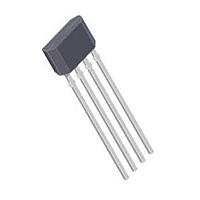
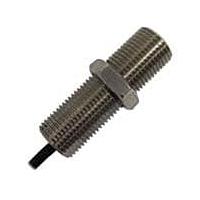
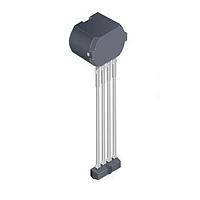
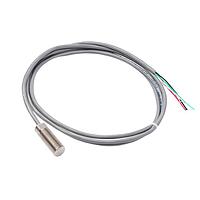
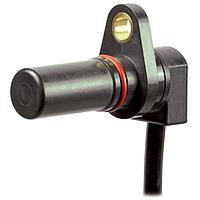
Speed Sensors
Reliable motion feedback is essential in rotating machinery, drive systems, industrial automation, and equipment safety. When a control system needs to detect shaft movement, confirm rotation, or calculate RPM in real time, speed sensors play a central role in turning mechanical motion into usable electrical signals for monitoring and control.
On this category page, you can explore sensor options commonly used for rotational detection in industrial and electronic systems. Whether the application involves motors, conveyors, fans, gear trains, or machine condition monitoring, selecting the right sensing principle helps improve measurement stability, response time, and integration with the wider control architecture.
Where speed sensors are used in industrial systems
Speed measurement is a practical requirement in many environments, from factory automation to embedded equipment. A sensor may be used to confirm that a shaft is turning, compare actual speed with a target setpoint, trigger alarms when rotation falls outside an acceptable range, or provide pulse feedback to a PLC, controller, or monitoring device.
In many installations, speed sensing is closely tied to machine protection and process consistency. For example, a loss-of-speed condition on conveyors, rollers, or cooling fans can indicate mechanical faults, overload, slippage, or drive issues. In more advanced systems, speed feedback also supports closed-loop control alongside other motion and position sensing technologies.
Common sensing principles and signal behavior
The right sensor type depends on the target material, required accuracy, installation space, environmental conditions, and the available input interface on the control side. In general, speed sensors detect repeated motion events such as passing gear teeth, magnets, slots, or rotating markers and convert them into pulses or switching signals that can be counted over time.
Different technologies may be preferred depending on the application. Magnetic sensing is widely used where non-contact detection and compact integration are important, while electromechanical or proximity-based approaches may fit simpler machine feedback tasks. In applications where rotational information is part of a broader machine health strategy, users may also review vibration monitoring sensors to complement speed-related diagnostics.
Key selection factors before choosing a sensor
A good selection process starts with the machine itself rather than the component alone. Consider the geometry of the rotating target, the expected speed range, the mounting distance, and whether the sensor must detect metal teeth, a magnetic target, or another repeating feature. Signal compatibility is also important, especially when the sensor output needs to interface with counters, PLC inputs, drives, or embedded electronics.
Environmental demands can be just as critical as electrical performance. Dust, oil, vibration, temperature variation, and electromagnetic noise may all affect long-term reliability. For this reason, buyers often compare housing style, connection method, sensing distance, switching behavior, and integration requirements before narrowing down the best fit for the machine design.
Manufacturer ecosystem in this category
This category includes solutions from established sensor and semiconductor manufacturers used across industrial and OEM applications. Brands such as Allegro MicroSystems, Honeywell, Infineon, NXP, SIEMENS, TE Connectivity, Amphenol Piher, and Carlo Gavazzi are often considered when engineers need dependable components for motion feedback, rotational sensing, and automation system integration.
Each manufacturer may approach speed detection from a different angle, ranging from semiconductor-based sensing elements to industrial-grade field devices suited for control cabinets, machinery, or embedded assemblies. That variety is useful for design teams that need to balance form factor, electrical interface, operating conditions, and sourcing preferences within one project.
How speed sensing fits into a broader motion feedback strategy
In real applications, rotational feedback rarely stands alone. A machine may use speed information together with position confirmation, directional logic, limit detection, or vibration analysis to create a more complete picture of operating condition. This is especially relevant in automated production lines and equipment where uptime depends on early fault detection and stable feedback signals.
For buyers comparing category options, it can be helpful to distinguish between simple speed detection and more advanced motion monitoring requirements. Some systems only need pulse output for RPM calculation, while others require signal quality suitable for continuous monitoring, synchronization, or event-based control logic. Defining that requirement early can reduce redesign work later.
Integration considerations for OEM and maintenance teams
From an engineering perspective, installation details matter as much as nominal sensor function. Mounting alignment, target repeatability, cable routing, connector choice, and input filtering all influence the final signal seen by the controller. In retrofit work, replacement speed sensors may also need to match the original sensing principle and switching behavior to avoid changes in the control program.
For OEM development, teams often review supplier consistency and product family coverage in addition to technical fit. That is where portfolios from companies such as Honeywell or TE Connectivity can be relevant, especially when one project combines sensing, connectivity, and broader control hardware requirements. The result is a more coherent bill of materials and easier long-term maintenance planning.
Choosing the right category path for your application
If your goal is direct rotational detection, this speed-focused selection is the right place to start. It is particularly suitable for applications involving motors, gears, rotating shafts, wheels, or movement verification where the core requirement is to measure or confirm motion rate. Buyers can then refine their choice according to mounting method, sensing technology, output type, and environmental constraints.
When the application extends beyond RPM or rotation confirmation, related categories may provide additional context. Some projects need broader machine condition monitoring, while others need different motion sensing methods for position, presence, or directional logic. Reviewing adjacent sensor families can help ensure the selected device matches the real operating requirement rather than only the initial symptom.
Find speed sensors that match real operating conditions
The most effective sensor choice is usually the one that fits the application environment, target geometry, and control interface with minimal compromise. A well-matched rotational sensing solution can improve process visibility, support stable automation performance, and reduce troubleshooting time in both new designs and replacement scenarios.
Use this category to compare available speed sensor options from recognized manufacturers and narrow your shortlist based on how the machine actually runs. If your system also depends on adjacent motion or condition data, exploring related sensor categories can help build a more complete and reliable sensing strategy.
Get exclusive volume discounts, bulk pricing updates, and new product alerts delivered directly to your inbox.
By subscribing, you agree to our Terms of Service and Privacy Policy.
Direct access to our certified experts