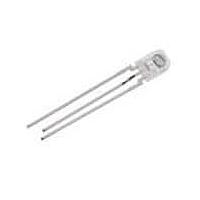
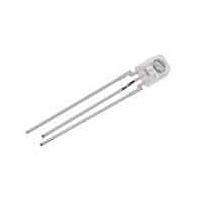
Photo IC Sensors
Accurate light-based detection is often the simplest way to add position feedback, object presence sensing, and motion reference points to compact electronic and electromechanical designs. In applications where fast response, small form factor, and reliable optical switching matter, Photo IC Sensors are a practical choice for designers working on automation equipment, office devices, consumer electronics, and embedded systems.
Within the broader optical sensing landscape, this category supports designs that need stable output behavior without moving into more complex vision or imaging systems. Depending on the sensing method, these components can be used to detect an interrupter flag, count rotation, identify reflective targets, or provide clean switching in tightly constrained spaces.
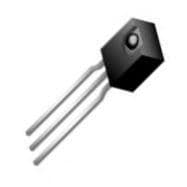
Where Photo IC Sensors fit in optical sensing design
Photo IC sensors combine optical emission and detection principles in compact packages intended for switching and detection tasks. In many designs, they are selected when engineers need a straightforward electrical output from an optical event, such as a blocked light path or reflected beam, without building a more complex discrete emitter-receiver circuit.
These devices are commonly considered for equipment that needs repeatable sensing over many cycles, including paper path detection, cover-open sensing, encoder reference points, media handling, and small mechanism control. If your application specifically uses a slotted mechanical geometry, it can also be helpful to compare this range with optical slot sensors to evaluate package style and mounting approach.
Common operating styles: transmissive and reflective sensing
One of the first selection points is the sensing method. Transmissive sensing works by placing an emitter and detector across a gap; when an object interrupts the light path, the output changes state. This approach is widely used for edge detection, slot encoding, paper movement monitoring, and position confirmation where a tab, vane, or wheel passes through the sensing area.
Reflective sensing detects light reflected from a nearby target surface instead of relying on beam interruption across a slot. This can be useful when the mechanical arrangement does not allow a flag to pass between emitter and detector. For example, the ams OSRAM SFH9206-5/6 Reflective Interrupter 6-Pin SMD illustrates a compact reflective format, while parts such as OMRON EESX1160W11 and OMRON EESA105 represent transmissive options suited to beam-interruption style detection.
Package, mounting, and integration considerations
Mechanical integration matters as much as electrical compatibility. In this category, you will find through-hole, screw-mount, and SMD options, each serving different assembly and product design needs. Through-hole versions are often preferred in robust industrial or legacy assemblies, while SMD types help reduce board space and support compact, high-volume production.
For example, OMRON EESX4340 and OMRON EESX3340 are SMD transmissive devices intended for compact PCB layouts, whereas OMRON EESX1096W11 and OMRON EESA401P2MID1 show how screw-mount styles can simplify alignment in equipment where sensor position must remain stable relative to moving parts. When optical transmission from a separate emitter is part of the architecture, browsing optical transmitters may also help during concept comparison.
How to choose the right device for your application
A practical selection process usually starts with the target object and the required detection behavior. Consider whether your design needs beam interruption or surface reflection, how much installation space is available, what output logic the control circuit expects, and whether the sensor will be mounted directly on a PCB or fixed to a frame.
Electrical and environmental conditions also matter. Many listed parts in this category operate with compact pin counts and are built for typical industrial or embedded temperature ranges, but the exact choice still depends on switching speed, emitter wavelength, available supply conditions, and the required collector or output interface. OMRON EESX1025, for instance, is notable for a photologic open-collector style output, while OMRON EESH3 and OMRON EESX1035 are examples of transmissive phototransistor-based options that may suit general presence or position sensing.
Representative products in this category
The available range includes several formats that help cover common design scenarios. OMRON EESY171 is a reflective device suited to close-range target detection, while OMRON EESX13302 offers an SMD transmissive format for compact assemblies. For applications needing a defined slot geometry and fast optical response, models such as OMRON EESA401P2MID1 or OMRON EESX1160W11 can be relevant starting points.
The category also includes variants with different output behavior, mounting styles, and package sizes, which is important when the sensing requirement is simple but the mechanical constraints are not. Rather than selecting only by part family, it is usually better to compare the sensing method, package style, and integration requirements against the actual motion path or target material in the end product.
Manufacturers and ecosystem context
This category is associated with established optical sensing suppliers including ams OSRAM, OMRON, onsemi, ROHM Semiconductor, Sharp, Lite-On, Panasonic Industrial Automation, and others listed for broader sourcing context. In the current featured products, OMRON is especially visible across transmissive and reflective interrupter-style devices, while ams OSRAM appears with compact reflective options.
For projects that extend beyond simple switching into measured light intensity or processed optical output, adjacent technologies may be worth reviewing. Depending on the sensing objective, engineers may also compare with light to digital converters or ambient light sensors when the goal is not just detection, but light-level measurement or environmental compensation.
Typical use cases across equipment design
Photo IC sensors are commonly integrated into printers, vending systems, compact automation assemblies, consumer devices, and control panels where a small optical sensor can reliably confirm movement or presence. They are also useful in mechanisms that need non-contact sensing to reduce wear compared with mechanical switches.
In industrial and OEM design workflows, these components are often chosen early because they help simplify both mechanical and electrical design decisions. A well-matched optical sensor can reduce alignment issues, improve signal consistency, and support repeatable operation in systems where timing and position feedback are essential.
Final selection guidance
Choosing the right Photo IC Sensor comes down to matching sensing principle, package style, output type, and installation constraints to the real operating conditions of the device you are building. Transmissive and reflective options each have clear advantages, and the best fit usually becomes obvious once the target geometry and switching logic are defined.
If you are narrowing down options, start with the intended detection method, then compare mounting style and signal behavior across the featured OMRON and ams OSRAM devices in this category. That approach makes it easier to find a sensor that fits both the mechanics of the system and the electrical interface of the final design.
Get exclusive volume discounts, bulk pricing updates, and new product alerts delivered directly to your inbox.
By subscribing, you agree to our Terms of Service and Privacy Policy.
Direct access to our certified experts