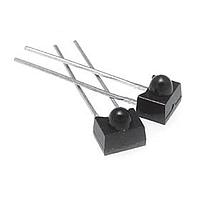
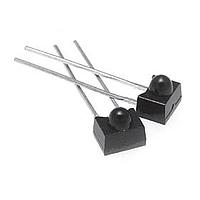
Phototransistors
In optical detection circuits, the sensing element often determines how quickly, reliably, and economically a design can respond to light. Phototransistors are widely used when engineers need a practical way to convert incident light into an amplified electrical signal for switching, detection, counting, or presence sensing across industrial and embedded applications.
Compared with simpler light-sensitive components, phototransistors are valued for their sensitivity and straightforward integration into control boards, sensor modules, and discrete receiver circuits. This category brings together parts suited to infrared and visible-light detection requirements, with options for through-hole and SMD assembly, different viewing angles, and operating ranges appropriate for many OEM and maintenance environments.
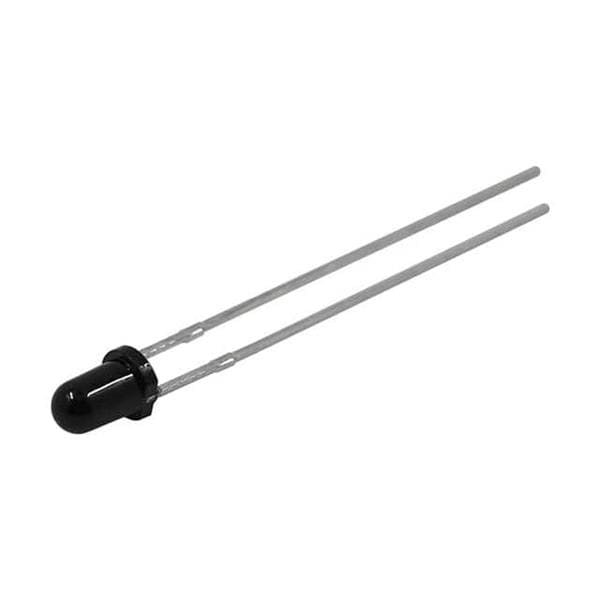
Where phototransistors are commonly used
These components are frequently selected for light detection tasks where a compact receiver is needed without the complexity of a more integrated sensing IC. Typical use cases include object detection, interrupter systems, position feedback, reflective sensing, simple counters, and IR receiver stages in industrial equipment.
They are also relevant in designs paired with emitters or complete optical assemblies. For example, a receiver may be combined with optical transmitters in through-beam or reflective arrangements, while systems requiring a fixed mechanical gap may be better served by optical slot sensors. This helps engineers choose between a discrete sensing element and a more integrated package based on board space, alignment requirements, and circuit complexity.
How to evaluate a phototransistor for your design
Selection usually starts with the optical source and expected signal level. Key considerations include peak wavelength compatibility, response time, package style, collector-emitter voltage, operating temperature range, and whether the application favors a narrow or wider reception angle. For many IR-based systems, wavelength matching between emitter and receiver has a direct impact on signal quality and immunity to unwanted ambient light.
Electrical and environmental limits matter just as much. Designers often compare dark current, power dissipation, collector current capability, and temperature tolerance to determine whether a part is suitable for factory equipment, automotive-adjacent electronics, or compact embedded products. Mounting style is another practical factor, especially when choosing between legacy through-hole layouts and higher-density SMT assemblies.
Product examples across package and sensing requirements
Several listed parts illustrate the variety available in this category. The ams OSRAM SFH 309-4 is an example of a silicon NPN phototransistor aimed at IR detection, while the SFH 300 FA-3/4 and SFH 313 FA-2/3 show how this family extends into different package sizes, electrical limits, and viewing characteristics. For compact layouts, the SFH 3400-Z points to the kind of chip-scale option designers may consider when space is constrained.
Fairchild devices such as the QSE114, QSB363, QSB363YR, QSB363ZR, and QSD123 represent another useful cross-section, including parts with infrared sensitivity, compact body sizes, and established use in general-purpose photo detection. For applications that benefit from top-view configuration or visible-ray filtering characteristics, the ROHM Semiconductor RPT-37PB3F is a notable example within the broader phototransistor landscape.
Infrared, visible filtering, and response characteristics
Many phototransistors in this category are optimized around infrared wavelengths such as 850 nm, 860 nm, 870 nm, 880 nm, or 940 nm. This makes them well suited to systems using IR emitters for non-contact sensing, especially where visible-light interference should be minimized. In practice, an IR-optimized receiver can improve consistency in equipment that relies on beam interruption, reflective targets, or enclosed optical paths.
Response time is another important parameter when moving from simple presence detection to faster switching or pulse-based measurement. Parts with rise and fall times in the microsecond range can support many common automation tasks, while beam angle and lens style influence how tightly the optical system can be controlled. If the application needs more processed output rather than an analog-like light response, engineers may also compare alternatives such as photo IC sensors for signal conditioning and logic integration.
Package style and integration into industrial electronics
From a mechanical and manufacturing perspective, package choice affects both prototyping and volume production. Through-hole phototransistors are still relevant in robust assemblies, maintenance replacement, and designs where mechanical stability or leaded mounting is preferred. SMD/SMT versions are better aligned with automated assembly and compact PCB layouts, especially in modern control modules and embedded optical subsystems.
Engineers should also consider how the receiver will sit relative to the light source and target surface. A narrow half-intensity angle can help with directional detection and rejection of stray light, while wider angles may be useful when alignment tolerance is more important than optical precision. In some applications, if the goal is measuring ambient illumination rather than detecting an emitter-based signal, a dedicated ambient light sensor may be a better fit than a standard phototransistor.
Manufacturer coverage and sourcing context
This category includes recognized names in optoelectronics and sensor components, with strong representation from ams OSRAM, Fairchild, and ROHM Semiconductor among the highlighted products. The broader manufacturer mix also includes established suppliers such as Broadcom, Honeywell, Lite-On, OMRON, onsemi, PANASONIC, and Sharp, giving buyers flexibility when aligning sourcing strategy with approved vendor lists or long-term maintenance needs.
For B2B purchasing teams, that range is useful because optical sensing projects often span prototyping, qualification, and replacement sourcing over extended product lifecycles. Rather than focusing only on one package or one vendor, it is often more practical to compare device form factor, spectral sensitivity, and operating range across multiple approved manufacturers.
Choosing the right part for a practical application
A good selection process starts with the sensing method: transmitted beam, reflective detection, proximity trigger, or general light response. From there, it becomes easier to narrow the field by wavelength, package type, response speed, and installation environment. Automotive-oriented or harsher environments may also call for closer attention to qualification status and temperature capability where available.
It is also worth checking whether the design needs a discrete receiver only, or a broader optical subsystem. In many cases, a phototransistor is the right choice because it offers simple integration, good sensitivity, and design flexibility. In others, a more integrated sensor family may reduce alignment effort or external circuitry. Reviewing the intended emitter, target material, housing geometry, and electrical interface early in the design phase usually leads to a more reliable result.
Conclusion
This range of phototransistor components supports a wide variety of optical detection tasks, from straightforward IR sensing circuits to more application-specific receiver arrangements. With options across wavelength bands, package formats, response times, and operating conditions, the category is well suited to engineers and procurement teams comparing parts for new designs, maintenance stock, or approved replacement sourcing.
When evaluating candidates, focus on the optical path, electrical interface, and environmental demands of the end application. That approach makes it easier to identify the right optical receiver for stable performance, manufacturability, and long-term component availability.
Get exclusive volume discounts, bulk pricing updates, and new product alerts delivered directly to your inbox.
By subscribing, you agree to our Terms of Service and Privacy Policy.
Direct access to our certified experts