Liquid Cold Plates, Liquid Cooling & Heat Pipes
When power density rises and available space shrinks, passive and liquid-assisted thermal solutions become an important part of system design. This category brings together Liquid Cold Plates, Liquid Cooling & Heat Pipes for engineers who need to move heat efficiently away from sensitive components, spread thermal load across a surface, or stabilize temperatures in compact assemblies.
These products are commonly used where conventional heatsinks alone may not be enough, especially in electronics, embedded systems, LED assemblies, medical devices, industrial equipment, and other high-reliability applications. Depending on the design goal, the right solution may focus on localized heat transport, surface temperature uniformity, or integration into a broader cooling architecture that also includes sensors and airflow management.
Where liquid cooling and heat pipe solutions fit
Heat pipes, vapor chambers, and liquid cold plates all address the same core challenge: removing heat from a source and transferring it to a location where it can be dissipated more effectively. The difference lies in how they move that heat and how they integrate into the final assembly.
Flattened heat pipes are often selected for compact electronics where designers need to carry heat away from processors, power components, or densely packed boards without adding excessive height. Liquid cold plates are typically used when heat must be transferred into a circulating fluid loop, while vapor chambers help spread heat across a wider surface area to reduce hot spots and improve contact with downstream cooling hardware.
Common product types in this category
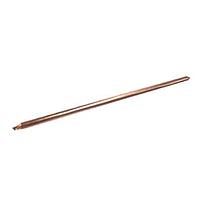
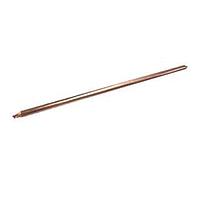
This range includes several thermal transport approaches that support different mechanical and thermal design priorities. For example, many listed parts from Wakefield Thermal are flattened, sintered copper heat pipes using water as the working fluid, making them suitable for applications where efficient passive heat transfer and low-profile integration are important.
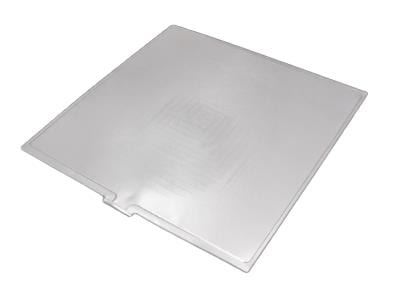
The category also includes solutions from Advanced Thermal Solutions, such as vapor chambers and tubed cold plates. A vapor chamber like ATS-VC-012-C1-R2 can help distribute heat across a broad footprint, while a part such as ATS-TCP-1018 shows how a compact cold plate can be used in systems that rely on liquid circulation for more controlled thermal performance.
Although these technologies are related, they are not interchangeable in every design. Selection usually depends on heat load, available mounting area, allowable thickness, orientation sensitivity, system airflow, and whether the project uses passive or pumped liquid cooling.
How to choose the right solution
A practical starting point is to define the thermal path clearly. If the challenge is moving heat from a concentrated source to a remote heatsink, a flattened heat pipe may be a strong fit. If the goal is to spread heat evenly under a module or across a larger contact surface, a vapor chamber may be more appropriate. If the system already includes a coolant loop, a liquid cold plate can provide direct and repeatable heat extraction.
Mechanical constraints matter just as much as thermal performance. Designers often compare thickness, width, length, material, and mounting geometry before narrowing the shortlist. In this category, for instance, Wakefield Thermal parts are available in different cross-sections and lengths, such as 126045, 126123, 126137, 126190, and 126705, which helps support different routing and packaging requirements without forcing a one-size-fits-all approach.
It is also important to think about the surrounding thermal ecosystem. In many assemblies, thermal transfer hardware works best when paired with temperature monitoring and protection devices such as board mount temperature sensors or thermal cutoffs, especially where overheating could affect performance, reliability, or safety margins.
Typical applications across industries
These products are relevant across a wide range of B2B applications. Embedded computing platforms, power conversion equipment, motor drives, LED lighting systems, imaging equipment, telecom hardware, and compact industrial control cabinets can all benefit from improved heat transport. In many of these designs, the thermal problem is not simply peak temperature, but long-term stability, hotspot reduction, and component life.
Cold plate technology is also common in systems where thermal loads are continuous and concentrated. The ATS-TCP-1018 example highlights suitability for areas such as automotive, medical, laser, LED, and industrial use, illustrating how liquid-based heat extraction can support applications with tighter operating windows. Where airflow is part of the design, these products may be used alongside fans and blowers to create a more balanced cooling strategy.
Representative products in this range
Several product examples help show the breadth of the category. Wakefield Thermal 125988, 126093, 126323, 126763, and 126773 reflect the variety available in flattened sintered copper heat pipes, with differing dimensions to support layout flexibility. These types of parts are often used where heat needs to be redirected from a crowded source area toward a larger heatsink or chassis surface.
On the liquid-assisted side, Advanced Thermal Solutions ATS-VC-012-C1-R2 offers a mesh vapor chamber format for thermal spreading, while ATS-TCP-1018 represents a compact 2-pass tubed cold plate design. Together, these examples show that this category serves both passive thermal transport and more structured liquid cooling architectures, rather than only one narrow cooling method.
Design considerations beyond the component itself
Choosing a thermal component is only one part of the design process. Interface quality, mounting pressure, contact flatness, coolant routing, and enclosure airflow can all influence real-world performance. A heat pipe or cold plate that looks suitable on paper may underperform if the surrounding thermal path is not engineered carefully.
Temperature sensing is often valuable during both prototyping and operation. For broader monitoring in machines, cabinets, and process environments, engineers may also evaluate industrial temperature sensors to verify thermal behavior under actual load conditions. This helps connect component selection with validation, maintenance, and system-level reliability.
Finding the right fit for your build
This category is intended for projects where standard airflow cooling needs reinforcement or where heat must be transported with more control and efficiency. Whether the requirement is a slim heat pipe for space-constrained electronics, a vapor chamber for heat spreading, or a cold plate for integration into a liquid loop, the available range supports multiple thermal design strategies.
Reviewing the heat source, mechanical envelope, and cooling method together usually leads to a better selection than focusing on any single parameter in isolation. With a mix of compact heat pipes, vapor chambers, and cold plates from established thermal solution providers, this category gives design teams a practical starting point for building a more reliable thermal management architecture.
Get exclusive volume discounts, bulk pricing updates, and new product alerts delivered directly to your inbox.
By subscribing, you agree to our Terms of Service and Privacy Policy.
Direct access to our certified experts