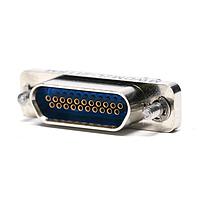
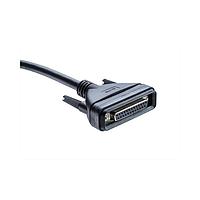
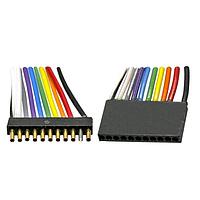
D-Sub Cables
Reliable point-to-point connectivity still matters in industrial control, instrumentation, and legacy communication systems. When equipment uses DB9, DB25, high-density D-Sub, MDR, or related interfaces, choosing the right D-Sub Cables helps maintain signal integrity, reduce installation issues, and support long service life in demanding environments.
This category brings together cable assemblies used for serial communication, data transfer, machine vision, and equipment interconnection across panel systems, test setups, and embedded platforms. From standard DB9 and DB25 serial leads to MDR-style assemblies for high-speed data paths, the range is suited to both replacement needs and new system builds.
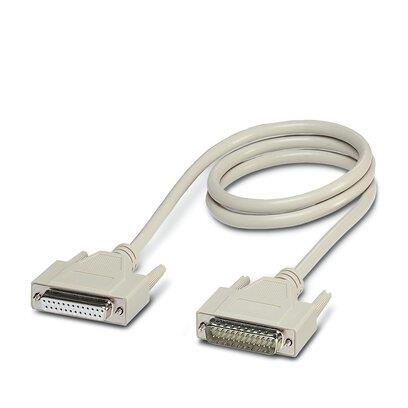
Where D-Sub cable assemblies are commonly used
D-Sub interfaces remain widely used in industrial electronics because they offer a familiar, mechanically secure connector format for many communication and I/O tasks. You will often find them in PLC panels, industrial PCs, serial device networks, measurement equipment, HMI systems, and machine subsystems that still depend on RS-232 or other established interfaces.
In addition to classic serial communication, this category also covers cable assemblies used in more specialized data links. MDR-based assemblies from 3M Electronic Solutions Division, for example, are relevant in applications such as Camera Link and other compact high-density interconnect requirements where connector size, pin count, and cable construction all influence performance.
Connector styles and cable types in this category
Although the category is grouped under D-Sub cables, the product mix includes more than one connector format that fits adjacent industrial communication needs. Standard DB9 and DB25 assemblies are common for serial links, device configuration, and interface extension, while high-density versions support systems requiring more contacts in a compact footprint.
There are also Mini D Ribbon and SDR-related cable assemblies used where higher-density connections are needed. Examples include the 3M Electronic Solutions Division 14T26-SZLB-300-0LC and 14T26-SZLB-500-0LC, both designed as MDR-to-MDR cable assemblies, as well as the 1SD26-R120-00C-300 SDR cable assembly. These products illustrate how the category serves both conventional D-Sub applications and more specialized interconnect ecosystems.
Typical selection criteria for industrial buyers
The right cable is usually defined by a small set of practical requirements: connector gender, pin count, cable length, shielding needs, and the electrical environment in which the assembly will operate. A DB25 male-to-female cable such as the Advantech BB-232AMF5 may suit serial extension tasks, while a DB9 male-to-male option like the Advantech BB-9PAMM6 is more appropriate for direct device-to-device serial connections.
Length also matters. Shorter assemblies can help reduce slack and improve cabinet organization, while longer runs are useful when equipment is distributed across panels or machine frames. In this category, examples range from compact 500 mm MDR assemblies to 7 m cable options, giving buyers flexibility for bench setups, retrofit work, and installed systems.
Examples of products available
Several representative products show the breadth of the category. For MDR-style connectivity, the 3M Electronic Solutions Division 14B26-SZ3B-200-03C offers a 2 m assembly, while the 14B26-SZLB-700-0LC extends that format to 7 m for installations that need extra routing distance. The 1W226-TZLB-050-0LC provides a short 500 mm MDR cable assembly suited to compact layouts.
For more traditional D-Sub requirements, HARTING appears in the category with products such as the 33562131000002 high-density D-Sub cable assembly and the 39509030011 male-to-male cable. Advantech also supports practical serial connectivity with items such as the BB-232AMF5 and BB-DGB9FT, the latter serving as a DB9 female to terminal block style connection accessory within a broader control wiring setup.
How D-Sub cables fit into a wider cabling ecosystem
In many projects, D-Sub cable assemblies are only one part of a larger interconnect plan. A machine or test station may combine serial links, computer I/O, and network infrastructure in the same installation. If your application also includes USB, peripheral, or interface leads for computing hardware, it can be useful to review related computer cable options as part of the overall design.
Likewise, systems that exchange data over networked controllers, industrial gateways, or Ethernet-enabled equipment may require a combination of D-Sub and networking cables. Looking at the complete cable path early helps avoid mismatched interfaces, unnecessary adapters, and maintenance complexity later.
What to check before ordering
Before selecting a cable assembly, confirm the connector type on both ends of the connection, including shell style, gender, and contact count. It is also important to verify whether the application needs a straight-through cable, an extension cable, or a specialized assembly matched to a specific device family. In industrial maintenance environments, this step helps prevent downtime caused by ordering a physically similar but electrically unsuitable cable.
Buyers should also consider routing conditions such as bend space, cabinet entry, and exposure to movement. Jacket material, conductor size, and overall construction can affect usability in real installations, even when the connector format is correct. For replacement work, matching the original interface standard is often just as important as matching length.
Choosing the right source for replacement and integration work
This category is useful for both MRO purchasing and engineering design. Maintenance teams can quickly identify replacement cables for installed serial or D-Sub-based equipment, while design engineers can compare connector formats and assembly styles for new control panels, embedded systems, or data acquisition setups.
Because the range includes products from established suppliers such as 3M Electronic Solutions Division, HARTING, and Advantech, buyers can navigate by interface style and application rather than relying only on part-number matching. That makes it easier to source a suitable cable for legacy hardware, machine vision links, or general industrial communication tasks.
Final considerations
Choosing D-Sub cable assemblies is ultimately about compatibility, installation practicality, and dependable operation in the target system. Whether the need is a DB9 serial lead, a DB25 extension, or an MDR-based assembly for high-density data transmission, reviewing connector layout, cable length, and application context will lead to a better fit.
For teams maintaining existing equipment or planning new builds, this category provides a focused starting point for selecting proven interconnect solutions without overcomplicating the purchasing process.
Get exclusive volume discounts, bulk pricing updates, and new product alerts delivered directly to your inbox.
By subscribing, you agree to our Terms of Service and Privacy Policy.
Direct access to our certified experts