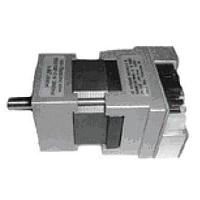
Stepper Motors
Precise incremental movement is essential in equipment that needs repeatable positioning, controlled indexing, and reliable synchronization. In those situations, Stepper Motors are widely used because they convert pulse signals into defined mechanical motion, making them a practical choice for automation, lab equipment, light-duty machinery, feeders, and compact motion systems.
For engineers, buyers, and system integrators, this category brings together stepper motor options used in motion control applications where accuracy, controllability, and simple drive architecture matter. Whether you are replacing an existing motor or building a new axis, the right selection depends on torque demand, step resolution, phase type, control method, and how the motor fits into the wider motion platform.
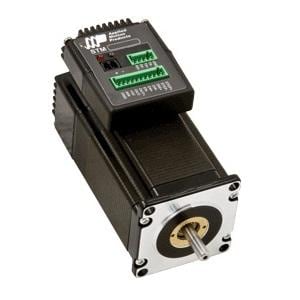
Where stepper motors fit in motion control
A stepper motor is typically chosen when a system needs repeatable movement in discrete increments rather than continuous free-running rotation. This makes it useful for indexing tables, dispensing systems, valve actuation, small conveyors, pick-and-place modules, and instrument positioning. Because motion is commanded in steps, designers can build straightforward control schemes for position and speed without always requiring complex feedback hardware.
In many machines, stepper motors sit between basic rotational drive solutions and more advanced servo-based motion platforms. If your application also involves broader rotary drive options, related products in AC and DC motors may be relevant for comparison, especially when evaluating speed range, torque profile, and control complexity.
Common selection factors for this category
The most important starting point is the mechanical load. Required holding torque, running torque, inertia, acceleration, and duty cycle all affect motor choice. Engineers also need to consider supply voltage, driver compatibility, mounting constraints, shaft interface, and whether the application benefits more from 2-phase or 5-phase stepper configurations.
Resolution and smoothness are also central to selection. Some applications prioritize fine positioning and lower vibration, while others simply need dependable indexing and easy control integration. In systems where the final motion quality depends on the full mechanism rather than the motor alone, it is also worth reviewing related actuators and positioners to ensure the motor and mechanics are matched appropriately.
Representative product options in this range
This category includes a mix of established stepper motor references and stepper-based sets suitable for different build requirements. Examples from Sanyo Denki include models such as the 103H5210-5140, 103H546-0410, SL5601-8241, and 103H5208-5140, along with step set references like FAM562D and the FAM581S-CX series. These examples are useful when looking for industrial-oriented motion components for positioning applications.
There are also compact and development-friendly options such as the Adafruit 918 Stepper Motors, which may be relevant in prototyping, educational setups, embedded projects, or lighter-duty motion tasks. The practical difference between these types of products is not just brand or part number, but how they fit the intended environment, drive electronics, and mechanical load profile.
Understanding motor types and system architecture
Not every stepper motor is applied in the same way. A standalone motor may be selected for custom machine design, while a stepper set can simplify integration where the motion package has already been defined around a specific architecture. In this category, several Sanyo Denki references are explicitly identified as 5-phase step sets, while others are presented as 2-phase stepping motors, giving buyers a useful starting point when aligning motor type with controller strategy.
The overall motion chain matters just as much as the motor itself. Couplings, leadscrews, guides, stages, and feedback devices can all influence final positioning quality. When a system also needs independent verification of movement or travel, complementary technologies such as motion and position sensors can help support closed-loop monitoring, limit detection, or process validation.
Applications that commonly use stepper motors
Discrete positioning is the main reason many OEMs and machine builders choose this motor category. Typical use cases include dosing and dispensing equipment, label handling, medical and laboratory instruments, semiconductor support equipment, small robotic modules, and compact manufacturing stations where repeatability matters more than very high dynamic performance.
Stepper motors are also common in systems that need controlled low-speed movement and stable stop positions. In these environments, the motor is often part of a larger assembly that may include guides, stages, cams, or indexing mechanisms. For applications where exact mechanical travel must be measured directly, related displacement transducers may also be part of the broader solution.
What to check before ordering
Before choosing a specific model, review the electrical and mechanical requirements of the application rather than selecting only by frame appearance or familiar brand name. Confirm the phase configuration, expected torque at operating speed, available drive electronics, mounting dimensions, shaft style, and the environment in which the motor will run. Thermal conditions and duty cycle can make a major difference in real-world performance.
It is also helpful to define whether you need a replacement part that matches an existing machine or a motor for a new design. For replacement work, compatibility with the installed driver and mechanics is often the priority. For new projects, designers usually have more freedom to optimize around control architecture, packaging space, and the level of positioning precision the machine actually needs.
Choosing with a system perspective
A stepper motor should be selected as part of a complete motion system, not as an isolated component. Drive method, commanded motion profile, inertia ratio, and load behavior all influence whether a given motor will operate smoothly and reliably. Looking at the application as a whole usually leads to a better result than comparing part numbers alone.
This category is intended to support that process by bringing together relevant stepper motor options from recognized suppliers, including industrial references from Sanyo Denki and more accessible development-oriented products such as Adafruit 918. If your project depends on repeatable positioning, predictable control, and practical integration into automation equipment, this range is a strong place to start narrowing down the right motor solution.
Get exclusive volume discounts, bulk pricing updates, and new product alerts delivered directly to your inbox.
By subscribing, you agree to our Terms of Service and Privacy Policy.
Direct access to our certified experts