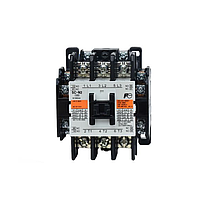
Contactors
Reliable motor control starts with choosing the right switching device for the load, duty cycle, and control method. In industrial panels, building systems, and machine automation, contactors are widely used to switch power circuits safely and repeatedly while keeping the control side separated from the main load.
This category brings together contactors for common electrical control tasks such as motor starting, load switching, and integration into automation cabinets. Whether you are replacing an existing unit or specifying components for a new panel, it helps to understand how contactors work, where they fit in the circuit, and what selection factors matter most in practice.
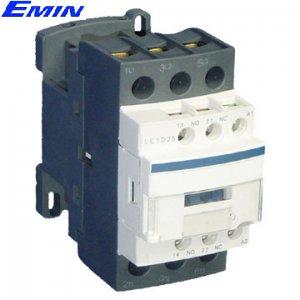
Where contactors are used in electrical control systems
A contactor is an electromechanical switching device designed to open and close power circuits under control of a lower-power signal. In many installations, it is used to switch three-phase motors, heating loads, lighting circuits, capacitor banks, or other equipment that requires frequent and dependable switching.
Because the control circuit and the power circuit are separated, contactors support safer remote operation and easier integration with PLCs, timers, pushbuttons, and other control devices. In broader control architectures, they are often installed alongside relays when different switching duties or signal-handling requirements exist within the same cabinet.
Main parts and operating principle
A typical contactor includes an electromagnetic coil, a magnetic core, main contacts, auxiliary contacts, and an arc-control structure. When the correct control voltage is applied to the coil, the magnetic system pulls the moving part into position, closing the main contacts and changing the state of any auxiliary contacts.
When coil power is removed, spring force returns the mechanism to its normal state and the contacts open. This simple operating principle is what makes contactors practical for repetitive switching tasks, especially in motor control circuits where predictable ON/OFF behavior is essential.
The auxiliary contacts are especially useful for interlocking, status feedback, and self-holding circuits. If your application needs expansion parts such as add-on auxiliaries or mounting-related items, it may also be useful to review contactor accessories for system compatibility.
Why contactors remain important in motor starting
In industrial environments, motors are rarely connected directly without a control layer. Contactors make it possible to switch motors remotely, combine them with overload protection, and build common starter arrangements such as direct-on-line or more advanced control schemes depending on the panel design.
They are also valued for their ability to handle frequent switching better than a standard manual switch in many applications. In machine building, HVAC panels, pumps, compressors, and process lines, the contactor often acts as the core power switching element between the control signal and the load.
For projects comparing different switching approaches, users sometimes also evaluate electromechanical contactors in related product groups to match control philosophy, current level, and installation style.
How to choose a suitable contactor
The first step is to define the load clearly. Motor loads, resistive loads, and other power applications can place very different demands on the switching device. Engineers usually check the operating voltage, rated current, control coil voltage, number of poles, and the need for auxiliary contacts before selecting a unit.
It is also important to consider the switching frequency, ambient conditions, and panel layout. A compact design may be helpful in crowded enclosures, while higher-duty applications may require a more robust frame size and suitable arc-handling capability. If the contactor is part of an automated machine, compatibility with the control logic and available supply voltage should be confirmed early in the design process.
In applications where actuation behavior or magnetic movement is part of a larger mechanism, related devices such as solenoids and actuators may also be relevant when reviewing the complete control system.
Representative product and manufacturer example
Within this category, users may encounter industrial solutions from ABB, a well-known manufacturer in electrical control and power switching. One example is the ABB AX205-30-11-80 Contactor, a model presented for higher-current motor control duties with auxiliary contacts included for control integration.
Rather than focusing only on a model code, it is better to evaluate whether the device fits the actual operating conditions of the system. Coil voltage, current range, contact arrangement, and installation context all affect whether a given product is appropriate for your panel or retrofit job.
Common application scenarios
Contactors are widely used in motor-driven systems such as pumps, fans, conveyors, compressors, and production machinery. They are also common in lighting control, power distribution panels, and compensation systems where repeated switching is needed under centralized or automated control.
In building and utility applications, they help isolate control logic from higher-power loads while supporting remote commands from controllers or protection devices. In manufacturing plants, they are often part of coordinated control circuits that include overload relays, timers, pushbuttons, and feedback contacts for safer operation.
Practical considerations for replacement or new design
When replacing an existing contactor, matching the electrical ratings is only one part of the job. The coil voltage, terminal layout, mounting dimensions, auxiliary contact configuration, and control sequence should also be checked to avoid wiring changes or unexpected behavior after installation.
For new designs, think about serviceability as well as electrical performance. A well-chosen contactor should support straightforward maintenance, clear wiring, and stable operation over time. If the panel may need future expansion, planning for accessory options and compatible control components can save effort later.
Final thoughts
Choosing the right contactor is mainly about matching the device to the load, control method, and operating environment rather than selecting by name alone. A well-specified unit can improve switching reliability, simplify control design, and support safer operation in industrial and commercial electrical systems.
As you review this category, compare the current rating, coil requirements, auxiliary contact needs, and installation constraints of your application. That approach will make it easier to identify a contactor that fits both the immediate task and the long-term requirements of the control panel.
Get exclusive volume discounts, bulk pricing updates, and new product alerts delivered directly to your inbox.
By subscribing, you agree to our Terms of Service and Privacy Policy.
Direct access to our certified experts