Protection Relays
Reliable machine operation often depends on how quickly the control panel can detect abnormal electrical conditions and disconnect a load before damage spreads. In motor circuits, distribution boards, and process equipment, protection relays play an important role in reducing downtime caused by overload, phase loss, voltage imbalance, or unstable supply conditions.
Protection relays in this category are used for monitoring electrical parameters and triggering a protective response when set limits are exceeded. They are commonly selected for pumps, compressors, conveyors, HVAC systems, production machinery, and other industrial loads where basic switching alone is not enough. For broader panel-building needs, users may also compare related devices in industrial relays and accessories.
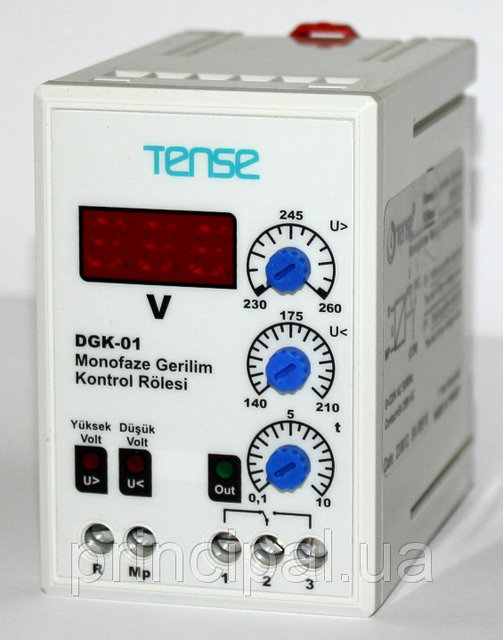
Where protection relays are typically used
These relays are commonly installed anywhere electrical faults can lead to equipment stress, nuisance trips, or costly shutdowns. In three-phase systems, they are often used to supervise line voltage, phase sequence, phase failure, and current conditions that may affect motors or other sensitive loads.
In single-phase applications, voltage monitoring relays help protect equipment from under-voltage and over-voltage events. This is useful in utility-fed control panels, small machinery, and building services systems where supply quality may fluctuate and connected devices need a controlled disconnect and reset behavior.
Main protection functions covered in this category
The range includes several relay types designed for different fault conditions. Overload relays are used to protect loads against excessive current over time, helping reduce thermal stress on motors and connected equipment. Digital versions also make it easier to adjust delay behavior and operating mode to match the application.
Voltage monitoring relays supervise under-voltage and over-voltage conditions in single-phase or three-phase networks. In many installations, this function is paired with delay settings so the relay can ignore short disturbances while still responding to genuine supply problems. For three-phase loads, phase sequence and asymmetry monitoring are also important to prevent reverse rotation or damage from missing and unbalanced phases.
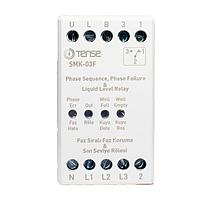
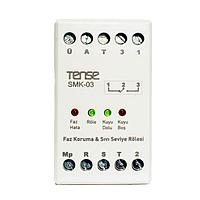
Phase failure relays are widely used in motor control circuits where a missing phase can quickly create overheating and unstable operation. In some systems, solid-state switching is also part of the control strategy, and users working on such designs may want to review Fotek options for related relay technologies.
Representative products in the range
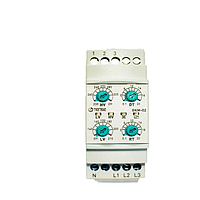
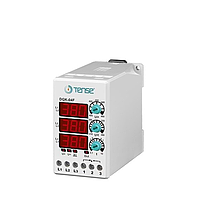
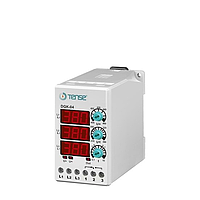
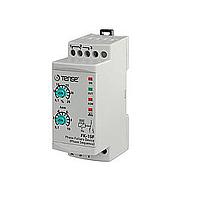
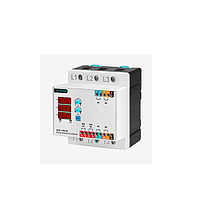
Several products in this category illustrate the different protection tasks found in industrial panels. The TENSE TRM series covers digital overload protection across multiple current ranges, including the TRM-30F for lower-current three-phase applications and higher-capacity models such as the TRM-100, TRM-200, and TRM-300 for larger loads. These devices are suited to applications where adjustable overload values and configurable trip timing are important.
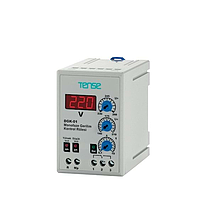
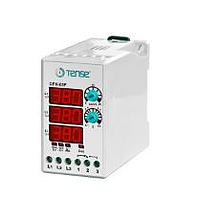
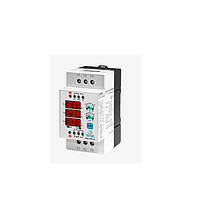
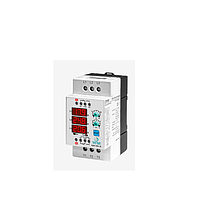
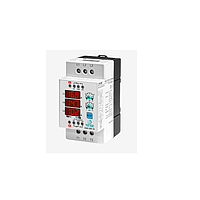
For voltage protection, the TENSE GKV and GKM/GKE series address both three-phase and monophase monitoring. Models such as the GKV-12 and GKV-12F are intended for three-phase over- and under-voltage supervision, while the GKM-11 and GKE-40 support single-phase voltage monitoring with adjustable thresholds and delay behavior.
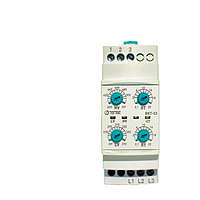
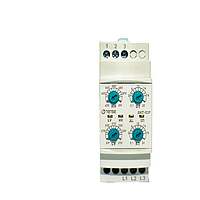
For phase supervision, the TENSE FKV-24F and FKV-03N provide dedicated monitoring of conditions associated with three-phase supply faults. The category also includes the Fotek SSR-40-DA solid state relay and the TENSE KON-TER-50 digital thermal contactor, which are relevant in control systems where protection and switching functions need to work together as part of the same panel architecture.
How to choose the right protection relay
The first step is to identify the fault you need to monitor: current overload, phase failure, voltage instability, or a combination of these. A relay intended for overload protection is selected differently from one intended for supply monitoring, so the electrical problem should define the relay type before comparing models.
Next, review the system configuration. Key points include whether the load is single-phase or three-phase, the expected current range, supply voltage, reset behavior, and whether adjustable delay is needed. In applications with frequent start-up transients, a relay with configurable waiting time can help avoid unnecessary trips while still protecting the load during sustained faults.
It is also important to consider installation context. Panel space, wiring method, coordination with contactors, and maintenance practices can influence model selection. When the design requires a wider ecosystem of control components, users may also explore brands such as OMRON or SCHNEIDER depending on overall panel standardization and sourcing preferences.
Why adjustable settings matter in industrial panels
Not every abnormal condition should trigger an immediate shutdown. Brief dips, inrush current, or temporary imbalance can occur during normal operation, especially in motor-driven systems. This is why many users prefer relays with adjustable thresholds and delay settings rather than fixed protection behavior.
Adjustable delay, reset timing, and operating mode help align the relay with real operating conditions. For example, a pump or fan motor may need a different response profile than a resistive heating load. Proper adjustment can improve continuity of operation while still maintaining protection against damaging faults.
Integration with contactors and control systems
In practice, protection relays are usually not standalone devices. They are integrated into a control circuit with contactors, breakers, alarms, and sometimes PLC or monitoring interfaces. Their output is used to interrupt the control path or signal a fault state when measured values move outside acceptable limits.
This makes protection relays valuable not only for equipment safety but also for troubleshooting and maintenance. LED indication, digital display, and visible status feedback can help technicians identify whether a shutdown was caused by overload, phase error, or voltage abnormality, reducing diagnosis time in the field.
Selection support for industrial buyers
For B2B procurement, the most useful comparison usually comes down to application fit rather than just model count. Current range, phase type, monitoring function, adjustment capability, and compatibility with the rest of the panel are the practical criteria that determine whether a relay will perform well in service.
This category brings together protection relay options for common industrial requirements, from motor overload monitoring to phase and voltage supervision. If you are selecting components for a new panel or replacing an existing unit, focusing on the protection function first will make it easier to narrow down the right device and reduce unnecessary redesign work.
A well-chosen relay helps protect equipment, stabilize operation, and support more predictable maintenance planning. Reviewing the fault condition, load characteristics, and required control logic is usually the clearest path to selecting a protection relay that fits the job.
Get exclusive volume discounts, bulk pricing updates, and new product alerts delivered directly to your inbox.
By subscribing, you agree to our Terms of Service and Privacy Policy.
Direct access to our certified experts