Thermal Relays
When motors operate under changing loads, heat buildup is often the first warning sign that something is wrong. A thermal relay helps prevent that heat from turning into winding damage, unplanned downtime, or repeated maintenance by disconnecting the circuit when overload conditions persist beyond a safe limit.
On this page, you can explore Thermal Relays used in motor protection circuits for industrial panels, machinery, pumps, fans, conveyors, and many other electrical drive applications. This category is especially relevant when you need dependable overload protection that works alongside contactors and other control devices rather than replacing them.
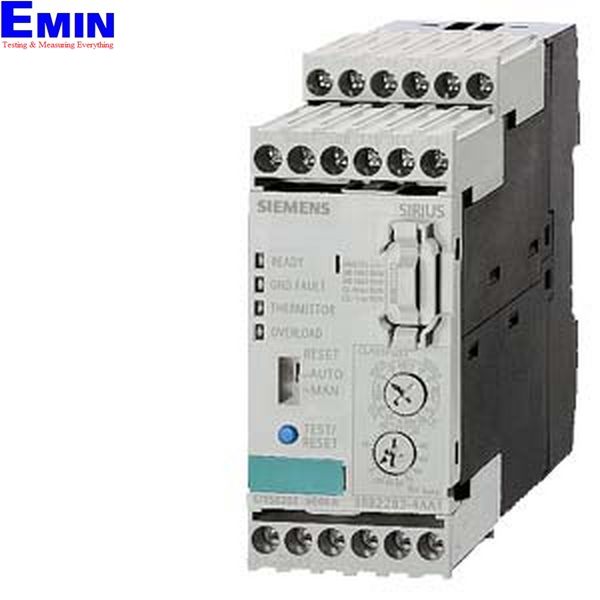
What thermal relays do in a motor control system
A thermal relay is designed to protect motors and similar loads against overload current over time. Instead of reacting instantly like a short-circuit protective device, it responds to the heating effect caused by sustained overcurrent. That makes it suitable for protecting equipment from conditions such as mechanical overload, phase imbalance effects, or prolonged high running current.
In practical installations, thermal relays are commonly paired with contactors. The contactor handles switching, while the relay monitors thermal stress and trips when the current remains above the adjustable setting for too long. If you are also comparing related control components, the broader range of industrial relays and accessories can help complete the panel design.
Thermal relays do not replace short-circuit protection
One of the most common misunderstandings is expecting thermal relays to protect against every electrical fault. In reality, they are intended for overload protection, not for interrupting severe fault current caused by a short circuit. For that reason, they are typically used together with upstream devices such as breakers or fuses in a coordinated protection scheme.
This distinction matters during selection. If a motor starter trips during normal operation, the cause may be overload, a low current setting, poor ventilation, elevated ambient temperature, or a mechanical issue on the machine. But if the concern is high fault current, the solution lies elsewhere in the protection chain, not in the thermal relay itself.
How to choose the right model
The most reliable starting point is the motor’s rated current, not only its power value. Current-based selection is more accurate because actual operating conditions, power factor, supply variation, and load profile all affect motor current. Once the current range is known, the relay should be matched to the application and to the compatible contactor frame where required.
For example, compact ranges may suit smaller motors, while larger frames are intended for heavier-duty circuits. In this category, examples include LS MT-12 variants for lower current ranges, LS MT-32 models for mid-range motor loads, and LS MT-150 versions for much higher current applications. For Schneider-based motor starters, models such as SCHNEIDER LRD21 Thermal Overload Relays and SCHNEIDER LRD350 illustrate adjustable thermal protection across different load levels.
Examples available in this category
Several products here show how thermal relays are used across a wide spread of current ratings. On the LS side, models such as LS MT-12 (2.5-4A), LS MT-12 (5-8A), LS MT-32 3P (7-10A), LS MT-32 (12-18A), LS ROLE-32A.9-13, and LS MT-63 (45-65A) cover applications from small motor starters to larger three-pole overload protection assemblies. Higher-load systems can also use LS MT-150 models in ranges such as 95-130A and 110-150A.
From LS and SCHNEIDER, the product mix reflects a familiar industrial requirement: selecting the relay by current window and contactor compatibility, not simply by brand preference. This category also includes related relay ecosystem items such as the LS RPZF4 Socket and the Coto Technology 0490-1688 relay-welding circuit, which are relevant in broader control and relay system design even though they serve different roles from motor overload relays.
Common reasons a thermal relay trips repeatedly
If a relay keeps tripping, the device may be doing exactly what it is supposed to do. Repeated trips often indicate that the current setting is too low, the motor is carrying more load than expected, or the installation environment is hotter than assumed. Loose terminations and oxidized connections can also create localized heating that affects protection behavior.
Another point to check is coordination with the contactor and the actual current measured under load. A motor may seem to run normally, yet still draw enough current over time to trigger the relay. In maintenance work, it is good practice to verify wiring, inspect terminals, confirm the set range, and review whether the machine’s duty cycle has changed since the relay was first installed.
Using thermal relays in different motor applications
Although many installations involve three-phase motors, thermal relays can also be applied in single-phase systems when the correct device and wiring method are used. The key is not to assume every three-pole relay behaves identically in every circuit. Proper connection, correct current setting, and awareness of the actual motor operating profile are all important for dependable protection.
For control engineers building a wider relay architecture, it can also be useful to compare other relay types used for signaling, isolation, or board-level switching. Categories such as reed relays or high frequency relay / RF relay serve very different purposes, which helps clarify why thermal relays remain a dedicated choice for overload protection in motor circuits.
What to review before ordering
Before selecting a relay, check a few practical points: motor full-load current, number of poles, the compatible contactor series, and the expected operating environment. Adjustable current range is especially important because it determines how precisely the relay can be set to the motor it protects. In the listed examples, that range can vary significantly, from a few amps in compact models to well over 100A in larger thermal overload relays.
It is also worth considering how the relay fits into the rest of the panel. Space constraints, reset method, wiring layout, and coordination with upstream protection all affect installation success. Choosing the correct relay from the beginning usually reduces nuisance tripping and improves long-term motor reliability.
Finding the right thermal relay for your system
This category is built for users who need practical overload protection options for motor starters and industrial control panels. Whether you are replacing an existing unit, sizing a relay for a new machine, or comparing current ranges across LS and Schneider products, the most important step is aligning the relay with real operating current and the surrounding control hardware.
A well-matched thermal relay helps protect equipment without overcomplicating the circuit. By reviewing current range, application conditions, and compatibility with the contactor assembly, you can narrow the selection to models that fit the job more accurately and support more stable motor operation over time.
Get exclusive volume discounts, bulk pricing updates, and new product alerts delivered directly to your inbox.
By subscribing, you agree to our Terms of Service and Privacy Policy.
Direct access to our certified experts