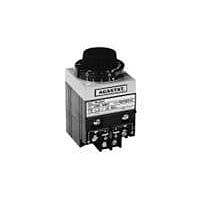
Time Delay Relay, Timer
Precise timing is often a small part of a control circuit, but it can have a major effect on how reliably a machine, panel, or process operates. In automation, power control, and equipment sequencing, a Time Delay Relay, Timer helps introduce intentional delays so loads switch in the correct order, signals are filtered, and short transient events do not trigger unwanted actions.
This category brings together timing relays used for delayed switching, interval control, off-delay behavior, flasher functions, and other common timing tasks in industrial and electro-mechanical systems. Whether the requirement is a simple fixed-delay relay or a more flexible multi-function timer, these devices are widely used in control panels, HVAC systems, motor circuits, lighting logic, and machine interlocks.
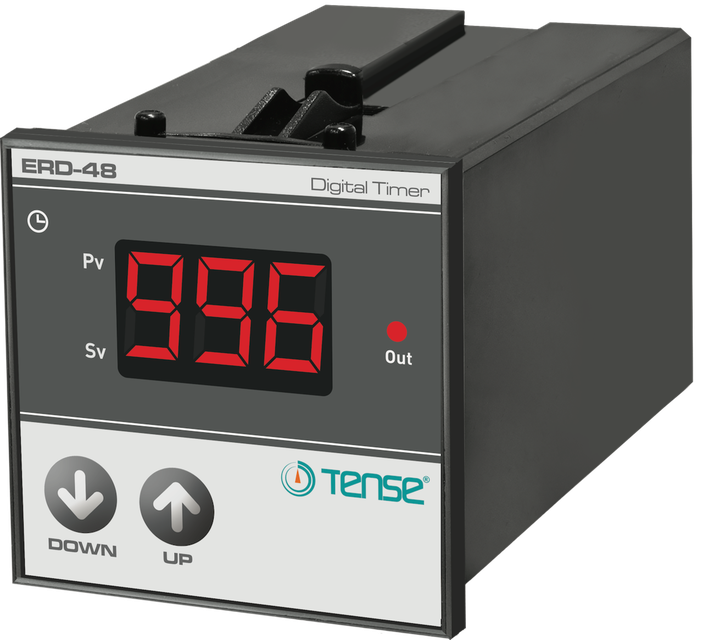
Where time delay relays are used
A timing relay is typically selected when a circuit needs more than just on/off switching. In many installations, equipment must wait a few seconds before starting, remain active for a defined interval, or turn off only after another condition has cleared. These functions help reduce nuisance trips, avoid simultaneous inrush currents, and improve overall sequence control.
In practical terms, time delay relays are often applied in motor starting logic, fan and pump run-on control, alarm delay circuits, lighting control, and process sequencing. If the application needs a broader range of switching components, it can also be useful to review industrial relays and accessories alongside timing devices.
Common timing functions and relay behavior
Not every timer relay works in the same way, so understanding the operating mode is usually more important than focusing on part numbers alone. Common behaviors include on-delay, where output changes after power or trigger is applied, and off-delay, where output remains active for a set time after the control signal is removed.
Other versions may provide interval timing, repeat cycle, or flasher operation. For example, the Eaton TRP07 is presented as a multi-function timing relay, which makes it relevant when one product family needs to support several timing modes. The Eaton TMR5P0524, described as an off-delay style relay, is a useful example of how timing devices can support controlled shutdown or delayed release in a panel design.
Some products in this category also serve specialized control roles. Littelfuse FS152-60 is listed as a flasher relay, while models such as Littelfuse KRDB422 and ORB24A25 illustrate delay-based relay control for timing-dependent switching events.
Key selection factors before you buy
The best starting point is the control logic of the application. Buyers typically need to confirm the required supply voltage, output contact arrangement, timing range, mounting or termination style, and switching current. A relay used for a short machine sequence may need a very different timing span from one used in ventilation purge cycles or delayed shutdown.
Contact form is another practical consideration. Depending on the circuit, you may need SPST, SPDT, DPDT, or higher contact configurations. For instance, the Eaton TRP07 is listed with SPDT contacts, while Eaton TMR5P0524 uses DPDT output, which may be better suited to applications requiring more than one switched path.
It is also important to check the physical interface. Some timing relays are built for octal sockets or plug-in bases, while others use quick-connect terminals or compact mounting formats. Products in this category show that both classic panel-friendly designs and more application-specific formats are available, including octal termination and quick-connect styles.
Examples from leading manufacturers
This category includes timing products from established relay and control brands such as Eaton, Littelfuse, Danaher, and TE Connectivity-related product lines. That variety is useful for B2B buyers who need to balance panel compatibility, preferred brand standards, and timing function requirements.
Danaher G1-405-676 is one example of a timer instrument suited to applications where timing is part of a broader control function. AMP Connectors - TE Connectivity 1755006-1 and DEUTSCH - TE Connectivity 1618398-6 show how timing relays can also appear in product families tied to specialized interconnect or ruggedized system environments. In parallel, Littelfuse offers several timing-related options in this category, from programmable timer styles such as KRPDD2121MB to application-specific control products like SC3120A and SC4120A.
Choosing between fixed-function and multi-function timers
For many OEM and maintenance teams, the main question is whether a fixed-function relay is enough or whether a multi-function timer will simplify inventory and future servicing. Fixed-function products are often preferred when the timing sequence is stable and the design should remain simple. They can reduce setup variation and make field replacement straightforward.
Multi-function timing relays can be advantageous when control requirements may change, or when one standard product is needed across several panel types. A model such as Eaton TRP07, identified as a 7-function timing relay, reflects this more flexible approach. In contrast, application-oriented relays like Littelfuse KRDB422 or ORB24A25 may be a better fit where a defined timing behavior is already known.
How timing relays fit into a wider relay system
Time delay relays are rarely selected in isolation. They usually work alongside contactors, overload protection, interface relays, sensors, and controller outputs. In some systems, a timing relay handles a simple standalone delay; in others, it supports a broader control chain by buffering, sequencing, or extending a signal.
When comparing related options, it may also help to distinguish timing relays from more specialized relay types. Applications involving vehicle electrical systems may be better served by automotive relays, while signal switching in sensitive electronics may point toward low signal PCB relays rather than power-oriented timer devices.
What to verify for replacement and retrofit projects
In MRO and retrofit work, matching the original timing mode is just as important as matching voltage or pin style. A relay with the wrong delay function can change machine behavior even if it physically fits the socket. Before ordering a replacement, verify the operating sequence, timing span, contact rating, and connection method used in the existing panel.
It is also helpful to review whether the old design used a plug-in timer, a socket-mounted relay, or a dedicated control module. Products in this category include examples with octal and 11-pin plug styles, quick-connect terminals, and compact relay formats, which shows why mechanical compatibility should be checked carefully during replacement planning.
Finding the right timing relay for your application
A good timing relay selection starts with the actual control objective: what must happen, after what delay, and under which trigger condition. Once that logic is clear, it becomes much easier to narrow down the suitable timing function, electrical rating, and mounting style from the available product range.
From simple delay-on or delay-off control to flasher and programmable timer functions, this category supports a wide range of industrial timing needs. If you are comparing options for a new build or replacing an existing relay in the field, focus first on timing function, supply compatibility, and contact arrangement to identify the most practical match.
Get exclusive volume discounts, bulk pricing updates, and new product alerts delivered directly to your inbox.
By subscribing, you agree to our Terms of Service and Privacy Policy.
Direct access to our certified experts