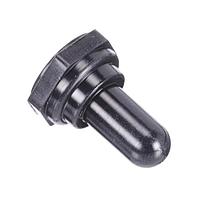
Switch Cases / Switch Covers
Protective housings and covers play a practical role in switch assemblies, especially where equipment is exposed to dust, accidental contact, vibration, or frequent operator use. In industrial panels, machine interfaces, pendant stations, and fused circuits, the right enclosure or cover helps maintain both device protection and a cleaner installation layout.
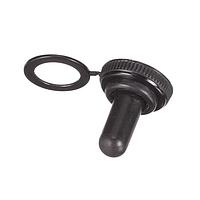
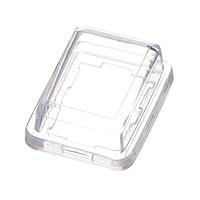
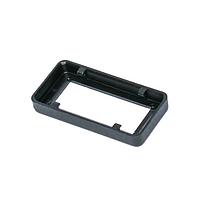
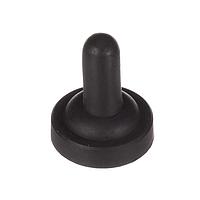
This category brings together Switch Cases / Switch Covers used to protect, mount, or complete switch-related assemblies. Depending on the application, these parts may serve as station enclosures for pushbuttons, pendant station housings, terminal covers, fuse covers, or accessory covers for specific switch families.

Where switch cases and covers are typically used
These accessories are commonly selected when the switching element itself is only one part of a larger control point. A pushbutton may need a metal enclosure for mounting on a machine, a pendant control may require a dedicated housing, and a fused disconnect or switch assembly may need a terminal or fuse cover to reduce exposure to live or sensitive parts.
In practice, switch cases and covers are used in control cabinets, operator stations, conveyor systems, lifting equipment, packaging lines, and general industrial automation environments. They are also relevant when retrofitting existing equipment, replacing damaged housings, or adapting a switch assembly to a more suitable mounting format.
Common product roles within this category
Not every item in this category performs the same function. Some products act as mounting enclosures for operator devices, while others are protective covers intended for a specific switch, fuse, or terminal arrangement. Understanding that difference helps avoid mismatched parts during maintenance or new equipment builds.
For example, SIEMENS P30EMS01 and P30EMS03P are enclosure options designed for 30 mm pushbutton switches, making them relevant where a standalone station is needed. SCHNEIDER XACB029534K117 and XACB049534K112 are pendant station enclosures, which are more suitable for suspended operator control applications. In a different use case, Eaton Bussmann SAMI-6N and SAMI-6I are fuse covers intended for non-indicating and indicating configurations respectively, while SCHNEIDER VLSC1P2 serves as a terminal cover for a defined current range.
How to choose the right switch case or cover
The first selection point is the intended switch family or device type. Many accessories in this category are designed for a specific series, size, or mounting standard rather than being universal parts. A housing for a 30 mm pushbutton station, for instance, should not be treated as interchangeable with a cover made for a limit switch or a terminal assembly.
Material is another key factor. Painted steel, stainless steel, plastic, and zinc each support different operating conditions and installation priorities. Where washdown resistance, corrosion concerns, or frequent cleaning matter, material choice becomes especially important. Where visibility, compactness, or lightweight installation is the priority, molded or lighter accessory styles may be more appropriate.
It is also important to check environmental exposure, mounting style, and compatibility with the existing switch hardware. Some protective accessories are designed around screw termination or screw mounting, while others are tied to a particular enclosure format. If the switching interface also requires operator-facing parts, related components such as switch actuators may need to be reviewed alongside the case or cover.
Examples of application-specific accessories
Several products in this category illustrate how specialized these components can be. The SIEMENS 3SE51303AA00 and 3SE52103AA00 LED covers are intended for defined position switch series and include enclosure-related protection characteristics such as IP66 and IP67 in the provided data. That makes them relevant in applications where sealing and visual indication are part of the device setup.
The Honeywell 3PA2 chassis micro switch packet represents another type of accessory role. Rather than acting as a general-purpose outer housing, it supports basic switch integration within a mechanical assembly. Banner Engineering EZA-ADE-2, described as an accessory access door for mechanical switches, is a good example of a support component that fits within the wider switch protection ecosystem without being the primary switching element itself.
Manufacturer ecosystems and compatibility considerations
Because switch covers and cases are often series-specific, buyers usually start with the installed brand or the switch line already in use. Within this category, brands such as SIEMENS and SCHNEIDER appear in practical enclosure and cover applications, while Eaton Bussmann is relevant where fuse-related protective accessories are needed.
Compatibility should always be checked against the intended switch family, enclosure format, and electrical assembly. A similar-looking cover may not align with the mounting points, opening dimensions, or operating hardware of another series. For broader maintenance planning, it can also be useful to review adjacent accessory groups such as switch hardware when mounting or replacement parts are needed as part of the same service task.
Why these accessories matter in industrial installations
A switch assembly is only as reliable as its installed protection and mechanical support. Cases and covers help reduce unintended contact, protect internal parts from dirt and impact, and improve the finished condition of control stations. In many facilities, they also contribute to maintenance efficiency because replacement housings and protective covers can restore an assembly without replacing the entire control device.
They also support cleaner standardization across equipment. Selecting consistent enclosures for pushbutton stations, pendant controls, and protective switch accessories can simplify panel design, spare parts planning, and field service. Where a project includes multiple user-interface elements, related finishing parts such as switch bezels and caps may also be relevant.
Selection tips for maintenance, retrofit, and OEM sourcing
For maintenance teams, the most efficient approach is to match the accessory to the original switch series and installation method first, then verify material and environmental suitability. For retrofit projects, it helps to evaluate whether the existing control point needs only a replacement cover or a different enclosure format altogether, especially when operator access or panel layout has changed.
For OEM and machine-building applications, choosing the right protective accessory early in the design stage can reduce rework later. Enclosure size, number of operator positions, exposure conditions, and service access all influence which case or cover is the better fit. That is particularly true for pendant stations and multi-hole pushbutton enclosures, where layout planning directly affects the final assembly.
Find the right fit for your switch assembly
This selection of switch cases and covers is intended to support real-world industrial control builds, repairs, and upgrades. Whether the requirement is a pushbutton station enclosure, a pendant housing, a fuse cover, a terminal cover, or a series-specific accessory for position or mechanical switches, the main priority is correct compatibility with the target device.
Review the intended switch family, mounting arrangement, and environmental demands before ordering. A well-matched case or cover helps complete the assembly properly, protect the switching components in service, and keep the control point easier to maintain over time.
Get exclusive volume discounts, bulk pricing updates, and new product alerts delivered directly to your inbox.
By subscribing, you agree to our Terms of Service and Privacy Policy.
Direct access to our certified experts