
IIoT & Wireless System Connectors
Reliable connectivity is often the difference between a system that simply collects data and one that can actually support day-to-day industrial decision-making. In IIoT environments, connectors and interface modules help bridge signals, devices, and communication layers so information can move cleanly from field instruments to control or monitoring platforms.
IIoT & Wireless System Connectors are used in applications where sensors, controllers, PCs, and distributed I/O need a practical connection path. Depending on the architecture, that may involve linking digital inputs to analog outputs, extending communications over serial networks, or integrating standalone equipment into a broader monitoring workflow.
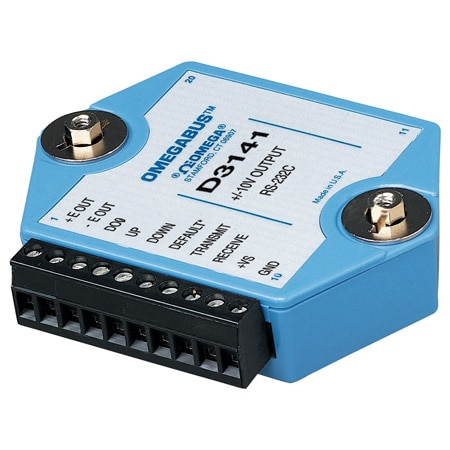
Why connectors and interface modules matter in IIoT systems
Industrial connectivity is not only about plugging devices together. A well-chosen connector or interface module helps maintain signal integrity, supports stable communication, and reduces the effort required to integrate legacy equipment with newer digital infrastructure.
In many facilities, machines and instruments still rely on serial communication, digital I/O, or analog control signals. This is where interface-oriented products from OMEGA can fit naturally, especially when a project needs compact modules that translate digital control into usable analog outputs for monitoring, actuation, or system interoperability.
Typical roles within a connected industrial architecture
Within an IIoT deployment, connectors and communication modules often sit between the edge device and the supervisory layer. They may connect a local controller to an analog device, allow a PC to communicate with remote points, or support distributed signal handling where direct wiring is not ideal.
These products are especially relevant when systems combine digital input, analog output, and serial communications such as RS232 or RS485. In that role, they help simplify integration between devices that do not share the same signal format, making them useful in test setups, machine retrofits, laboratory automation, and small distributed control tasks.
Examples of connector-related interface modules in this category
Several products in this category illustrate the kind of connectivity needs commonly found in industrial and technical environments. For example, the OMEGA D4252 OMEGABUS® PC to Analog Output Module supports RS485 communication with a 0 to 20 mA output, which can be useful where current-loop signaling is preferred for noise resistance and longer cable runs.
Where voltage output is required instead, models such as the OMEGA D4182 and OMEGA D4172 provide RS485-based digital-in to analog-out conversion with 0 to 10 Vdc or 0 to 5 Vdc output ranges. For installations that still use point-to-point serial communication, RS232 versions such as the OMEGA D4251 or OMEGA D4181 may be more suitable. These examples show that connector selection is closely tied to both the communication method and the signal type required by the connected device.
How to choose the right connector or interface option
The first step is to confirm the communication standard used by the equipment being connected. RS232 is typically chosen for shorter, direct connections, while RS485 is often better suited to multi-drop networks and longer communication distances. Matching the interface to the real installation layout helps avoid unnecessary converters and reduces commissioning complexity.
Next, look at the output signal your downstream device expects. Some applications require current output such as 0 to 20 mA, while others need voltage outputs like 0 to 1 Vdc, 0 to 5 Vdc, 0 to 10 Vdc, or bipolar ranges such as ± 5 Vdc and ± 10 Vdc. It is also worth checking factors such as supply voltage, isolation, operating temperature, and the number of input and output channels before final selection.
Integration considerations for industrial environments
In practice, connector performance depends not only on the module itself but also on wiring quality, grounding strategy, addressing, and overall network design. Serial modules used in distributed systems should be selected with attention to node count, communication distance, and how configuration data is retained during power cycles.
Many applications also benefit from programmable behavior on the output side. Features such as slew rate control, stable EEPROM-based settings, and screw-terminal wiring can help technicians deploy a module more efficiently and maintain repeatable behavior over time. In systems where analog values drive external devices, smooth output transitions may also help reduce unwanted process disturbances.
Relationship to broader IIoT and wireless systems
Connector and interface products are one part of a wider connectivity ecosystem. In many projects, they are used alongside smart wireless sensors that collect field data and with wireless transmitters that extend signal availability across the plant.
For users building a more complete connected environment, software also plays an important role in visualization, data handling, and device management. If your goal includes centralized monitoring or analytics, it may be useful to review IIoT software options that complement hardware connectivity at the edge.
Where these products are commonly used
This category is relevant across test benches, industrial automation panels, utility monitoring, process support systems, and lab-to-production environments. Any setup that needs to move from a digital command structure to an analog control signal can benefit from the right interface module and connector arrangement.
It is also a practical area for retrofit projects. When an existing machine or instrument must be connected to a PC or supervisory platform without redesigning the entire system, compact communication modules can provide a straightforward path to integration while preserving the original signal requirements of the equipment.
Final thoughts
Choosing IIoT and wireless system connectors is really about building dependable links between devices, signals, and communication layers. The best fit depends on your interface standard, output type, installation distance, and the operating conditions of the application.
Whether you are working with RS232 or RS485, current or voltage output, or a mix of digital and analog signals, this category helps support cleaner integration across modern industrial systems. Reviewing the available module options carefully can make system expansion, retrofit work, and long-term maintenance far more manageable.
Get exclusive volume discounts, bulk pricing updates, and new product alerts delivered directly to your inbox.
By subscribing, you agree to our Terms of Service and Privacy Policy.
Direct access to our certified experts