IIoT & Wireless Systems
Connecting field measurements to software, operators, and control decisions is now a practical requirement in many plants, labs, and OEM systems. Whether the goal is remote visibility, easier sensor deployment, or better use of process data, IIoT & Wireless Systems help bridge the gap between individual instruments and a more connected measurement environment.
In this category, the focus is on smart sensing and wireless-ready interfaces that support modern data collection workflows. These devices are especially useful when traditional wired installations are difficult, when flexible deployment matters, or when users want measurement points that can integrate with configuration tools, gateways, and higher-level monitoring platforms.
Where IIoT and wireless measurement systems fit
Industrial Internet of Things solutions are often adopted to make measurement data easier to access and act on. In practical terms, that can mean monitoring pressure, temperature, analog process signals, or pulse-based inputs without building a complex infrastructure around each sensing point. For maintenance teams and process engineers, this improves visibility while reducing the effort required to commission or reconfigure devices.
This category sits naturally alongside solutions such as data loggers and signal conditioners. In many installations, wireless and IIoT-capable devices are not a replacement for every conventional component, but part of a broader measurement architecture that includes acquisition, conditioning, and system-level analysis.
Typical device types in this category
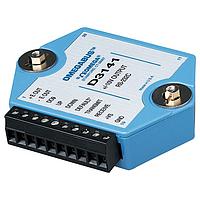
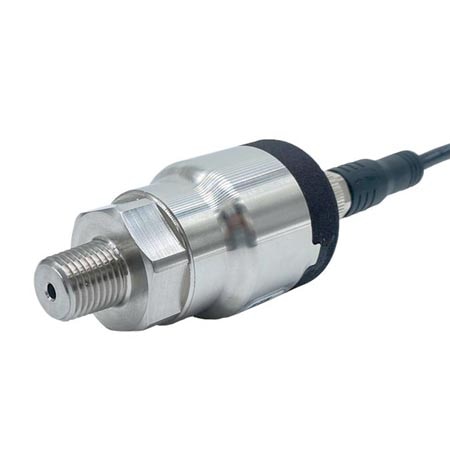
The product mix here supports a range of measurement tasks. Some devices act as smart pressure probes, combining pressure sensing with digital communication and configurable I/O. Others serve as modular interfaces for analog process current and voltage, digital counting and totalizing, or more specialized measurements such as heat flux.
There are also compact non-contact temperature options such as the OMEGA SP-002-1 and OMEGA SP-001-1 smart IR sensors. These are useful when direct contact measurement is not practical, for example on moving targets, hot surfaces, or applications where sensor mounting space is limited. In the same ecosystem, the OMEGA SP-014-1 provides an analog process interface, while the OMEGA SP-013-1 is suited to pulse and counter-style signals.
Examples from the OMEGA smart device ecosystem
OMEGA is a key manufacturer represented in this category, with devices designed for configurable, connected measurement points. The SP-006 Series smart pressure probes illustrate how IIoT-ready instrumentation can support different pressure ranges and measurement types while maintaining a compact format and multiple communication options. Within the listed range, examples include gauge models such as the OMEGA SP-006-1-C-001G, SP-006-1-C-050G, SP-006-1-C-100G, and SP-006-1-C-250G, as well as the SP-006-1-C-050A for absolute pressure measurement.
These products show an important advantage of modern wireless-ready instrumentation: the sensing element is only one part of the value. Configuration compatibility, digital I/O, and support for software-based setup can simplify deployment and ongoing maintenance. For users building scalable monitoring points, that combination is often just as important as the measurement range itself.
What to consider when selecting a system
A good starting point is the measurement type. Pressure, non-contact temperature, analog current or voltage, pulse inputs, and heat flux each place different demands on the sensing hardware and integration method. Choosing the right device begins with understanding both the process variable and how that data will be used afterward.
The next consideration is communication and configuration. Several products in this category support interfaces such as USB, Modbus, or wireless connectivity, and many are designed to work with configuration environments including SYNC software and gateway-based systems. If the application is part of a broader connected plant strategy, it is worth planning how field devices will interact with supervisory software, historians, or edge infrastructure such as wireless and IIoT system solutions.
Environmental conditions also matter. Enclosure rating, operating temperature range, humidity tolerance, and connection style can strongly affect device suitability in production areas, utility systems, pilot plants, or outdoor installations. For example, some devices listed here are rated up to IP67, which is important in harsher industrial environments.
Applications across process and industrial environments
IIoT and wireless systems are used in a wide range of scenarios. Smart pressure probes can support utility monitoring, pneumatic systems, fluid process lines, and test setups where pressure data needs to be observed locally and shared digitally. Analog process interfaces can help bring 4 to 20 mA or low-voltage signals into a connected architecture without redesigning the entire measurement chain.
Digital interface devices are also valuable in applications involving machine pulses, counters, duty cycle measurements, or simple event tracking. Non-contact IR sensors fit well in thermal monitoring tasks where surface temperature must be checked without touching the target. In more specialized energy or thermal studies, heat flux interfaces can provide another layer of process insight.
When long-term trending is part of the objective, these devices may complement temperature chart recorder solutions or broader monitoring platforms. The right setup depends on whether the priority is real-time access, alarm handling, historical analysis, or distributed measurement coverage.
Benefits of a modular, connected approach
One of the main strengths of this category is deployment flexibility. Instead of treating every sensor as a standalone endpoint, connected devices make it easier to standardize how measurements are captured, configured, and transferred. That can reduce wiring complexity, improve accessibility for diagnostics, and support incremental system expansion.
Another benefit is better alignment between instrumentation and digital operations. Smart field devices can help maintenance, engineering, and production teams work from the same measurement data more efficiently. In many cases, the result is not just convenience, but faster troubleshooting and more consistent use of process information across the organization.
Choosing the right products for your project
If you are comparing options in this category, focus on the practical fit between the measurement point and the surrounding system. Pressure range, gauge versus absolute measurement, field of view for IR sensing, number of channels, I/O needs, and enclosure protection all play a role. It is also important to confirm how the device will be powered, configured, and integrated into the larger monitoring workflow.
For compact connected sensing, the listed OMEGA smart devices provide examples of how wireless-ready and software-compatible instrumentation can support modern industrial measurement strategies. A well-chosen IIoT or wireless solution can improve data availability without forcing unnecessary complexity into the installation.
As plants and test environments continue moving toward more connected operations, this category offers useful building blocks for capturing field data in a smarter way. Reviewing the intended signal type, environment, and integration path will usually lead to a more reliable and scalable selection.
Get exclusive volume discounts, bulk pricing updates, and new product alerts delivered directly to your inbox.
By subscribing, you agree to our Terms of Service and Privacy Policy.
Direct access to our certified experts