
Smart Wireless Sensors
Real-time visibility at the sensing layer is often the difference between reactive maintenance and a more connected, data-driven operation. In many industrial environments, smart wireless sensors help bridge that gap by collecting process values close to the asset and making that data easier to configure, transmit, and use across monitoring or IIoT workflows.
This category brings together compact sensing and interface devices designed for modern industrial measurement tasks. Typical use cases include pressure monitoring, non-contact temperature measurement, pulse and counter signals, analog process inputs, and specialized measurements such as heat flux, with options that support USB, Modbus, and wireless data access depending on the device.
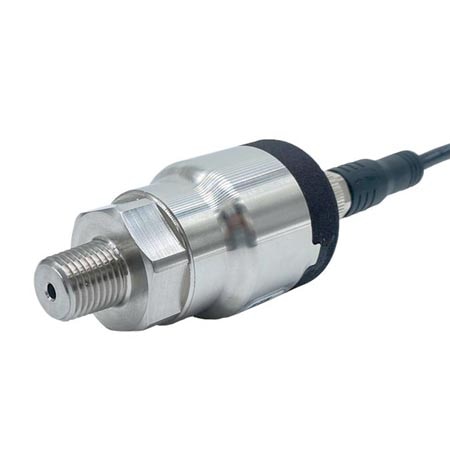
Where smart wireless sensing fits in industrial systems
Compared with conventional point sensors that require more fixed wiring and separate signal handling hardware, this type of device is built for easier deployment and digital integration. The value is not only in measurement accuracy, but also in faster setup, configurable I/O, and better access to data for diagnostics, trending, or remote supervision.
For plants moving toward connected operations, these devices can complement broader wireless transmitter strategies and simplify sensor-level data acquisition. They are especially useful when adding measurement points to existing equipment is difficult, costly, or disruptive.
Measurement types available in this category
The products highlighted here show that the category is broader than a single sensing principle. Pressure monitoring is represented by OMEGA SP-006 Series smart pressure probes, available in gauge and absolute variants with different full-scale ranges such as 1 psi, 50 psi, 100 psi, and 250 psi. This gives users flexibility when matching the sensor range to the process, which is critical for maintaining usable resolution and avoiding over-ranging.
Temperature measurement is also covered through compact smart IR sensors such as the OMEGA SP-001 and SP-002 series. These support non-contact temperature sensing across a wide temperature span and can be useful where direct contact is impractical, where moving targets are involved, or where the installation space is limited.
Beyond standard pressure and temperature points, the category also includes interface-oriented devices such as the OMEGA SP-014-1 analog process interface, SP-013-1 digital counter/totalizer interface, and SP-016-1 heat flux sensor interface. These modules extend the sensing ecosystem by bringing process current, voltage, pulse-related signals, and heat flux measurement into the same connected architecture.
Examples from the OMEGA smart sensing portfolio
OMEGA is the key manufacturer represented in this category, with devices designed for compact installation and software-based configuration. A practical example is the OMEGA SP-006-1-C-050G for low-range gauge pressure or the SP-006-1-C-250G for higher pressure applications. Both illustrate how the same product family can support different process demands while maintaining a consistent integration approach.
For non-contact thermal monitoring, models such as the OMEGA SP-002-1 and SP-001-1 provide smart IR sensing with different fields of view. In real applications, that matters because the optical ratio affects spot size and the distance from target, which in turn influences whether the measured temperature truly represents the area of interest.
Interface modules are equally important in a smart sensing deployment. The SP-014-1 can be considered when bringing analog process signals into a connected measurement layer, while the SP-013-1 is relevant for pulse, duty cycle, and counting tasks. The SP-016-1 supports heat flux sensing, which is useful where thermal transfer behavior must be monitored rather than temperature alone.
What to consider when selecting a smart wireless sensor
The first step is to define the measurement type and the real operating range. For pressure applications, choosing a sensor with an appropriate full-scale range helps preserve measurement quality. A low-pressure point may benefit from a 1 psi or 50 psi device, while more demanding hydraulic or pneumatic conditions may require a 100 psi or 250 psi version.
Next, consider the process connection, enclosure, and environmental exposure. In this category, examples include 1/4 in NPT male pressure connections and enclosure ratings such as IP50 or IP67, depending on the product. For washdown, dust, or harsher installation zones, enclosure suitability can be just as important as the sensor signal itself.
It is also worth evaluating how the device will be configured and how data will be consumed. Products in this range may support software configuration and multiple data interfaces, making them relevant not only for measurement but also for commissioning, diagnostics, and scalable deployment into IIoT software environments.
Why configuration and connectivity matter
A smart sensor does more than output a raw signal. In many projects, the real efficiency comes from the ability to configure behavior, adjust parameters, and integrate the device into a broader monitoring platform without extensive custom engineering. This is particularly useful when maintenance teams need to standardize commissioning across multiple assets or replicate setups across similar machines.
Several products in this category are compatible with OMEGA configuration and gateway software, which supports a more connected workflow from installation to ongoing monitoring. Depending on the model, communication options may include USB, Modbus, and wireless access, helping users balance local setup convenience with remote data availability.
Typical application scenarios
In process industries, smart pressure probes can be used for compressed air lines, fluid systems, test benches, or general equipment monitoring where pressure trends are more useful than occasional manual checks. The combination of digital I/O and connected data access can also support alarm handling or simple machine-state interaction at the edge.
Smart IR sensors are a practical fit for thermal observation of surfaces, rotating parts, moving products, or locations where contact probes are difficult to mount. In manufacturing or R&D environments, they can help monitor temperature without interrupting the process.
Interface modules broaden the category’s use in mixed-signal environments. A plant may already have analog outputs, pulse sources, or specialized heat flux sensors installed; modules such as the SP-014-1, SP-013-1, and SP-016-1 help bring those signals into a connected IIoT hardware ecosystem without redesigning the whole instrumentation layer.
How this category supports scalable IIoT deployment
One of the main advantages of a smart sensing approach is that it supports incremental modernization. Instead of replacing an entire control architecture at once, users can add connected sensing points where visibility is most needed first. That may be a pressure point on a utility line, a non-contact temperature check on a critical asset, or an interface module that captures an existing analog or digital signal.
This makes the category relevant for both new installations and retrofit projects. If your application needs a broader range of field-ready options, you may also want to explore related smart wireless sensor solutions on the site to compare sensing formats and integration paths within the same connected systems landscape.
Choosing the right device for your application
The right choice depends on how the measurement will be used: local indication, remote monitoring, data logging, condition tracking, or integration into a larger automation or IIoT platform. Range, sensing method, environmental resistance, configurable I/O, and software compatibility should all be reviewed together rather than in isolation.
For buyers, engineers, and system integrators, this category offers a practical starting point for building a more connected measurement layer. Whether the priority is pressure, non-contact temperature, analog process input, pulse monitoring, or heat flux, these devices help turn field signals into accessible operational data with a cleaner path to deployment and expansion.
Get exclusive volume discounts, bulk pricing updates, and new product alerts delivered directly to your inbox.
By subscribing, you agree to our Terms of Service and Privacy Policy.
Direct access to our certified experts