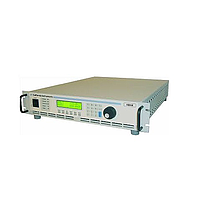
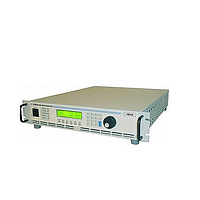
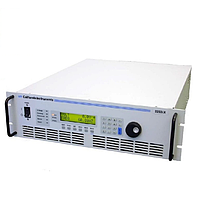
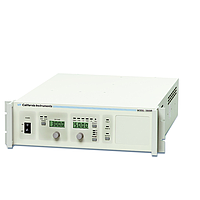
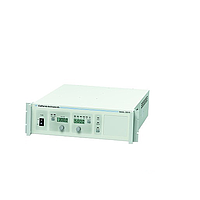
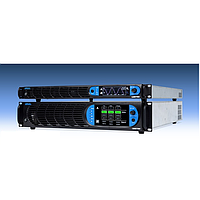
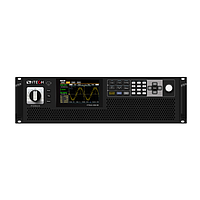
AC Power Supply
Stable AC output is essential when engineers need to validate products under different mains conditions, simulate line disturbances, or supply equipment with controlled voltage and frequency. In lab, service, and production environments, the right AC Power Supply helps reduce uncertainty during testing while giving better control over power quality, load behavior, and protection settings.
On this category page, you can explore programmable and basic AC sources used for electronics testing, power conversion validation, compliance-related work, and industrial equipment development. The range includes compact bench models, higher-power units, and supporting accessories for broader system integration.

Where AC power supplies are commonly used
Unlike a fixed wall outlet, an AC source allows users to set output voltage, frequency, and in some cases waveform behavior to match the real operating environment of the device under test. This is especially useful for evaluating products intended for global markets, where nominal input conditions may differ by region or application.
Typical use cases include testing power adapters, household appliances, motors, control boards, telecom equipment, and electronic assemblies that must operate reliably under varying line conditions. In more advanced setups, programmable sources are also used to reproduce dips, surges, frequency variation, and other power line disturbance scenarios.
Basic and programmable AC source options
Not every application requires the same level of control. Some users need a straightforward source for stable adjustable AC output, while others need programmable functions, stored test steps, remote control, and measurement feedback for automation or repeatable validation procedures.
For routine bench work, models such as the KEYSIGHT AC6801B, AC6802B, AC6803B, and AC6804B provide a practical path from lower to higher output power. For more configurable test needs, BKPRECISION models such as the 9801, 9803, 9805, 9832B, and 9833B extend capability with features suited to programmable operation, waveform handling, and interface-based control. If you are comparing broader source types for your setup, you can also review our high power DC supply options for systems that require controlled DC output instead of AC.
What to consider when selecting an AC power supply
The first step is matching the source to the electrical demands of the load. Output power, voltage range, current capability, and frequency range all affect whether the supply can start and operate the device correctly. Loads with high inrush current or dynamic behavior may require extra headroom beyond nominal steady-state consumption.
It is also important to consider whether you need AC only, or AC and DC modes in one instrument. Some applications benefit from built-in measurement functions for voltage, current, power, and frequency, while others need remote interfaces such as LAN, USB, RS232, or GPIB for rack integration and automated test workflows.
For engineers who need lower distortion and more controlled output quality, programmable AC power sources can be useful in design verification and pre-compliance work. If your project also involves regulated DC rails for boards, modules, or subassemblies, our adjustable DC power supply range may be a relevant companion category.
Examples from the available product range
For compact and general-purpose work, the BKPRECISION 9801 and 9803 cover lower to mid power requirements while supporting adjustable output across a wide voltage range. The BKPRECISION 9805 increases available power for more demanding single-phase applications and can fit situations where higher current handling is necessary.
When higher functionality is needed, the BKPRECISION 9832B and 9833B are representative examples of AC sources designed for programmable testing. These instruments support remote communication and broader waveform-related control, making them suitable for users who need repeatable sequences, disturbance simulation, or software-driven operation. You can also browse the wider BKPRECISION portfolio for related test and power products.
Within the KEYSIGHT range, the AC6801B through AC6804B provide a clear progression in output capacity, which helps when selecting a model based on load size rather than changing test methodology. This can simplify scaling from development benches to larger product validation environments. For users working with integrated test ecosystems, the KEYSIGHT brand page offers additional instrument categories that may complement AC source applications.
Interfaces, accessory options, and system integration
In many B2B environments, the AC source is not used as a stand-alone instrument. It may be part of an automated rack, endurance test station, incoming inspection bench, or product verification line. In these cases, communication interfaces become just as important as output performance because they influence how easily the source can be scripted, monitored, and synchronized with other instruments.
The listed range includes products with LAN, USB, RS232, and optional GPIB depending on model. There are also accessory items such as the GW INSTEK APS-001 GPIB Interface Card for APS-7000 series systems, which illustrates how interface expansion can support legacy automation environments or mixed-instrument control architectures.
Why waveform quality and protection matter
Output quality is a key consideration when testing equipment that is sensitive to supply distortion, unstable frequency, or abnormal events at the input stage. A source with controlled harmonic performance and stable regulation can help produce more consistent test results, especially when measuring efficiency, thermal behavior, or response to abnormal line conditions.
Protection functions are equally important. Features such as over-voltage, over-current, over-power, and over-temperature protection help safeguard both the power source and the connected load. This is particularly relevant in R&D and service environments where test conditions may change frequently and the risk of wiring errors or unexpected load behavior is higher.
Choosing the right category for your application
AC power supplies are typically selected when the device under test expects mains-like input or when engineers need to evaluate behavior under adjustable AC conditions. That can include consumer electronics, industrial controllers, lighting products, or power conversion stages that must be verified across different voltage and frequency combinations.
If your application is focused on fixed DC rails, battery simulation, or high-voltage bias rather than mains simulation, another power category may be more appropriate. The value of this category lies in giving users access to AC sources that support everything from basic voltage adjustment to more advanced programmable testing with measurement and communication capability.
Final thoughts
A suitable AC power supply does more than provide adjustable output. It helps create a controlled test environment, improves repeatability, and supports safer evaluation of products under real-world or simulated line conditions. By comparing power level, programmability, interface options, and protection features, you can narrow the selection to the models that best fit your lab, production, or industrial validation workflow.
Whether you need a simple bench unit or a more advanced programmable source, this category brings together practical options for controlled AC testing across a wide range of technical applications.
Get exclusive volume discounts, bulk pricing updates, and new product alerts delivered directly to your inbox.
By subscribing, you agree to our Terms of Service and Privacy Policy.
Direct access to our certified experts