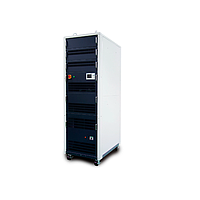
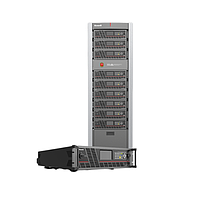
Bidirectional DC Power Supply
In modern power test environments, one instrument often needs to do more than simply source energy. Engineers may need to simulate battery charging, absorb returned power during discharge, and evaluate how devices behave under changing conditions. That is where a Bidirectional DC Power Supply becomes especially useful, combining source and sink operation in a single platform for development, validation, and production testing.
This category is intended for applications where controlled DC output and regenerative load behavior are both important. It is particularly relevant in battery-related testing, automotive electronics, energy storage, power conversion, and R&D setups that require flexible DC power handling without building a more complex source-plus-load arrangement.
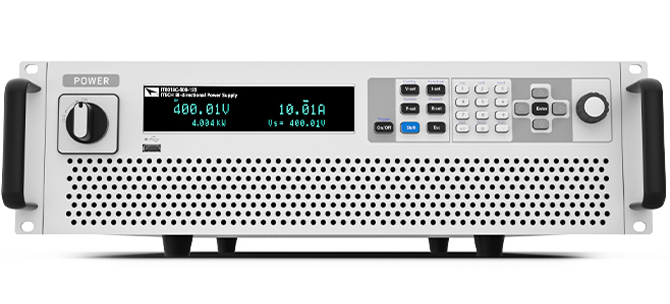
Why bidirectional operation matters in DC power testing
A conventional DC supply delivers power to the device under test, while a separate electronic load is typically required to absorb energy. A bidirectional power supply can do both. This makes it easier to simulate charging and discharging processes, test energy flow in both directions, and reduce bench complexity in labs or automated systems.
In practical terms, this architecture is valuable when testing battery packs, DC-DC converters, onboard chargers, inverters, and other power electronics that may return energy to the source. Compared with using standalone source and load equipment, bidirectional systems can improve test flexibility and help streamline rack integration.
Typical applications for this category
Bidirectional DC supplies are widely used in environments where energy transfer is dynamic rather than one-way. Common use cases include battery simulation, battery cycling, validation of regenerative systems, and functional testing of power conversion hardware. They are also relevant in EV component development, renewable energy research, and industrial DC bus testing.
When a project requires higher output capability for larger DUTs, users may also compare options in high power DC supply ranges above 1 kW. For applications focused primarily on elevated voltage rather than source-and-sink flexibility, it can also be helpful to review high voltage DC power supply solutions.
Representative product range in this category
The products highlighted here show how this category covers different voltage and current priorities while keeping the same core bidirectional concept. Within the listed models from EA Elektro-Automatik, users can find options suited to high-voltage testing as well as lower-voltage, higher-current work.
For example, the EA Elektro-Automatik PSB 11500-06 provides up to 1500 V and 3000 W, which is relevant for test setups that need high DC voltage with moderate current. At the other end of the range, models such as the PSB 10080-120 or PSB 10060-120 are more aligned with lower-voltage, high-current scenarios, making them suitable for applications where current demand is the primary design factor.
Mid-range configurations also support a broad range of development tasks. Models such as the PSB 10500-20, PSB 10360-30, and PSB 10200-50 illustrate the trade-off between voltage and current at the same general power class, helping engineers select a platform that better matches their DUT operating window.
How to choose the right bidirectional DC power supply
The first step is to define the DUT voltage, current, and power envelope across all intended test conditions. In this category, available examples range from low-voltage high-current profiles, such as 60 V or 80 V with up to 120 A, through mid-range options like 200 V, 360 V, and 500 V, up to high-voltage models reaching 750 V, 1000 V, and 1500 V.
It is also important to think about whether your application emphasizes charging, discharging, battery emulation, or regenerative test behavior. A unit that works well for a battery simulator may be selected differently from one used primarily for converter characterization or automated end-of-line testing. Resistance mode range, sinking capability at low voltage, and output behavior under transient conditions can all influence the final choice.
If your requirement is mainly straightforward sourcing rather than bidirectional energy flow, a simpler platform from the adjustable DC power supply category may be more appropriate for lower-power work. That comparison can help narrow the selection based on test complexity and budget scope.
Key technical considerations beyond headline ratings
Voltage, current, and wattage are only part of the selection process. In engineering labs and automated test systems, ripple and noise, output capacitance, isolation level, and efficiency can affect repeatability and DUT behavior. These characteristics become more important when testing sensitive electronics, control systems, or high-voltage components.
Another important point is the usable operating area during source and sink transitions. For example, some models in this range are designed to maintain regenerative functionality from low minimum voltages while offering broad resistance ranges for simulation-related tasks. This is especially relevant when the test sequence includes charge-discharge cycling, power ramping, or emulation of changing battery conditions.
Brand landscape and system context
This category sits within a broader ecosystem of programmable power equipment used in electronics, automotive, industrial energy, and test automation. Well-known manufacturers in this space include KEYSIGHT, CHROMA, EA Elektro-Automatik, GW INSTEK, iKAM, and KEISOKU GIKEN, each serving different levels of integration, performance focus, and application depth.
For users building complete AC and DC test benches, bidirectional DC units are often considered alongside AC sources, programmable loads, and conventional DC supplies. If your project also involves front-end AC simulation or power input testing, it may be useful to review the available AC power supply options as part of a broader system design.
Where these instruments fit best
A bidirectional platform is usually most valuable when one test station must cover multiple energy-flow scenarios with minimal hardware duplication. It can simplify fixture design, reduce switching between instruments, and support more realistic battery and power-conversion test methods. This makes the category especially relevant for R&D teams, validation labs, university research, and production environments working with advanced power electronics.
Within this category, the available examples show a practical spread from 1500 W to 3000 W classes and from 60 V up to 1500 V. That range allows engineers to align instrument selection with the electrical profile of the DUT rather than relying on an oversized or poorly matched supply.
Final considerations
Choosing the right Bidirectional DC Power Supply depends on more than nominal power. The best fit usually comes from matching voltage range, current capability, sink behavior, and control requirements to the real test workflow. Whether the focus is battery simulation, regenerative power testing, or flexible DC source-and-load operation in one chassis, this category provides a strong starting point for evaluating suitable platforms.
Review the listed models carefully based on your target operating range and application method. A well-matched instrument can make daily testing more efficient, improve result consistency, and support future expansion as power test requirements become more demanding.
Get exclusive volume discounts, bulk pricing updates, and new product alerts delivered directly to your inbox.
By subscribing, you agree to our Terms of Service and Privacy Policy.
Direct access to our certified experts