High Power DC Supply >1KW
When a test setup, production line, or automation bench needs more than a small bench supply can deliver, power architecture becomes a design decision rather than a simple accessory choice. This is where High Power DC Supply >1KW equipment is used: to provide stable, programmable DC output for demanding loads, higher current draw, wider voltage ranges, and repeatable system-level testing.
In this category, the focus is on programmable and industrial-grade DC sources that support engineering, validation, ATE, battery-related workflows, power electronics development, and long-duration load conditions. Compared with lower-power units, these supplies are selected not only by voltage and current, but also by control interfaces, response behavior, protection features, and how well they fit into automated environments.
Where high power DC supplies are typically used
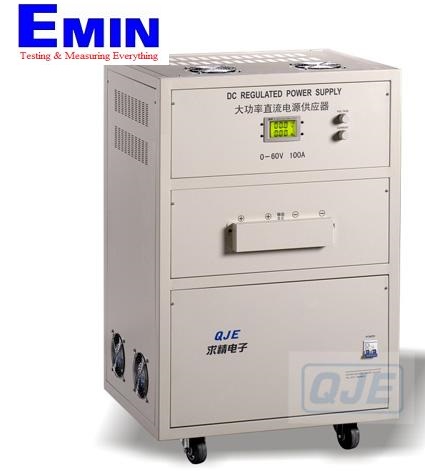
Supplies above 1 kW are common in laboratories and industrial environments where the DUT requires meaningful power delivery under controlled conditions. Typical use cases include motor drives, DC-DC converter testing, inverter development, battery simulation support, burn-in, component validation, and rack-based automated test systems.
They are also relevant when output flexibility matters. A system may need low voltage with very high current in one project, then higher voltage at lower current in another. For teams comparing broader power-source options, it can also be useful to review related categories such as AC power supply solutions or more specialized high-voltage DC sources depending on the application.
What matters when choosing a supply above 1 kW
The first step is matching the required operating window: output voltage, output current, and total power. In real projects, that means checking not only the maximum rating but also how the supply behaves across the usable range. Many engineers now prefer multi-range or autoranging designs because they provide better flexibility across different test points without oversizing the system too aggressively.
Control and integration are just as important. In engineering and ATE environments, USB, LAN, RS232, GPIB, and analog programming can be critical for remote operation, scripting, and closed-loop control. Protection features such as OVP, OCP, OPP, and thermal protection also matter because a high power source interacts with expensive loads, prototype hardware, and safety procedures.
Dynamic performance should not be overlooked. Rise time, command response time, regulation, ripple, and readback accuracy influence whether a supply is suitable for characterization work or primarily for stable power delivery. For lower-power and more compact tasks, some users may instead compare with adjustable DC power supplies up to 1 kW.
Examples from this category
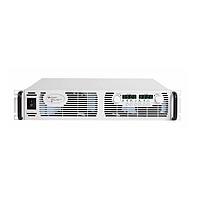
This category includes a wide spread of output profiles. For applications that need high current at relatively low voltage, the KEYSIGHT N8731A provides 8 V, 400 A, and 3200 W, which is the type of configuration often considered for busbar, low-voltage rail, or power conversion testing. At the other end, models such as the BKPRECISION MR3K160120 and MR25080 address higher-voltage programmable DC sourcing with substantial power capacity.
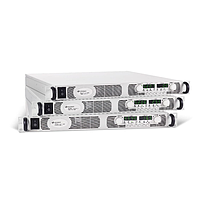
For more demanding automated environments, BKPRECISION HMR series units illustrate the role of ATE system DC power supplies. Models such as the HMR195027, HMR500108, HMR130023, HMR65046, and HMR80360 show how the same power platform can be configured for very different voltage/current combinations while maintaining programmable operation and system integration features.
Where very high output capability is required, the BKPRECISION HPS20K1500, HPS20K1500-400V, HPS20K800, and HPS20K800-400V represent the kind of 20 kW class sources used in advanced power electronics, high-voltage validation, and large-scale test setups. These examples are useful because they show how this category spans everything from a few kilowatts to much larger programmable platforms.
Power range, voltage range, and system flexibility
Choosing the right unit is rarely about selecting the highest wattage available. In many projects, the better question is how much flexibility the source gives across the full test plan. A supply with a broad operating envelope can reduce the number of instruments needed across prototype, validation, and production-support stages.
This is why autorange behavior is so valuable in high power platforms. It allows the available power to be used more efficiently across different voltage and current combinations, making one system suitable for multiple DUT types. That can be especially helpful for integrators and R&D teams who support changing product requirements over time.
Input power conditions also matter in facility planning. Some high power models are designed for single-phase operation, while larger systems may require three-phase input such as 208 VAC or 400 VAC variants. That distinction affects installation, rack design, and deployment in labs versus factory environments.
Manufacturers commonly considered in this segment
Buyers in the >1 kW range often compare brands based on application fit, interface options, service expectations, and platform depth rather than headline specifications alone. In this category, commonly referenced manufacturers include KEYSIGHT and BKPRECISION, both represented by products suited to programmable system power applications.
Depending on the project, teams may also evaluate ranges from Advanced Energy, Ametek, CHROMA, KEITHLEY, TDK-Lambda, EA Elektro-Automatik, GW INSTEK, and KIKUSUI. The right choice often depends on whether the priority is compact rack integration, high voltage, high current, automation connectivity, or broader test system compatibility.
How to narrow down the right model
A practical selection process usually starts with the load profile. Define nominal voltage, peak current, startup behavior, transient demand, and whether the application needs continuous or intermittent full-power operation. Then check the required control method, local versus remote operation, and whether the supply must be integrated into software-driven workflows.
It is also worth reviewing the physical and electrical installation details early. High power DC supplies can differ significantly in form factor, cooling strategy, AC input requirement, and scalability for parallel operation. For rack-based systems, this can be as important as the output rating itself.
If the application is mainly fixed-output conversion rather than programmable test work, a different product family may be more appropriate, such as a fixed-output AC-DC power supply. For programmable sourcing, however, this category is the right place to compare flexible, higher-capacity DC platforms.
Why this category is useful for engineering and procurement teams
A well-structured high power DC source category helps both technical and purchasing stakeholders. Engineers can compare output architecture, interface options, and protection behavior, while procurement teams can shortlist platforms aligned with facility power, budget scope, and supplier preferences.
Because projects in power electronics, EV-related development, industrial automation, and system testing often evolve, selecting a scalable supply platform can reduce future redesign effort. Looking across the available models in this category makes it easier to identify whether the need is for higher voltage, higher current, or a more automation-ready programmable source.
For teams building or upgrading serious test capability, high power programmable DC supplies are foundational equipment rather than optional accessories. The best fit usually comes from balancing output range, control features, protection, installation constraints, and long-term application flexibility across the real operating conditions of the job.
Get exclusive volume discounts, bulk pricing updates, and new product alerts delivered directly to your inbox.
By subscribing, you agree to our Terms of Service and Privacy Policy.
Direct access to our certified experts