EMI and EMC Test System
Reliable electromagnetic compatibility work starts with the ability to reproduce disturbances in a controlled way and observe how equipment responds. For engineering teams involved in product validation, telecom infrastructure, industrial electronics, or component qualification, an EMI and EMC Test System helps turn abstract compliance requirements into repeatable lab procedures.
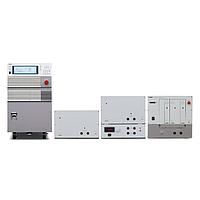
This category brings together instruments used for surge, impulse, and noise immunity testing, along with related tools that support fault analysis and disturbance injection. The focus is not only on generating high-voltage or fast transient events, but also on selecting the right setup for the device under test, the test waveform, and the level of control required in a professional environment.
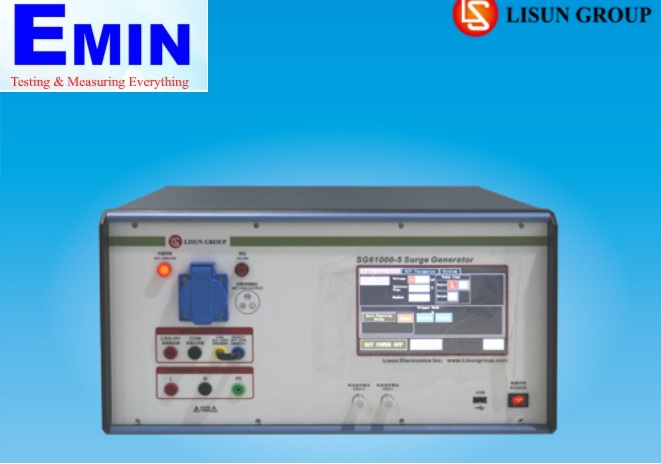
Where EMI and EMC test systems fit in practical measurement workflows
In telecom and electronic measurement environments, EMC testing is closely tied to product robustness. Engineers need to verify whether a device can tolerate surge events, impulse disturbances, or injected noise without malfunction, degraded performance, or damage. That is especially important for interfaces exposed to power lines, communication lines, and field wiring.
Many labs combine these systems with broader measurement tools such as signal analyzers to evaluate response behavior after a disturbance. In development stages, they may also be used alongside a signal generator when building more complete test and troubleshooting workflows.
Main device groups in this category
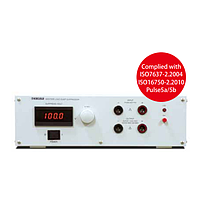
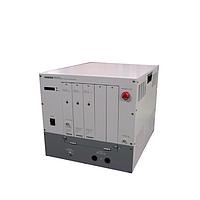
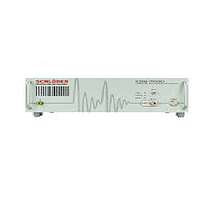
This category covers several types of immunity and impulse test equipment. One major group is high-voltage pulse and surge generators designed to produce standardized waveforms used in dielectric and EMC testing. These instruments are relevant when a product must be evaluated against transient overvoltage conditions or surge-related standards.
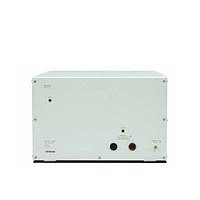
Another group includes impulse noise simulators and probe-based injection tools for localized or system-level disturbance testing. These are useful when the goal is to reproduce fast electrical noise, investigate coupling paths, or examine sensitive sections of a circuit without building a fully custom setup.
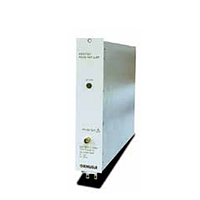
A smaller but still relevant group in this selection includes surge wave receivers. These devices play a different role from generators: they support detection and pinpointing tasks in cable or fault-related applications where acoustic and magnetic sensing can help locate surge events in the field.
Representative systems and what they are used for
For high-voltage impulse generation, HILO-test appears in this category with several models covering different voltage ranges and waveform needs. Examples such as the HILO-test PG 10-1000 and PG 20-4000 are suited to applications where controlled surge pulses, selectable polarity, and repeatable triggering are important for component or system-level verification.
The HILO-test IPG series, including the IPG 620, IPG 1050, and IPG 1272, illustrates another common requirement in EMC work: generating defined impulse voltages with built-in monitoring and programmable repetition behavior. For users comparing setups, the practical difference often comes down to the required voltage level, stored energy, and whether the DUT needs a more compact bench-top solution or a broader test range.
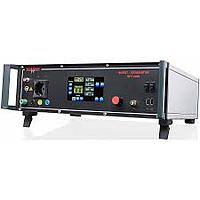
For fast noise injection, the NOISEKEN INS-S420 Impulse Noise Simulator provides an example of a configurable system intended for controlled pulse output and test sequence handling. The NOISEKEN H2-B EMS Probe Kit, by contrast, is better understood as a supporting tool for localized disturbance application, helping engineers examine susceptibility at specific circuit areas during debugging or pre-compliance work.
How to choose the right EMI and EMC test system
The first selection factor is the type of disturbance you need to reproduce. A lab focused on surge immunity will look for pulse generators with suitable waveform definitions, voltage range, polarity options, and trigger control. If the objective is board-level investigation or troubleshooting of sensitive electronics, a probe kit or impulse noise simulator may be more appropriate than a larger surge platform.
The second factor is the DUT environment. Some systems are intended for bench evaluation of components and subassemblies, while others are more suitable for testing complete equipment, interfaces, or installation-related scenarios. Power capacity, coupling method, output impedance, and synchronization options all influence whether the system matches your actual test plan.
Third, consider how the instrument fits into your documentation and lab workflow. Features such as touch-panel control, USB report handling, external trigger capability, and remote control interfaces can make a meaningful difference in production validation or repeated qualification programs. For teams managing multiple test benches, these operational details matter almost as much as the waveform itself.
Why waveform control and repeatability matter
In EMC work, generating “a high voltage pulse” is not enough. The rise time, pulse width, repetition interval, and synchronization behavior all affect test validity and reproducibility. That is why professional systems emphasize programmable output conditions and stable timing, especially when tests must be repeated across several products or documented for internal quality procedures.
For example, systems in this category include solutions for 1.2/50 µs and 10/700 µs impulse testing, as well as configurable impulse noise simulation. These waveform families are relevant because different interfaces and standards call for different disturbance profiles. Choosing an instrument with the right waveform capability helps avoid under-testing or building a setup that is too broad for the actual requirement.
Field-oriented tools and specialized use cases
Not every application in this category is limited to a bench EMC lab. The MOTWANE SLE 90, SLE 90+, and SLE 200-Z surge wave receivers show how related equipment can support cable fault location and surge event detection through combined acoustic and magnetic sensing. In these cases, the value lies in signal interpretation and pinpointing rather than in disturbance generation.
This makes the category useful for organizations that work across both laboratory and utility-style diagnostic tasks. A manufacturer, test house, or maintenance team may need one set of tools for immunity verification and another for locating faults or surge-related issues in installed systems.
Related measurement categories worth exploring
Depending on your application, EMC work often overlaps with RF, telecom, and transmission-line measurements. When a project involves cable quality, matching, or antenna-related verification, a cable and antenna analyzer may be relevant alongside impulse and immunity tools.
For telecom-specific troubleshooting and line evaluation, engineers may also need telephone network testers in the same broader measurement ecosystem. Looking at these adjacent categories can help build a more complete test setup rather than treating EMC in isolation.
Choosing with application clarity in mind
The most effective way to compare products in this category is to start from the test objective: surge immunity, impulse voltage generation, localized noise injection, or field surge detection. From there, voltage range, waveform type, triggering method, and handling features become much easier to evaluate in context.
If you are building or upgrading a professional test environment, this EMI and EMC selection offers options ranging from compact probe-based tools to advanced high-voltage pulse generators and specialized surge wave receivers. A well-matched system supports more dependable troubleshooting, clearer validation results, and a more efficient path from development to qualification.
Get exclusive volume discounts, bulk pricing updates, and new product alerts delivered directly to your inbox.
By subscribing, you agree to our Terms of Service and Privacy Policy.
Direct access to our certified experts