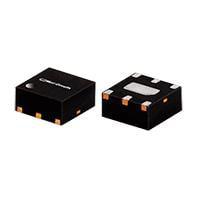
Attenuator
Controlling RF and microwave signal level is a basic requirement in telecom test setups, lab characterization, and system integration. Whether the goal is to protect sensitive instrument inputs, simulate line loss, balance a signal chain, or improve repeatability during measurement, attenuators are one of the most practical components to keep in the signal path toolkit.
On this category page, you can explore attenuator solutions used in telecommunication and electronic measurement environments, with a focus on dependable level control across a wide frequency range. The available selection is especially relevant for engineers working with coaxial RF paths, bench testing, automated measurement systems, and high-frequency development work.

Why attenuators matter in RF and telecom measurement
An attenuator reduces signal amplitude by a defined amount while helping preserve impedance conditions in the signal chain. In practical use, this helps avoid overdriving receivers, spectrum analyzers, power sensors, or other measurement equipment, while also making level adjustments more predictable during calibration and troubleshooting.
In telecom environments, attenuation is often used to emulate transmission loss, match test conditions, and stabilize measurements when multiple devices are connected. It also works alongside other passive RF building blocks such as isolators and power dividers, depending on how the signal needs to be routed, split, or protected.
Common attenuator types in this category
This category includes both manual attenuators and programmable step attenuators. The right choice depends mainly on how often attenuation settings need to change and whether those changes are part of an automated test process.
Manual models are typically preferred for fixed bench setups, service work, and applications where the attenuation level is adjusted occasionally by the operator. Programmable step attenuators are more suitable for repeatable switching between predefined levels, especially in automated RF test racks, characterization workflows, and production verification environments.
When designing a broader RF path, engineers may also need related interconnect components such as RF adapters or signal routing elements like telecommunication switches to complete the setup.
Key selection criteria before choosing an attenuator
The first parameter most buyers check is frequency range. An attenuator must support the full operating band of the signal path, not just the nominal test frequency. In this category, example products span from low-frequency and broadband DC applications up to microwave ranges as high as 50 GHz.
The second consideration is attenuation range and step size. Some applications need coarse adjustment, such as 10 dB steps over a wide range, while others require finer 1 dB or 5 dB resolution for tighter level control. This decision affects how precisely you can reproduce test conditions and how quickly you can set up measurement sequences.
Insertion loss at the 0 dB state, where applicable, is also important because it influences total path loss even before intentional attenuation is added. Input power handling should be reviewed as well, especially in transmitter testing or any setup where peak power levels may approach the component’s limit.
Examples from the available product range
Several KEYSIGHT attenuators in this category illustrate how attenuation solutions can be matched to different RF tasks. For high-frequency applications, the KEYSIGHT 84908M programmable step attenuator supports operation from DC to 50 GHz with attenuation steps suited to automated microwave testing. For users working below that range but still needing broad coverage, the KEYSIGHT 84907L and KEYSIGHT 8497K provide alternative combinations of bandwidth and attenuation span.
If the requirement is focused on 18 GHz or below, options such as the KEYSIGHT 8495H and KEYSIGHT 8494H show how programmable models can address either wider attenuation ranges or finer step resolution. In manual configurations, products like the KEYSIGHT 8496B, KEYSIGHT 8494B, KEYSIGHT 8496A, and KEYSIGHT 8495A are more aligned with hands-on adjustment in stable test setups.
These examples are useful because they show that attenuator selection is rarely about one specification alone. Frequency coverage, attenuation range, control method, insertion loss, and power tolerance all need to be evaluated together in the context of the intended measurement chain.
Manual vs programmable attenuators
Manual attenuators are often the simplest choice when the signal level only needs occasional adjustment. They are straightforward to integrate into a bench setup and are commonly used during development, maintenance, and general-purpose lab work where convenience and direct operator control are more important than remote automation.
Programmable step attenuators become more valuable when attenuation changes must be fast, repeatable, and scriptable. In automated testing, they reduce setup variability and support controlled switching between signal conditions without physically reconfiguring the RF path. This is especially useful in telecom device validation, production screening, and long test sequences where consistency matters.
Typical applications in telecom and electronic measurement
Attenuators are widely used in receiver sensitivity testing, signal conditioning before instrument inputs, and calibration routines that require defined level reduction. They are also helpful when simulating cable losses or network path attenuation to understand how a device behaves under more realistic field conditions.
In mixed RF systems, attenuation can improve measurement stability by reducing mismatch effects and preventing overload in downstream equipment. Combined with suitable switching, dividing, or interface components, attenuators help create a more controlled and repeatable environment for evaluating transmitters, receivers, modules, and broadband communication hardware.
For buyers comparing brands, this category context also aligns with broader RF and microwave portfolios from manufacturers such as Amphenol, Analog Devices, ANRITSU, Broadcom, Hirose Electric, Mini-Circuits, and KEYSIGHT, depending on the wider system architecture and sourcing preference.
How to choose the right model for your setup
Start by defining the highest operating frequency, the maximum power expected at the attenuator input, and whether the attenuation must be adjustable during operation. From there, narrow the options by required attenuation span and resolution. A system that only needs occasional coarse reduction has different priorities than an automated rack that cycles through multiple test levels.
It is also worth checking the role of the attenuator within the full RF path. If it sits close to sensitive instrumentation, insertion loss and repeatability may be more critical. If it is part of a broader network with splitters, switching, and interconnect transitions, overall compatibility and signal-chain behavior become just as important as the attenuator’s headline specifications.
Final considerations
A well-chosen attenuator helps make RF and telecom measurements safer, more repeatable, and easier to control. Instead of viewing it as a simple passive accessory, it is better understood as a core signal-management component that supports instrument protection, level conditioning, and realistic test simulation.
Use this category to compare manual and programmable options based on frequency range, attenuation steps, loss, and power handling, then select the model that best fits your measurement workflow. For technical teams building complete signal paths, attenuators are often a small component with a very large impact on measurement quality.
Get exclusive volume discounts, bulk pricing updates, and new product alerts delivered directly to your inbox.
By subscribing, you agree to our Terms of Service and Privacy Policy.
Direct access to our certified experts