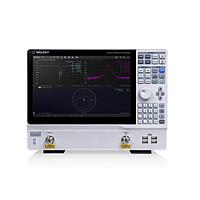
Vector network analyzer
Reliable RF and microwave measurements depend on more than checking amplitude alone. When matching, transmission behavior, and phase response all matter, a Vector network analyzer becomes one of the most important instruments in the lab, production line, and field test workflow. It is widely used across telecom, wireless, broadcast, antenna development, filter tuning, and general high-frequency electronics testing.
On this page, you can explore vector network analyzers for different frequency ranges, port configurations, and measurement tasks, along with calibration tools that help improve measurement confidence. The category is especially relevant for engineers working with RF components, microwave assemblies, interconnects, antennas, and impedance-sensitive circuits.
What a vector network analyzer measures
A VNA measures how a device under test responds to a known RF stimulus. Instead of showing only signal level, it characterizes both magnitude and phase, which allows the instrument to calculate reflection and transmission behavior across frequency. In practical terms, this helps engineers understand impedance matching, insertion loss, return loss, and overall network performance.
This makes a VNA useful for evaluating filters, cables, antennas, amplifiers, resonators, matching networks, and other RF or microwave devices. Compared with a basic meter or simpler RF test tool, it provides a much more complete view of how energy is reflected or transferred between ports under real operating frequencies.
Typical applications in telecom and RF development
In telecom and wireless systems, many performance problems come from mismatch, unwanted loss, or unstable behavior over frequency. A vector network analyzer helps identify these issues before deployment or during troubleshooting. It is commonly used for antenna verification, cable and connector characterization, passive component testing, and gain-phase measurements in RF chains.
For antenna-focused work, users may also compare options in the Cable & Antenna analyzer category when the task is more field-oriented. For broader spectral observation and signal behavior, a signal analyzer may complement VNA measurements in the same workflow.
How VNA calibration improves measurement accuracy
At RF and microwave frequencies, the measurement setup itself can introduce error. Cables, adapters, connectors, and fixture transitions affect the result, sometimes significantly. That is why calibration is an essential step in VNA use: it moves the measurement reference plane closer to the actual device under test and reduces systematic errors from the test path.
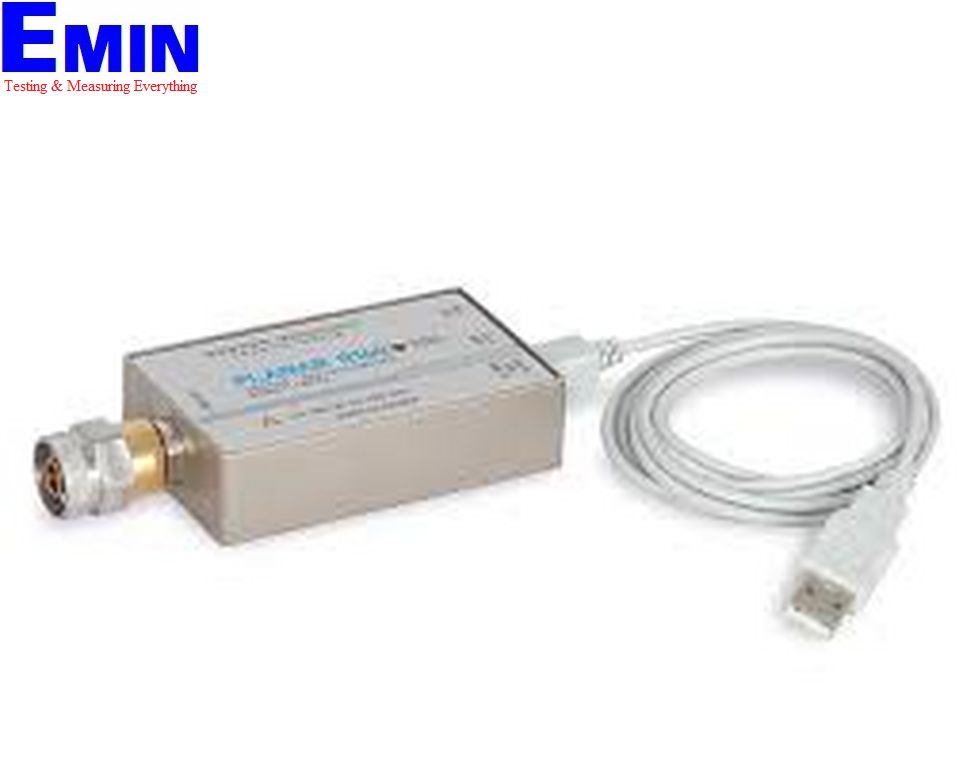
Common calibration methods use known standards such as open, short, load, and through. For fast and repeatable workflows, electronic calibration modules are often preferred. A good example in this category is the KEYSIGHT N4693D Electronic Calibration Module, designed for full two-port calibration up to 50 GHz with 2.4 mm connectors, helping simplify setup while maintaining high measurement consistency.
Choosing by frequency range, ports, and test scope
The right instrument depends first on the operating frequency of the device being measured. Lower-frequency RF tasks may be covered by compact analyzers in the sub-10 GHz range, while microwave development often requires much wider coverage. Port count is another key factor: 2-port analyzers are widely used for standard reflection and transmission work, while 4-port models support more advanced device characterization and multiport testing.
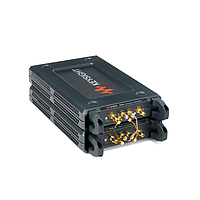
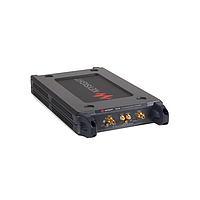
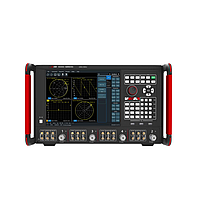
Examples in this category show that selection can vary substantially. The KEYSIGHT P9371B covers applications up to 6.5 GHz, while the KEYSIGHT P9374B extends to 20 GHz and the KEYSIGHT P9377B reaches 44 GHz in a 2-port format. For users who need more ports, the KEYSIGHT P9382B and KEYSIGHT P9384B provide 4-port capability for broader network analysis requirements.
Representative product options in this category
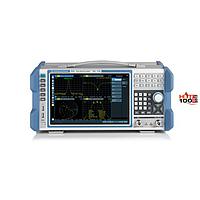
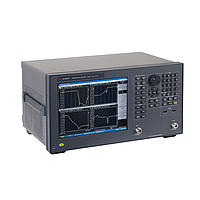
Many buyers look for a balance between measurement capability, portability, and workflow speed. The KEYSIGHT P9370B, for example, is positioned as a 2-port solution from 9 kHz to 4.5 GHz and supports use with electronic calibration modules for faster setup. The KEYSIGHT E5061B-135 is well suited to transmission and reflection measurements in the 100 kHz to 3 GHz range, which can be relevant for components such as filters, resonators, cables, and related RF assemblies.
For mixed low-frequency and RF characterization, the KEYSIGHT E5061B-3L3 adds impedance analysis functions and supports multiple measurement methods, which can be useful when the application crosses between component analysis and network measurements. If you are also evaluating source equipment for RF test benches, it may be helpful to review the signal generator category alongside VNA options.
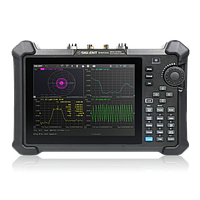
Another notable option is the Tekbox TBVNA-6000, which combines vector network analysis with broader instrument functionality. This can be attractive in environments where space, budget, or multi-purpose bench use is a factor, especially for development and educational setups.
Manufacturers commonly considered for VNA solutions
This category includes products and brand options relevant to a range of test environments, from portable and modular setups to more advanced RF and microwave measurement systems. Among the manufacturers often considered are KEYSIGHT, ANRITSU, Rohde & Schwarz, COPPER MOUNTAIN, Tekbox, OMICRON, PICO, PROTEK, and TRANSCOM.
In the current featured products, KEYSIGHT appears prominently with analyzers covering multiple frequency bands and configurations, as well as calibration accessories. Tekbox also stands out for users looking at compact or multifunction-style RF instrumentation. Final selection should depend on required frequency coverage, calibration workflow, software environment, and the type of DUTs being tested.
When a VNA is the right tool
A vector network analyzer is usually the right choice when you need to measure how a device reflects and transmits RF energy across frequency with phase information included. That is especially important for impedance matching, S-parameter work, filter development, antenna tuning, and troubleshooting losses in interconnects or microwave paths.
For simpler mismatch checks, some users may compare a VNA with a VSWR Analyzer. However, when the job requires a fuller picture of network behavior, calibration control, and multiport analysis, a VNA offers much greater insight and flexibility.
FAQ
Why does phase matter in VNA measurements?
Phase information allows the analyzer to describe the complete vector behavior of a signal, not just its level. This is essential for accurate impedance analysis, matching networks, and S-parameter characterization.
Do all VNA applications require calibration?
In most practical RF measurements, calibration is strongly recommended. It helps reduce errors caused by cables, connectors, and fixtures, which become more significant as frequency increases.
Should I choose a 2-port or 4-port model?
A 2-port unit is often sufficient for standard reflection and transmission testing. A 4-port model is more suitable when you need multiport DUT characterization or more advanced measurement scenarios.
Choosing the right VNA starts with understanding your frequency range, number of ports, calibration needs, and the type of RF devices you test most often. A well-matched instrument can streamline development, improve troubleshooting, and deliver more dependable measurement data across telecom and microwave applications.
Get exclusive volume discounts, bulk pricing updates, and new product alerts delivered directly to your inbox.
By subscribing, you agree to our Terms of Service and Privacy Policy.
Direct access to our certified experts