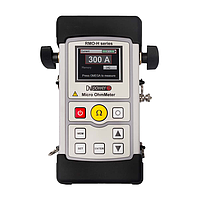
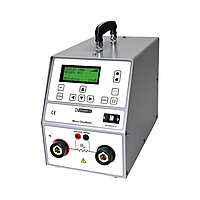
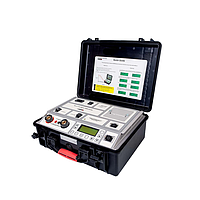
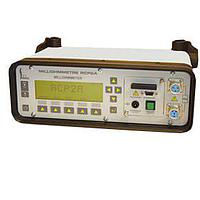
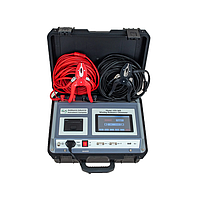
Low Resistance Tester
When connection quality, winding integrity, or contact condition needs to be verified, resistance measurements at very low values become critical. A Low Resistance Tester is designed for this task, helping maintenance teams, test engineers, and manufacturers measure milliohm and micro-ohm values that ordinary multimeters cannot resolve with the same confidence.
In power systems, switchgear service, transformer testing, motor maintenance, and production QA, low-resistance measurement is commonly used to evaluate joints, busbars, breakers, bonding paths, and other conductive parts. This category brings together instruments and accessories suited for those applications, from portable micro-ohmmeters to Kelvin leads and temperature-related measurement accessories.
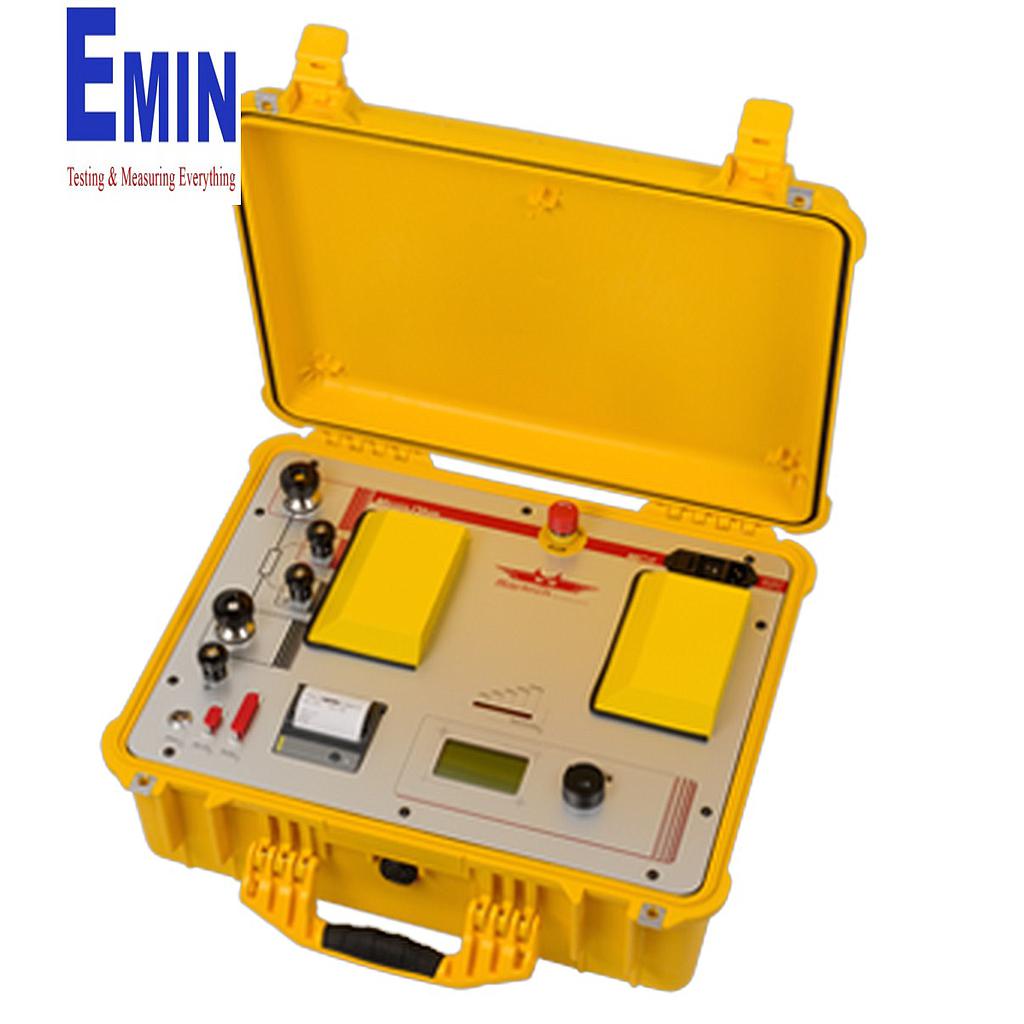
Where low resistance testing is used
Low-resistance measurement is especially important wherever contact resistance affects heat generation, voltage drop, and long-term reliability. Typical examples include circuit breaker contacts, grounding connections, cable joints, welded bonds, transformer windings, and copper or aluminum busbar connections.
In service and commissioning work, the goal is often to compare readings between phases, poles, or repeated test points over time. In production environments, the same measurement supports incoming inspection and assembly verification. For broader electrical test workflows, teams may also work alongside equipment such as withstand voltage test systems or insulation-related test instruments depending on the asset under evaluation.
Why 4-wire measurement matters
Most instruments in this category are built around the 4-wire method, also called Kelvin measurement. This technique separates current injection from voltage sensing so that lead resistance and contact resistance in the test cables have much less influence on the final result. That is essential when measuring values in the micro-ohm or low milliohm range.
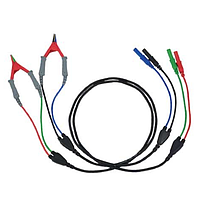
For practical field work, this means more stable and repeatable measurements on low-value conductors and joints. It also makes a difference when long leads, clamps, or high test currents are involved. Accessories such as Kelvin clamps and dedicated lead sets are not just add-ons; they are part of achieving a reliable measurement chain.
Representative instruments in this category
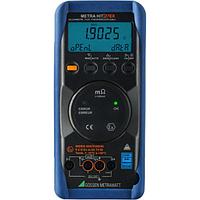
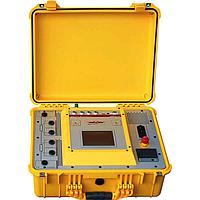
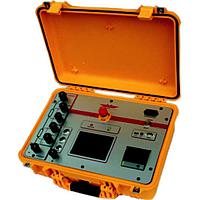
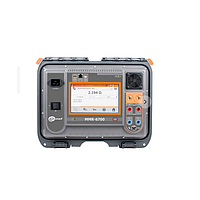
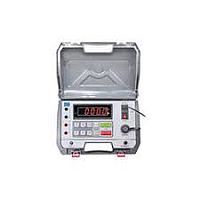
Among the highlighted options, Chauvin Arnoux is well represented with portable micro-ohmmeters suited to maintenance and field testing. The Chauvin Arnoux C.A 6255 uses a 4-wire method, supports low-value measurement with fine resolution, and offers test current up to 10 A. That combination is relevant for users who need more than a simple continuity check and want a tool for contact resistance and winding resistance verification.
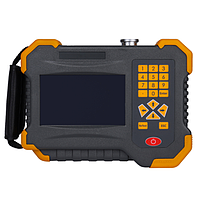
The Chauvin Arnoux C.A 6240 is another example aimed at low-resistance work with 4-wire measurement and portable operation. Features such as internal storage, rechargeable battery power, and communication capability are useful where measurements need to be logged and transferred after field work rather than noted manually at each point.
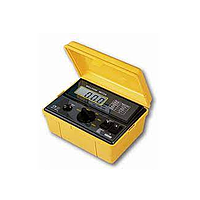
For more general milliohm applications, the Amprobe MO-100 Milliohm Meter fits use cases where the measurement range is broader and the application is less specialized than transformer or breaker testing. In parallel, some users searching in this category may also compare low-resistance workflows with specialized high-resistance instruments from KEYSIGHT, especially when their testing scope spans from insulation-level behavior to conductive path verification.
Accessories that support accurate measurement
Low-resistance testing depends heavily on correct fixturing. Kelvin clamps, test strips, current leads, and probe sets help maintain stable current injection and precise voltage pickup at the test point. This is why accessory products in this category remain highly relevant rather than secondary.
Examples include the Chauvin Arnoux P01101783 1 A Mini Kelvin clamps, the P01102056 clamp measuring set, and dedicated Kelvin lead sets such as the P01295495 and P01295487. These accessories can help adapt the test setup to small terminals, contact-resistance measurement points, or extended reach requirements. Where thermal influence must be considered, the Chauvin Arnoux P01102013 Pt 100 Probe can support temperature compensation in workflows where conductor resistance varies with temperature.
Battery-related parts, such as the Chauvin Arnoux P01296030 battery pack for compatible models, also matter in real maintenance environments. For teams working on-site, portable runtime and instrument readiness can affect how efficiently a full round of inspections is completed.
How to choose the right low resistance tester
The best fit depends on the asset type, expected resistance range, required test current, and whether measurements are made in the lab, on the production line, or in the field. If the target is switchgear contacts, busbar joints, or breaker poles, test current capability and connection accessories are often as important as raw resolution. If the target is small components or lighter-duty electrical assemblies, a lower-current milliohm meter may be sufficient.
It is also worth considering how results will be documented. Instruments with onboard memory, USB or serial communication, and software support can reduce reporting time and improve traceability. In asset diagnostics programs, low-resistance data is often only one part of the assessment, alongside tests such as capacitance and tan delta measurement for insulation condition on certain equipment classes.
Mechanical design matters as well. Field users may prioritize rechargeable battery operation, rugged housing, and clamp-based accessories, while bench users may focus more on data handling and repeatability. A clear definition of the test object and workflow usually leads to a better selection than comparing specifications alone.
Common application considerations
A good low-resistance measurement starts with proper surface contact, stable clamping, and consistent test procedure. Oxidized surfaces, loose connections, and varying pressure at the contact point can all influence results. For this reason, trend comparison and repeatability are often more meaningful than a single isolated reading.
Temperature is another practical factor. Since conductor resistance changes with temperature, readings taken under different ambient or load conditions may not be directly comparable unless compensation is applied. This is one reason accessories and test methods matter so much in low-ohm work.
Users involved in broader substation or cable diagnostics may also evaluate other equipment categories such as VLF testing instruments where the objective shifts from conductor path resistance to insulation assessment under controlled electrical stress.
Brands and solution scope
This category includes products associated with established test and measurement manufacturers such as Chauvin Arnoux, KEYSIGHT, and Amprobe, while the broader lineup may also be relevant to users familiar with HIOKI, MEGGER, KEITHLEY, YOKOGAWA, CHROMA, Eaton, and BKPRECISION. The exact choice depends less on brand alone and more on the measurement task, required current level, portability, data workflow, and compatible accessories.
For B2B buyers, the practical question is usually whether the instrument fits the maintenance standard, QA process, or commissioning method already in place. Matching the tester with suitable leads, clamps, and operating conditions is often what determines whether the system performs well in daily use.
Finding a suitable setup for your application
This selection is intended for users who need dependable low-ohm measurement rather than basic continuity indication. Whether the requirement is a portable micro-ohmmeter, a milliohm meter for service work, or accessories to complete a Kelvin measurement setup, the category covers tools used in real electrical maintenance and test workflows.
If you are comparing options, focus on the resistance range you need, the test current required by your application, the type of connections you will measure, and how results must be recorded. A well-matched low resistance tester and accessory set can make routine inspection faster, more consistent, and easier to integrate into broader electrical testing procedures.
Get exclusive volume discounts, bulk pricing updates, and new product alerts delivered directly to your inbox.
By subscribing, you agree to our Terms of Service and Privacy Policy.
Direct access to our certified experts