Phase meter
Accurate phase relationship measurement is essential in power analysis, calibration work, transformer testing, sensor evaluation, and many other electrical test tasks. When engineers need to compare two or more signals in terms of phase angle, frequency, and amplitude behavior, a Phase meter becomes a practical instrument for obtaining repeatable, high-resolution results across a defined bandwidth.
This category brings together instruments used to measure phase angle between electrical signals under laboratory, production, and field-support conditions. Depending on the model, users may also evaluate related parameters such as voltage, frequency, ratio, in-phase and quadrature components, which is especially useful when phase is only one part of a broader electrical measurement workflow.
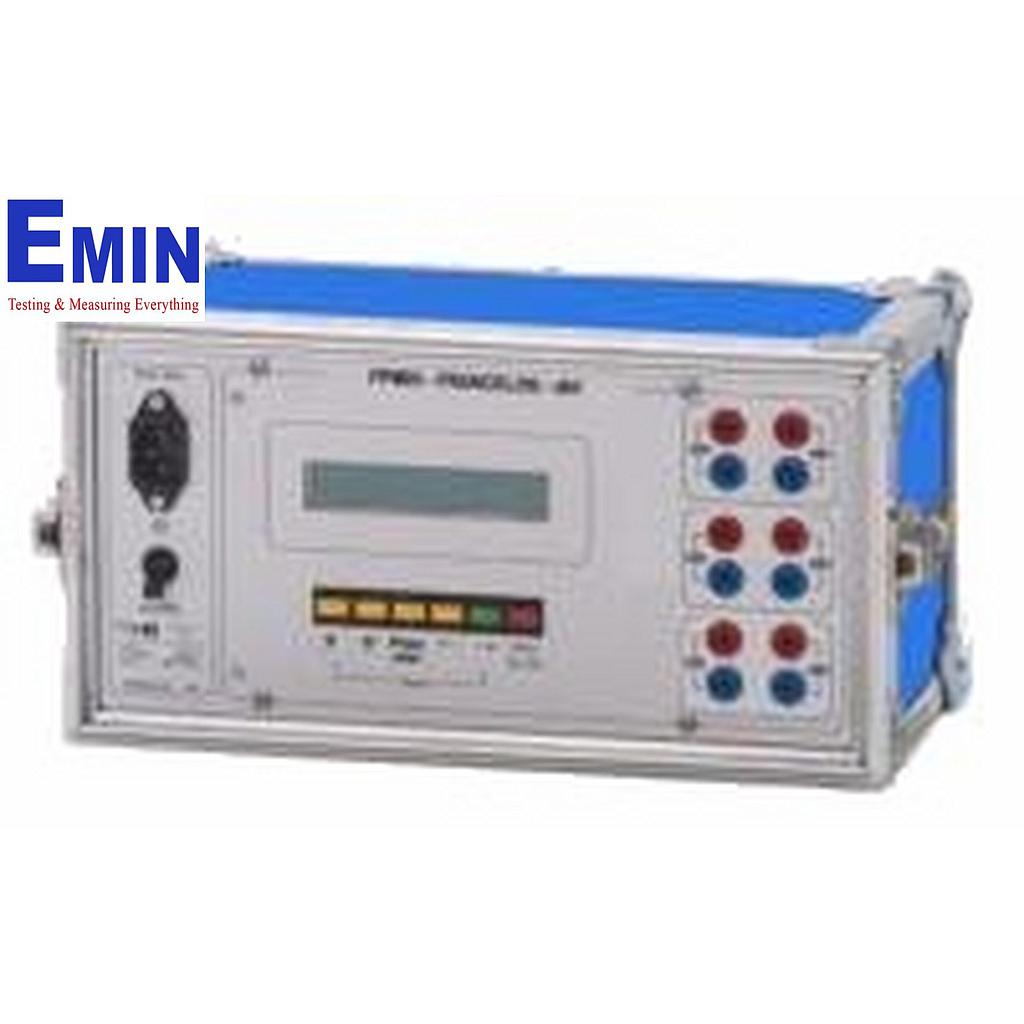
Where phase meters are used
Phase measurement is important wherever timing relationships between AC signals affect system behavior. Typical use cases include checking phase shift in transformers, validating instrumentation chains, analyzing transducers such as LVDTs, and supporting test benches for power electronics or component characterization.
In electrical maintenance and insulation test environments, phase data is often reviewed alongside other test results. For example, teams working with dielectric condition assessment may also look at capacitance and tan delta instruments, while high-potential verification may be part of the same workflow as withstand voltage testing. In these contexts, a dedicated phase meter helps isolate waveform relationship issues that may not be obvious from amplitude measurements alone.
What to look for when selecting a phase meter
The most important selection factors usually include measurement range, accuracy over frequency, input voltage capability, channel configuration, and the type of signals being compared. Some applications only require a straightforward two-channel comparison, while others benefit from multi-input instruments that can evaluate several signals in one setup.
Frequency range is especially important. Low-frequency and power-related work may focus on tens of hertz to a few kilohertz, while calibration, electronics, or sensor analysis can require wider bandwidth. Resolution also matters, particularly in precision environments where very small phase deviations can affect uncertainty budgets or acceptance criteria.
Users should also consider input isolation, impedance, coupling method, and interface options such as USB, LAN, or IEEE-488.2. These features can simplify automated test setups and make the instrument easier to integrate into a calibration lab or production test station.
Representative instruments in this category
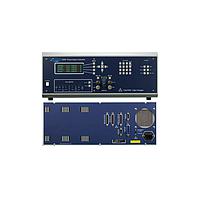
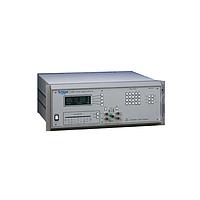
Among the notable options, Clarke-hess provides instruments aimed at precise phase-related measurement. The Clarke-hess 6000A Phase Meter is suited to applications that need very fine angular resolution and broad measurement coverage, while the Clarke-hess 2600 Phase Angle Voltmeter adds value where users want phase information together with voltage, frequency, ratio, and related signal components.
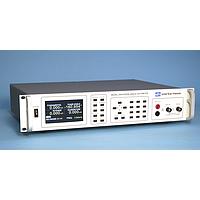
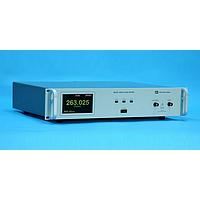
Vitrek is another important name in this category, particularly for users looking at wider bandwidth and flexible multi-input configurations. Models such as the Vitrek 6000-3 and Vitrek 6000-6 Phase Angle Voltmeters support three-input and six-input measurement scenarios, while the Vitrek 6250 is relevant when both voltage and current-oriented measurement considerations are part of the setup.
These examples illustrate that the category is not limited to one measurement style. Some instruments are optimized for highly precise phase comparison between two channels, while others are better suited to more complex test systems where multiple signals must be observed and compared efficiently.
Phase meter vs. phase angle voltmeter
In practice, the terms are closely related, but they can imply slightly different instrument roles. A basic phase meter is generally associated with direct phase comparison, whereas a phase angle voltmeter often combines phase measurement with amplitude and frequency analysis in a single platform.
For many buyers, the distinction matters less than the measurement task itself. If the application requires only stable and accurate phase readings between known signals, a dedicated phase meter may be sufficient. If the workflow also needs voltage comparison, ratio measurement, or multi-channel analysis, a phase angle voltmeter can provide a more complete solution without adding separate instruments.
Choosing by application environment
In calibration and metrology settings, repeatability, resolution, and interface connectivity are usually the priorities. Engineers in these environments often need traceable results, controlled input behavior, and convenient remote operation for automated sequences. Instruments with digital interfaces and stable performance across frequency are often preferred.
In R&D and product validation, flexibility can be more important than narrow specialization. Multi-input models are useful when comparing several nodes in a circuit or evaluating phase behavior across a test article. If the work involves insulation systems, cable studies, or transformer-related investigations, other equipment such as a high-voltage step-up transformer or a very low frequency tester may also appear in the broader test chain, with phase measurement serving as one part of the diagnostic picture.
Why bandwidth, input range, and channel count matter
A common mistake when selecting a phase instrument is focusing only on the headline accuracy number. In real use, the useful performance window depends on how accuracy changes with frequency, what amplitude range is supported, and whether the instrument can handle the required number of simultaneous inputs.
For example, some applications involve low-level signals, while others require measurement at much higher voltages. Likewise, a two-channel instrument may be ideal for straightforward phase comparison, but it can become limiting in systems where multiple sensor outputs, reference signals, or balanced measurements must be observed together. Matching the instrument architecture to the test method often improves both efficiency and confidence in the result.
FAQ
Can a phase meter be used for both lab and production environments?
Yes, provided the instrument’s accuracy, bandwidth, input range, and interface options match the application. Bench use in calibration labs and integration into automated test systems are both common.
Is a multi-input model always better?
Not necessarily. Multi-input instruments are useful for complex setups, but a simpler two-channel unit may be more practical when the measurement task is narrow and repeatable.
What is the main benefit of a dedicated phase instrument?
The main benefit is reliable measurement of signal relationship in angular terms, often with better clarity and resolution than trying to infer phase indirectly from general-purpose instruments.
Finding the right phase measurement solution
The right choice depends on signal type, required accuracy, frequency span, and how phase data fits into the rest of the electrical test process. Some users need a precise, dedicated instrument for two-signal comparison, while others need broader phase angle and voltage analysis across several channels.
By comparing application needs against the available instrument architectures from Clarke-hess and Vitrek, buyers can narrow the selection more effectively and choose a solution that supports both current measurements and future test expansion. A well-matched phase meter helps turn waveform relationships into actionable data, whether the job is calibration, troubleshooting, validation, or advanced electrical testing.
Get exclusive volume discounts, bulk pricing updates, and new product alerts delivered directly to your inbox.
By subscribing, you agree to our Terms of Service and Privacy Policy.
Direct access to our certified experts