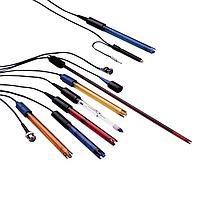
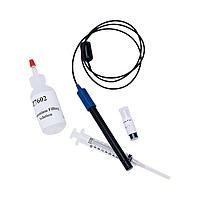
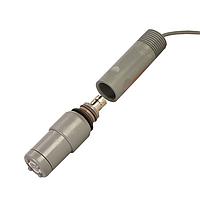
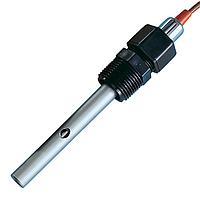
Water Quality Sensors
Reliable liquid analysis starts with stable sensing at the point of measurement. In water treatment, process skids, laboratory support systems, and industrial utilities, sensor selection has a direct impact on data quality, maintenance intervals, and overall process control. This page brings together Water Quality Sensors used for core liquid measurement tasks such as pH, ORP, and conductivity, with a focus on practical industrial use rather than generic specification lists.
When evaluating water analysis components, buyers usually need more than a basic product match. They need to understand which sensing principle fits the application, whether the installation is in-line, insertion, or dip-style, and how temperature, pressure, and chemical exposure may affect long-term performance. That is why this category is especially relevant for engineers, maintenance teams, OEMs, and system integrators working with continuous liquid monitoring.

Core sensor types used in water quality monitoring
This category centers on several of the most common electrochemical measurement needs in liquid testing. pH sensors are used to track acidity or alkalinity, ORP sensors help monitor oxidation-reduction potential in treatment and disinfection processes, and conductivity sensors are applied where ionic concentration or dissolved solids are important process indicators.
These measurements are often used together rather than in isolation. A water system may rely on pH control for dosing, ORP for oxidation status, and conductivity for concentration trends or rinse verification. For applications that also require ion-selective analysis, it may be useful to explore related options such as ion measurement electrodes where a more specialized measurement approach is needed.
pH and ORP sensors for process and utility environments
A large portion of this category is dedicated to pH and ORP electrodes designed for industrial measurement points. Within the featured range, OMEGA offers insertion-style and steam-sterilizable sensor options that are suited to demanding installations where temperature resistance, chemical compatibility, and stable reference design matter.
Examples include the OMEGA PHE-5431-10 and ORE-5431-10 series for high-temperature insertion use, as well as the OMEGA PHE-5432-10 and PHE-5432-10-PG models for steam-sterilizable pH measurement. These products illustrate common requirements in process water and liquid handling systems: broad pH range coverage, elevated temperature capability, and construction intended for continuous contact with process media.
For buyers standardizing around one supplier, the broader OMEGA product range can also provide useful context when comparing sensors, accessories, and adjacent measurement devices within the same instrumentation ecosystem.
Conductivity sensors for concentration and process verification
Conductivity measurement is often selected when users need fast feedback on dissolved ionic content. In practice, this can support water quality trending, chemical concentration checks, cleaning verification, or process consistency monitoring. Compared with pH measurement, conductivity sensing can be more direct for applications where ionic strength is the primary concern.
Featured products such as the OMEGA CDE-5008-EF10 and CDE-5004-ED10 represent dip-style conductivity sensors intended for liquid environments where simple immersion-based measurement is appropriate. For engineering teams, the key decision factors usually include measurement range, cell constant, wetted material compatibility, and allowable process temperature rather than brand name alone.
How to choose the right water quality sensor
The best selection process starts with the measurement objective. If the goal is acid-base control, a pH electrode is the natural choice. If the process depends on oxidation state, especially in disinfection or chemical treatment logic, an ORP electrode may be more relevant. If ionic concentration or water purity trends matter most, conductivity sensing is often the better fit.
Next, consider installation and operating conditions. High-temperature process points may require insertion-type electrodes with suitable materials and reference construction. Applications involving sterilization cycles may benefit from steam-sterilizable designs. In-line industrial systems can call for threaded or gland-based process connections, while open tanks or basins may be better matched to submersible or dip-style sensors.
Temperature compensation can also be important. Some pH sensor configurations in this category include integrated RTD-based temperature sensing, which can simplify measurement architecture and improve compensation in changing process conditions. This matters particularly where liquid temperature varies significantly during operation.
Design details that affect performance in real applications
Two sensors with the same nominal measurement type may behave very differently in service. Reference junction design, body material, pressure tolerance, and cable arrangement all influence response stability and maintenance demands. In industrial liquid analysis, these practical details often determine whether a sensor performs consistently over time or becomes a frequent service item.
Several featured pH electrodes in this category use glass and PTFE-based construction with double-junction reference designs, which are commonly preferred where contamination resistance and measurement stability are important. Preamplified sensor options, such as selected Alpha® pH electrodes, can also be valuable in installations where signal handling benefits from a conditioned output architecture at the sensor level.
It is equally important to match sensor form factor to the process. A compact in-line body may suit closed piping or treatment loops, while a longer submersible design may be more appropriate for tanks, pits, or open vessels. Choosing the right geometry at the start can reduce installation complexity and improve long-term usability.
Typical application contexts for this category
Water quality sensors are used across a broad range of industrial and technical environments. Common examples include water treatment skids, chemical preparation systems, utility water circuits, rinse processes, and general liquid handling systems where continuous or routine measurement is required. In these settings, sensors are expected to provide repeatable data under changing thermal and chemical conditions.
Some users may also combine electronic sensors with simpler verification tools depending on the task. For quick spot checks or low-complexity field use, related categories such as test paper can complement instrumental measurement. Where liquid analysis workflows involve calibration chemistry or consumable support materials, reagents and related supplies may also be relevant.
What matters for maintenance and replacement planning
In B2B purchasing, sensor selection is rarely a one-time decision. Teams also need to think about replacement intervals, connector style, cable routing, and whether a like-for-like spare should be held on site. For pH and ORP measurement in particular, maintenance planning often includes cleaning routines, calibration frequency, and verification against process drift.
Standardizing around a consistent sensor family can simplify spare parts management and technician training. It also helps reduce downtime when a process line depends on uninterrupted liquid analysis. Reviewing process temperature, pressure, immersion depth, and required measurement range before ordering is the most practical way to avoid mismatch.
Choosing with application fit in mind
This category is most useful when treated as a solution space rather than just a product list. The right choice depends on what you need to measure, where the sensor will be installed, and how demanding the process environment is. Whether the requirement is high-temperature pH measurement, ORP monitoring, or dip-style conductivity sensing, the products shown here support common industrial water analysis workflows.
If you are comparing options, focus on sensing principle, installation method, material compatibility, and operating limits first. That approach usually leads to a better long-term match than choosing by model name alone, especially in systems where measurement reliability affects process quality and maintenance effort.
Get exclusive volume discounts, bulk pricing updates, and new product alerts delivered directly to your inbox.
By subscribing, you agree to our Terms of Service and Privacy Policy.
Direct access to our certified experts