Air Quality Meter Calibration Service
Reliable indoor and ambient air measurements depend on more than a functioning instrument. Over time, sensor drift, environmental exposure, and routine use can affect how an air quality meter responds, which is why Air Quality Meter Calibration Service is an essential part of maintaining confidence in readings used for safety, compliance, diagnostics, and facility management.
For contractors, EHS teams, HVAC specialists, and industrial users, calibration helps keep measurement data consistent and usable in real operating conditions. This category focuses on calibration support for air quality monitoring instruments used to assess parameters such as air condition, ventilation performance, and general environmental quality in workplaces and technical facilities.
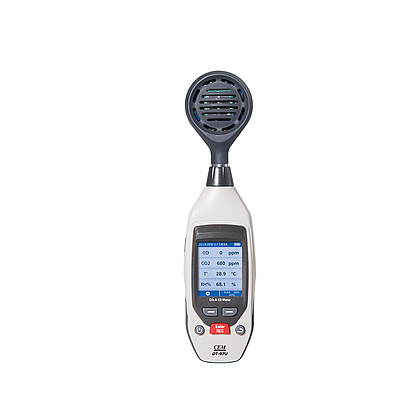
Why calibration matters for air quality meters
An air quality meter is often used to support decisions about ventilation, indoor environment checks, maintenance actions, and troubleshooting. If the instrument gradually deviates from its expected response, even small errors can lead to misleading conclusions about the condition of a room, duct system, workspace, or monitored area.
Calibration service helps verify that the instrument is responding correctly and, where applicable, brings it back into acceptable measurement performance. This is especially important in B2B environments where records, repeatability, and traceable maintenance practices matter just as much as the measurement itself.
Typical instruments covered in this category
This category is intended for calibration service related to portable and field-used air quality meters. In practical terms, these instruments are commonly used by building maintenance teams, HVAC technicians, environmental monitoring staff, and industrial users who need dependable air condition data during inspection or routine operation.
Examples in this range include services such as the Aeroqual Air Quality Monitor Calibration Service, the Sauermann Air Quality Meter Calibration Service, and the FLUKE Air Meter Calibration Service. These examples illustrate the type of instruments supported in this category without suggesting that all devices are identical in sensing method or calibration procedure.
Common use cases in industrial and commercial environments
Air quality meters are used across many technical settings where environmental conditions need to be checked as part of normal operations. This may include office buildings, production areas, clean utility spaces, laboratories, mechanical rooms, warehouses, and HVAC commissioning projects. In these situations, stable and trustworthy readings support faster diagnosis and better maintenance planning.
Calibration is also relevant when instruments are part of regular inspection schedules or used across multiple sites by service teams. If a meter is moved frequently, exposed to varying temperature or humidity conditions, or used intensively in the field, periodic verification becomes even more important.
How calibration service supports maintenance and quality control
A structured calibration process helps organizations manage instruments more systematically. Instead of treating an air quality meter as a simple handheld tool, it becomes part of a broader measurement control approach that supports audit readiness, maintenance records, and operational consistency.
For companies managing a mixed fleet of devices, calibration planning also helps reduce uncertainty between service intervals. Teams that use both air quality and gas monitoring instruments may also want to review related services such as fixed gas meter calibration service for installed systems or single gas meter calibration service for portable gas-specific devices.
Choosing the right service for your instrument
Not every instrument should be sent under the same service type. Before selecting a calibration service, it helps to confirm the device category, brand, and intended measurement role. An air quality meter used for environmental checks may require a different service path than a multi-gas detector or a combustion analyzer, even if they are all used in air-related applications.
That is why this category is best suited to instruments specifically designed for air quality monitoring rather than gas safety detection alone. If your equipment is closer to an emissions or combustion application, a more suitable route may be the combustion/emission gas analyzer calibration service. Selecting the right category from the start helps avoid delays and improves service accuracy.
Brand coverage and service relevance
This category includes representative services associated with brands commonly used in technical measurement and environmental monitoring. Depending on the instrument type, users may encounter equipment from Aeroqual, Sauermann, FLUKE, and other manufacturers whose devices are used in field measurement, building diagnostics, and maintenance work.
In adjacent gas detection applications, users may also work with instruments from TESTO, EXTECH, RAE, SENKO, GFG, or INDUSTRIAL SCIENTIFIC. Those brands are relevant when organizations manage a broader equipment inventory that includes both air quality meters and gas detection devices. However, the service selection should always match the actual instrument function rather than the brand name alone.
When to consider recalibration
Recalibration is commonly considered after a defined maintenance interval, after frequent field use, or when users notice questionable measurement behavior. It may also be appropriate after transport, storage in harsh conditions, sensor replacement, or comparison against a reference instrument that suggests a noticeable deviation.
Periodic recalibration is particularly important for teams that rely on trend monitoring or repeated site surveys. Consistent service intervals help reduce uncertainty between inspections and support more meaningful comparison of results over time.
Related calibration needs across the same workflow
Many organizations that use air quality meters also maintain other environmental and gas-related instruments as part of the same operational workflow. For example, a facilities team may use air quality meters for indoor environment assessment while also maintaining portable gas detectors for safety checks or separate analyzers for burner and exhaust diagnostics.
Where that broader requirement exists, it can be useful to align service planning across categories. In addition to this page, users may also review the parent service area for gas detector and meter calibration or look at related categories such as air quality-specific and gas-specific calibration services to organize maintenance more efficiently.
Choosing the correct calibration path helps protect the usefulness of your data, supports better maintenance decisions, and reduces uncertainty in day-to-day measurement work. If your instrument is used for environmental assessment, ventilation checks, or indoor air monitoring, this category provides a focused starting point for arranging the right service support for your air quality meter.
Get exclusive volume discounts, bulk pricing updates, and new product alerts delivered directly to your inbox.
By subscribing, you agree to our Terms of Service and Privacy Policy.
Direct access to our certified experts