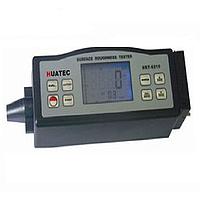
Gloss Meter, Roughness Meter Calibration Service
Reliable surface measurement depends on more than the instrument itself. In coating inspection, metal finishing, plastics, automotive parts, printing, and quality laboratories, even small deviations in a gloss meter or roughness tester can affect acceptance criteria, process control, and traceability. This is why Gloss Meter, Roughness Meter Calibration Service is an important part of maintaining measurement confidence across production and inspection workflows.
On this category page, you can explore calibration support for instruments used to evaluate surface appearance and surface texture, including gloss meters, angle glossmeters, surface roughness testers, roughness measuring instruments, and surface profile gages. These services are relevant for both routine quality checks and for organizations that need documented calibration as part of internal quality systems.
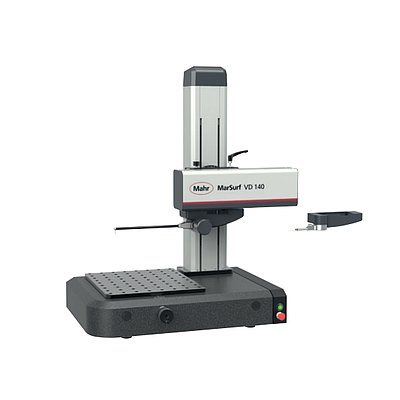
Why calibration matters for surface measurement instruments
Surface quality measurement is highly sensitive to instrument condition, reference standards, and measurement geometry. A gloss meter must provide stable and repeatable readings at the intended measurement angle, while a roughness tester or roughness measuring instrument must maintain accuracy in probe response, traverse behavior, and reading consistency. When calibration is overdue or measurement drift is not detected, inspection results may no longer reflect the actual surface condition.
For manufacturers and laboratories, this has practical consequences. A gloss value that reads too high or too low can influence coating approval, while an inaccurate roughness reading can affect decisions in machining, finishing, adhesion preparation, or product release. Calibration helps verify that the instrument performs within expected limits and supports more dependable comparison between batches, operators, and sites.
Instruments covered in this category
This category focuses on calibration services for instruments used to assess gloss, roughness, and surface profile. Typical examples include the TASCO Gloss Meter Calibration Service, HORIBA Gloss Meter Calibration Service, and SANKO Angle Glossmeters Calibration Service for gloss measurement applications. For surface texture evaluation, relevant services include the MITUTOYO Surface Roughness Tester Calibration Service, Mahr Roughness Measuring Instrument Calibration Service, and PCE Surface Roughness Tester Calibration Service.
Where coating or blasted surface preparation needs to be verified, surface profile gages are also part of the broader surface measurement workflow. In that context, services such as the TQCSheen Surface Profile Gage Calibration Service, ELCOMETER Surface Profile Gage Calibration Service, and DEFELSKO Surface Profile Gage Calibration Service may be useful. Although these instrument types serve different purposes, they all play a role in evaluating how a surface looks, feels, or performs in the final application.
Common application areas
Gloss and roughness instruments are widely used in industries where surface finish is tied to function or appearance. Typical use cases include painted and coated parts, plated surfaces, precision-machined components, molded plastic parts, paper and film inspection, and incoming or final quality control. Calibration is especially relevant when measurement data is used for supplier qualification, process validation, customer reporting, or complaint analysis.
In many facilities, gloss, roughness, thickness, hardness, and dimensional checks are performed as part of the same inspection chain. If your workflow also includes coating verification or other mechanical metrology, related services such as thickness gauge calibration or hardness meter calibration may be worth reviewing alongside surface measurement support.
How to choose the right calibration service
The right service depends first on the instrument type. A gloss meter, angle glossmeter, roughness tester, and surface profile gage are not calibrated in the same way, so it is important to select the service that matches the measurement principle and application of your device. If your operation relies on different surface instruments from multiple suppliers, choosing service by device category is often the clearest approach.
Brand and model compatibility can also matter. On this page, representative service options are available for manufacturers such as HORIBA, Mahr, MITUTOYO, PCE, SANKO, TQCSheen, ELCOMETER, DEFELSKO, and TASCO. If you already know your device family, reviewing the matching service listing can help confirm whether the calibration option aligns with your equipment and inspection needs.
Examples of available calibration services
For gloss measurement, users often look for calibration support tied to instruments used in coating appearance control. Examples in this category include the PCE Gloss Meter Calibration Service, HORIBA Gloss Meter Calibration Service, TASCO Gloss Meter Calibration Service, and SANKO Angle Glossmeters Calibration Service. These services are suitable for organizations that need to maintain consistency in gloss evaluation over time.
For surface texture and profile verification, available examples include the MITUTOYO Surface Roughness Tester Calibration Service, Mahr Roughness Measuring Instrument Calibration Service, PCE Surface Roughness Tester Calibration Service, TQCSheen Surface Profile Gage Calibration Service, ELCOMETER Surface Profile Gage Calibration Service, and DEFELSKO Surface Profile Gage Calibration Service. Together, these examples show the range of instruments supported within this category, from finish assessment to profile-related checks.
When recalibration should be considered
Calibration intervals are usually influenced by usage frequency, handling conditions, internal quality requirements, and the criticality of the measurement. Even if an instrument appears to be operating normally, recalibration may be advisable after intensive use, impact, transport between sites, long storage periods, or when measurement results begin to show unexplained variation.
A practical sign is when results no longer align with reference samples, previous trends, or parallel instruments. If your inspection system includes dimensional tools used alongside surface instruments, it may also be useful to review services such as callipers calibration service or micrometers calibration service to keep the broader metrology workflow under control.
What this category helps buyers and quality teams do
For purchasing teams, this category simplifies the search for calibration options across several recognized instrument brands and device types. For quality engineers and lab personnel, it provides a more organized way to identify service coverage for gloss meters, roughness measuring instruments, and profile gages without having to navigate unrelated product groups.
The main value lies in connecting the service requirement to the actual inspection task. Whether the priority is appearance control, machining finish verification, or surface preparation assessment, selecting an appropriate calibration service supports better measurement reliability and more consistent decision-making in day-to-day operations.
Conclusion
When gloss, roughness, or surface profile data is part of your quality process, calibration is not just a maintenance task; it is part of protecting measurement integrity. This category brings together relevant calibration services for commonly used surface measurement instruments from brands such as HORIBA, Mahr, MITUTOYO, DEFELSKO, ELCOMETER, PCE, TQCSheen, SANKO, and TASCO.
If you are comparing options, start by identifying your instrument type and manufacturer, then review the matching service listing for the most relevant calibration path. That approach makes it easier to support traceable inspection, reduce uncertainty in measurement results, and keep surface quality evaluations aligned with your production or laboratory requirements.
Get exclusive volume discounts, bulk pricing updates, and new product alerts delivered directly to your inbox.
By subscribing, you agree to our Terms of Service and Privacy Policy.
Direct access to our certified experts