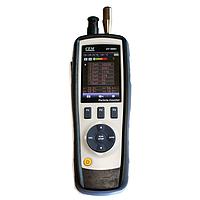
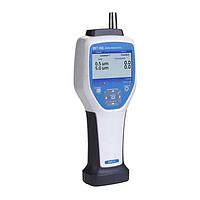
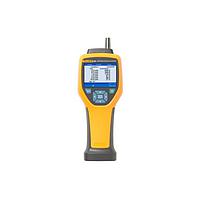
Particle Counter, Dust Monitor Calibration Service
Reliable air quality data depends not only on the instrument itself, but also on how well it is maintained and verified over time. In facilities where particle concentration, dust loading, or aerosol trends are part of environmental control, process quality, or compliance routines, regular calibration helps keep measurements consistent and defensible.
Particle Counter, Dust Monitor Calibration Service is intended for organizations that use airborne particle counters, dust monitors, aerosol monitors, and related air quality instruments in daily operations. Whether the equipment is used in clean environments, industrial workplaces, laboratories, or general air monitoring programs, calibration supports better confidence in the readings used for decision-making.
Why calibration matters for particle and dust measurement
Particle counters and dust monitors are often used where small measurement deviations can affect reporting, troubleshooting, or process control. Over time, sensors, optical components, sampling pathways, and internal electronics may drift, which can reduce the reliability of measured values if the instrument is not checked at appropriate intervals.
A structured calibration service helps confirm that the device is operating within expected performance parameters. This is especially important when instruments are used for trend monitoring, maintenance planning, indoor air quality assessment, contamination control, or workplace exposure evaluation.
Equipment typically covered in this category
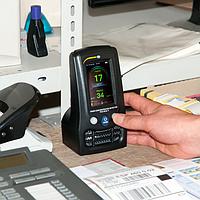
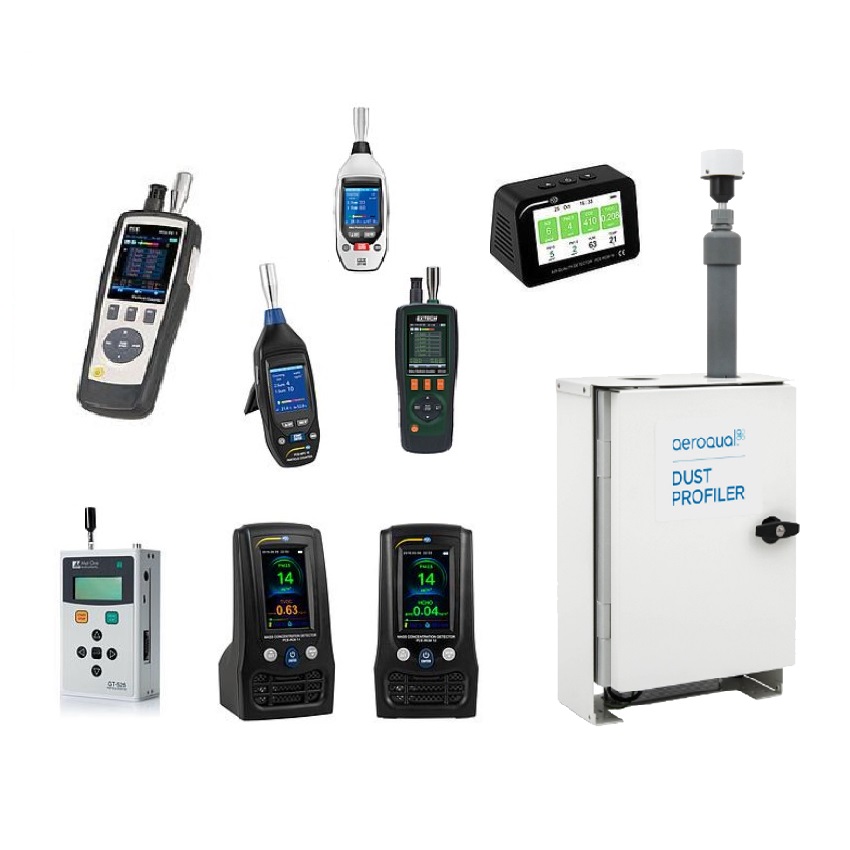
This category focuses on calibration services for instruments that measure airborne particles, dust concentration, or aerosol presence. In practice, that can include portable dust monitors, aerosol monitors, air quality meters with particulate measurement capability, and particle counters used to assess suspended particulate levels in controlled or industrial environments.
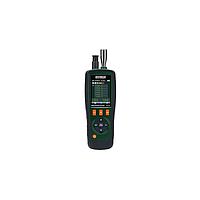
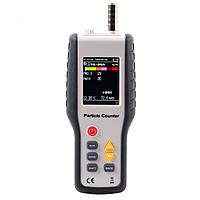
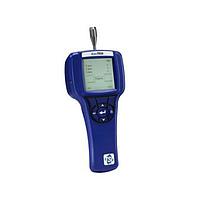
Examples in this category include services such as the Casella Dust Monitor Calibration Service, KANOMAX Dust Monitor Calibration Service, Aeroqual Dust Monitoring Device Calibration Service, and TSI Aerosol Monitor Calibration Service. It also covers calibration for particle counting instruments, such as services associated with TSI, PCE, EXTECH, Beckman, and KANOMAX devices.
Supported brands and common service needs
Many businesses operate mixed fleets of test and monitoring equipment from different manufacturers, so brand familiarity can be important when selecting a service provider. This category includes calibration support for widely used brands such as TSI, Aeroqual, Casella, ELCOMETER, KANOMAX, PCE, EXTECH, and Beckman, based on the representative services listed here.
Typical service needs vary by instrument type. A dust monitor may be used for workplace air checks or environmental surveys, while a particle counter may support clean area verification or contamination tracking. In both cases, calibration helps reduce uncertainty and supports more dependable comparisons between past and current readings.
How to choose the right calibration service
The most practical starting point is the actual instrument category you use. Dust monitoring equipment and particle counting instruments are related, but they are not always calibrated in the same way or for the same measurement purpose. Selecting a service that matches the device type helps avoid delays and ensures the work aligns with the instrument’s intended use.
If your equipment is primarily designed for particulate mass or dust trend measurement, a dedicated dust monitor service is usually the better fit. If your work depends on airborne particle counting by size or concentration, a more specific particle counter service may be appropriate. For organizations managing several types of test equipment, related categories such as electrical and electronic meter calibration or mechanical measuring instrument calibration may also be relevant.
Representative services in this category
To illustrate the scope of this category, available examples include the Casella Dust Monitor Calibration Service, ELCOMETER Dust Monitor Calibration Service, KANOMAX Dust Monitor Calibration Service, and PCE Air Quality Meter Calibration Service. These examples reflect common service demand for instruments used in air quality and particulate monitoring workflows.
On the particle counting side, representative services include the TSI Particle Counter Calibration Service, PCE Particle Counter Calibration Service, EXTECH Particle Counter Calibration Service, KANOMAX Particle Counter Calibration Service, and Beckman Particle Counter Calibration Service. Rather than treating these as interchangeable, it is better to match the service to the instrument function, manufacturer, and operational context.
When recalibration should be considered
Calibration intervals usually depend on how often the instrument is used, the criticality of the measurements, and internal quality requirements. Devices used in demanding field conditions, production support, or regulated monitoring routines may need more frequent attention than instruments used only occasionally for general checks.
Recalibration should also be considered after repair, transport shock, abnormal readings, long storage periods, or whenever measurement results appear inconsistent with expected conditions. If your maintenance program includes multiple instrument classes, related services such as oscilloscope and logic analyzer calibration can help standardize service planning across the wider equipment base.
Who this service is relevant for
This category is useful for laboratories, manufacturing facilities, environmental monitoring teams, clean process users, building and facility management teams, and service organizations that rely on particulate or dust measurement equipment. It is also relevant for companies that need traceable maintenance routines for portable monitoring assets deployed across multiple sites.
Organizations comparing service options often look for three things: fit with the device type, familiarity with the manufacturer, and a workflow that supports dependable measurement performance over time. That makes it helpful to start with the actual instrument family in use, whether that is a dust monitor, air quality meter, aerosol monitor, or particle counter.
Choosing a service that fits your monitoring workflow
Not every air monitoring instrument is used in the same way, so calibration should be chosen with the application in mind. A handheld unit used for periodic spot checks may have different service priorities than a device used routinely for quality control, contamination investigation, or environmental assessment.
By selecting a calibration service aligned with your instrument type and measurement task, you can maintain stronger confidence in the data your team relies on. This category brings together practical options for particle counters, dust monitors, and related air monitoring devices, making it easier to find a suitable service path for the equipment already in your operation.
Get exclusive volume discounts, bulk pricing updates, and new product alerts delivered directly to your inbox.
By subscribing, you agree to our Terms of Service and Privacy Policy.
Direct access to our certified experts