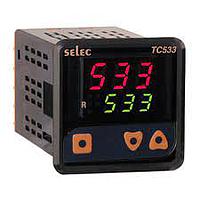
Temperature Meter & Controller Calibration Service
Stable temperature measurement is critical in process control, product quality, laboratory work, and equipment safety. When a temperature meter or controller starts to drift, even small errors can affect heating cycles, storage conditions, testing accuracy, and overall system performance. A professional Temperature Meter & Controller Calibration Service helps verify that readings and control responses remain aligned with the required operating range.
This category is intended for businesses that rely on temperature indication, monitoring, or closed-loop control in industrial and technical environments. Whether you are checking a standalone meter, a panel controller, or related temperature control instrumentation, calibration supports traceability, confidence in measurements, and more consistent operation across production and maintenance workflows.
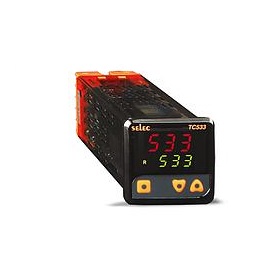
Why calibration matters for temperature meters and controllers
Temperature devices are often used in applications where process stability depends on accurate sensing and repeatable control. Over time, sensors, display circuits, input modules, and controller response characteristics may deviate from expected values. Regular calibration helps identify these deviations before they create larger problems in production, validation, or maintenance routines.
For a temperature meter, the focus is usually on measurement accuracy across the relevant range. For a controller, calibration also matters because the displayed value and the control behavior both influence the final process condition. In practical terms, this means calibration can support tighter process consistency, fewer troubleshooting hours, and better confidence when comparing field readings with reference values.
What this service category typically covers
This category centers on calibration for instruments used to measure or regulate temperature in industrial systems. Depending on the device type, the work may involve checking indication accuracy, evaluating controller input response, and confirming that the instrument performs within acceptable tolerance under defined test conditions.
Many users search for one service because their system combines sensing, indication, and control in the same workflow. That is why this category is useful for panel-mounted temperature controllers, display units, and similar devices used in machinery, utilities, laboratories, food processing, packaging, HVAC-related systems, and general manufacturing environments.
If your requirement is more specific to handheld or probe-based instruments, you may also want to review contact temperature meter calibration service for direct-contact measurement devices.
Common applications in industrial and technical environments
Temperature meters and controllers are used anywhere thermal conditions must be measured, displayed, recorded, or regulated. Typical examples include ovens, furnaces, incubators, tanks, water systems, climate chambers, production lines, and thermal treatment processes. In these settings, calibration supports more reliable decision-making by maintenance teams, quality personnel, and process engineers.
In a control application, inaccurate indication can lead operators to believe a process is stable when the actual temperature is higher or lower than expected. In a monitoring application, the same drift may affect audits, troubleshooting, or preventive maintenance records. A proper calibration workflow helps reduce uncertainty and provides a clearer basis for equipment verification.
For organizations managing multiple thermal measurement technologies, related services such as infrared thermometer calibration service or thermal imaging camera calibration service may also be relevant alongside controller and meter calibration.
How to choose the right calibration scope
The most useful service scope depends on how the device is actually used in your operation. Start with the required temperature range, the process criticality, and the acceptable tolerance for your application. A controller used in a non-critical utility process may need a different calibration interval and reporting depth than an instrument supporting product quality or controlled storage conditions.
It is also important to distinguish between the instrument itself and the broader measurement chain. In many systems, overall performance depends on the controller, the sensor type, wiring condition, and the installation environment. Calibration of the instrument improves confidence in the device under test, but users should also consider whether the sensor and field setup need separate verification.
Where the need is specifically focused on thermal instruments and control devices, this category remains the most direct fit. For organizations comparing service options by device family, temperature meter and controller calibration is typically the right starting point.
Representative service options in this category
This category includes service entries associated with several recognized suppliers used in temperature measurement and control applications. Examples include the Selec Temperature Measurement and Controller Calibration Service, Adtek Temperature Measurement and Controller Calibration Service, EZDO Temperature Measurement and Controller Calibration Service, and Sansel Temperature Measurement and Controller Calibration Service.
These listings help users identify calibration support in connection with brands commonly found in industrial panels and process control environments. Brand-specific references can be useful when standardizing maintenance planning across installed equipment from manufacturers such as SELEC and Adtek, while still keeping the focus on the calibration requirement rather than on model marketing.
When recalibration should be considered
Calibration intervals are usually influenced by operating conditions, usage frequency, criticality, internal quality requirements, and past stability of the device. Instruments exposed to vibration, heat stress, electrical noise, or demanding duty cycles may require closer review than equipment used in lighter conditions. Recalibration is also commonly considered after repair, after abnormal readings, or before important validation and audit activities.
Another practical trigger is process inconsistency. If operators are seeing unexplained temperature variation, overshoot, or mismatch between displayed and reference values, calibration is a logical step in the diagnostic process. While calibration does not replace repair when a fault exists, it helps determine whether the issue is related to instrument accuracy, controller behavior, or another part of the system.
Benefits for maintenance, quality, and compliance teams
For maintenance teams, calibrated temperature devices make troubleshooting more efficient because technicians can work from more reliable reference points. For quality teams, calibration records support internal control plans and help document that key instruments are being managed systematically. For engineering teams, repeatable thermal measurement improves confidence when tuning processes or comparing performance across assets.
In B2B environments, the value of calibration is rarely limited to one instrument. It contributes to a broader asset management approach where measuring devices, control equipment, and thermal inspection tools are maintained according to actual operational needs. That is especially useful in facilities where temperature affects product characteristics, energy use, safety margins, or regulatory documentation.
Finding the right service for your equipment portfolio
Choosing a calibration service for temperature meters and controllers should begin with the role of the instrument in your process, not just with the product label. Consider the measurement range, the control function, the required level of confidence, and whether the device is part of a larger thermal monitoring strategy. This makes it easier to select a service scope that matches real operating conditions.
For companies working with mixed temperature instrumentation, this category provides a practical route for controller and meter verification within a wider thermal calibration program. By reviewing the available service options and matching them to your installed devices, you can build a more consistent maintenance plan and reduce uncertainty in temperature-dependent operations.
Get exclusive volume discounts, bulk pricing updates, and new product alerts delivered directly to your inbox.
By subscribing, you agree to our Terms of Service and Privacy Policy.
Direct access to our certified experts