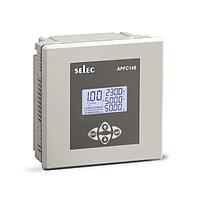
Power Factor Regulator Repair Service
When reactive power control starts to drift, the effects are often visible far beyond the compensation panel. Unstable capacitor bank switching, poor power factor, penalty risks, nuisance alarms, and reduced system efficiency can all point back to a faulty controller. For facilities that rely on automatic power factor correction, a reliable Power Factor Regulator Repair Service helps restore stable operation without replacing the entire control system unnecessarily.
This service category is intended for maintenance teams, panel builders, utilities, and industrial plants that need evaluation and repair support for damaged or erratic regulators. It is especially relevant when the regulator no longer reads correctly, fails to switch capacitor steps properly, or behaves inconsistently under changing loads.
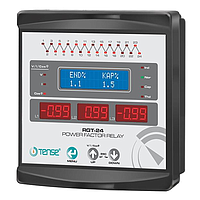
Why power factor regulator repair matters
A power factor regulator is the control element that monitors system conditions and commands capacitor banks to connect or disconnect in steps. In practical terms, it helps maintain a target power factor by responding to changing reactive power demand. When this device malfunctions, the entire compensation strategy can become inaccurate or unstable.
Repair is often the right path when the issue is isolated to the regulator itself rather than the full compensation assembly. Typical service needs include display or keypad faults, incorrect sensing behavior, failed output stages, communication issues, or unstable control logic. In these cases, repairing the controller can be more practical than replacing multiple associated components.
Common symptoms that indicate regulator problems
In many sites, the first warning sign is not total failure but irregular capacitor bank operation. Capacitor steps may switch too frequently, remain stuck on or off, or respond in a sequence that no longer matches the real load profile. Operators may also notice poor power factor performance even though the capacitor bank itself appears intact.
Other symptoms can include inaccurate current sensing, alarm conditions, intermittent display problems, or a regulator that powers up but does not control outputs correctly. If capacitor wear or contactor stress is increasing, it is worth checking whether the regulator is issuing unstable commands. Where capacitor damage is involved, related support such as inverter repair service may also be relevant in broader power quality troubleshooting, depending on the installation environment.
Scope of service for industrial and commercial systems
A repair workflow for these devices generally focuses on identifying the failed section, checking control response, and verifying that the regulator can return to dependable service in the compensation panel. This may involve inspection of power supply circuits, output switching channels, sensing interfaces, display sections, and control boards. The goal is to restore consistent reactive power control rather than simply make the unit power on again.
For users managing mixed electrical automation assets, this category also fits naturally into a broader maintenance strategy. In plants where multiple control devices are affected, support areas such as power thyristor controller repair or data logger repair for automation systems may also help address related control and monitoring issues.
Supported brands and representative repair cases
This category includes repair support for selected regulator-related equipment from manufacturers such as SELEC and BTB ELECTRIC. These brands are commonly associated with electrical control and compensation applications where regulator reliability directly affects panel performance.
Representative service examples in this category include the SELEC Capacitor Repair service and the BTB ELECTRIC Capacitor Repair service. These examples are useful for buyers looking for a service path around capacitor compensation systems, especially when faults may involve both the controller logic and the surrounding correction hardware. In real maintenance scenarios, it is important to distinguish between a failed capacitor bank component and a regulator that is no longer making correct switching decisions.
How to assess whether repair is the right option
Repair is usually worth considering when the regulator has a localized fault and the rest of the panel remains serviceable. If the enclosure, wiring environment, and associated measurement inputs are still in acceptable condition, controller repair can extend equipment life and reduce downtime. This is particularly useful for installed systems where replacing the regulator would also require panel modifications or control parameter reconfiguration.
Before sending a unit for service, it helps to document the observed behavior: switching errors, display messages, alarm conditions, current transformer input issues, or power-up status. The more clearly the fault appears in operation, the easier it is to separate regulator failure from external causes such as capacitor degradation, contactor wear, incorrect CT wiring, or upstream load variation.
Applications where reliable correction control is critical
Power factor regulators are widely used in manufacturing plants, commercial buildings, pumping stations, utility support panels, and other installations with fluctuating inductive loads. In these environments, automatic correction helps improve system efficiency and maintain compliance with utility power factor requirements. A failed regulator can quickly reduce the effectiveness of the entire compensation bank.
Facilities with motors, transformers, HVAC systems, or variable load patterns are especially sensitive to unstable correction control. When troubleshooting broader electrical equipment fleets, some users also review related service options such as SIEMENS equipment repair if their installed base includes multiple automation and power control devices from different areas of the plant.
What to prepare when requesting repair service
To speed up evaluation, it is helpful to provide the regulator model, visible fault condition, installation context, and any history of abnormal capacitor bank behavior. Details such as whether the issue is constant or intermittent, whether outputs are switching incorrectly, and whether sensing values appear inaccurate can make the repair process more efficient.
If the regulator is part of a larger panel problem, noting the condition of capacitors, contactors, fuses, and current transformers can also help. This gives a clearer picture of whether the fault is limited to the controller or linked to the wider power factor correction system.
Choosing a repair path that matches your system
Not every compensation issue requires complete replacement. In many cases, targeted repair of the regulator is a practical way to restore proper step control, improve system stability, and support continued use of the existing panel architecture. The most effective approach is to evaluate the controller in the context of the full correction system, including sensing, switching, and capacitor condition.
For teams responsible for plant uptime, this category provides a focused route to address regulator faults within the wider field of electrical and automation maintenance. If your system is showing unstable compensation behavior, a structured repair service for power factor regulators can be an efficient next step toward reliable operation.
Get exclusive volume discounts, bulk pricing updates, and new product alerts delivered directly to your inbox.
By subscribing, you agree to our Terms of Service and Privacy Policy.
Direct access to our certified experts