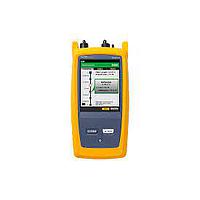
OTDR Photometer Repair Service
When fiber links need to be qualified, diagnosed, or restored quickly, measurement accuracy becomes just as important as field access. Instruments used in optical testing often work in demanding environments, so periodic service and fault recovery are essential to keep results reliable. This is especially true for OTDR Photometer Repair Service, where both trace analysis and optical power verification depend on stable, properly functioning equipment.
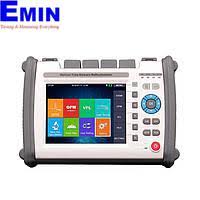
For maintenance teams, telecom contractors, and industrial network operators, repair service is not only about fixing a failed unit. It also helps extend equipment life, reduce measurement uncertainty caused by wear or drift, and support consistent troubleshooting workflows across fiber installation, commissioning, and maintenance activities.
Why OTDR and photometer condition matters in optical testing
An OTDR is typically used to assess fiber events such as splices, connectors, bends, and breaks by analyzing reflected light along the cable path. A photometer, often used for optical power measurement, supports insertion loss checks and signal-level verification. If either instrument is damaged, unstable, or out of tolerance, technicians may misread link quality or spend extra time isolating issues that are actually caused by the test set itself.
Repair service is therefore important for organizations that depend on dependable field measurements. Common service needs can include display or interface issues, connector wear, charging or power faults, unstable readings, communication problems, or general functional recovery after heavy use. In practical terms, restoring test equipment helps teams protect both workflow continuity and confidence in measurement results.
Typical service scope for OTDR photometer instruments
This category focuses on repair support for optical test devices used in fiber maintenance and inspection. Depending on the instrument type, service may involve fault diagnosis, component-level recovery, functional restoration, cleaning of optical interfaces, and verification that the unit operates as intended after repair. The goal is not simply to power the device back on, but to return it to a condition suitable for technical work.
Because OTDRs and optical power measurement tools are part of a broader fiber test ecosystem, repair needs may overlap with related equipment categories. For example, teams working with integrated field kits may also need optical power meter repair support or service for an optical fault locator used alongside OTDR-based diagnostics.
Supported brands and examples in this category
Many users look for service by instrument brand because repair procedures, spare parts handling, and post-repair checks often depend on the original platform. This category includes service examples related to established optical test equipment brands such as ANRITSU, JDSU, Fluke Network, YOKOGAWA, Promax, and Fibretool.
Representative entries include ANRITSU OTDR Meter Repair Service, JDSU OTDR Meter Repair Service, Fibretool OTDR Meter Repair Service, Promax OTDR Meter Repair Service, YOKOGAWA OTDR Meter Repair Service, and Fluke Network OTDR Meter Repair Service. These examples help indicate the range of supported equipment families without turning the page into a simple product list.
When to consider repair instead of replacement
Repair is often a practical option when the instrument still fits the workflow, but performance problems have started to affect usability. Examples include inconsistent measurement behavior, damaged ports, keypad or touchscreen problems, charging faults, startup failure, or physical wear from transport and field deployment. In many cases, restoring a familiar instrument can be more efficient than replacing it and retraining teams on a different interface.
For B2B users managing multiple fiber test tools, service planning also supports asset lifecycle control. A repaired OTDR or photometer may continue serving installation teams, maintenance crews, or inspection staff without disrupting reporting methods, accessory compatibility, or established test routines. This is particularly relevant where instruments are used regularly but not yet at end-of-life from an operational perspective.
How repair service supports network reliability
In optical networks, test equipment quality directly affects maintenance decisions. A faulty instrument can lead to incorrect acceptance of a weak link or unnecessary dispatches to investigate a non-existent cable event. By restoring instrument function and usability, repair service helps reduce avoidable downtime, repeated site visits, and troubleshooting delays.
This matters across telecom infrastructure, campus fiber systems, industrial communication networks, and contractor-led installation projects. Organizations that rely on trace interpretation and power verification typically benefit from keeping their optical test assets in serviceable condition. Where broader optical diagnostics are involved, related support such as optical analyzer repair service may also be relevant.
Choosing the right service path for your instrument
A suitable service request usually starts with clear identification of the instrument type, brand, and observed fault symptoms. For OTDR and photometer devices, it helps to describe whether the problem involves optical interfaces, charging and battery behavior, display issues, unstable readings, communication ports, or complete startup failure. This makes diagnosis more efficient and helps match the service process to the actual issue.
Users managing a wider fiber maintenance workflow may also want to coordinate service across related devices. For example, if splicing and line verification are handled by the same team, it can be useful to review fiber optic welding machine repair services in parallel with OTDR-related repair planning. That approach can reduce equipment gaps in field operations.
Who this category is relevant for
This category is useful for telecom service providers, fiber installation contractors, data center teams, system integrators, maintenance departments, and technical procurement staff responsible for optical test equipment uptime. It is also relevant for organizations that need to maintain consistency across multiple field instruments instead of replacing units one by one.
Whether the requirement involves a single damaged tester or recurring service for a fleet of optical instruments, the main objective remains the same: restore dependable operation so fiber testing can continue with less disruption. That makes this category a practical starting point for businesses looking to maintain test capability while controlling replacement costs.
Final considerations
Reliable optical diagnostics depend on instruments that behave consistently in real working conditions. Choosing the right OTDR photometer repair path helps preserve equipment value, support better measurement confidence, and keep maintenance teams productive in the field.
If your workflow depends on OTDR traces, optical power checks, or broader fiber fault analysis, this category brings together relevant service options for commonly used brands and related optical equipment. Reviewing the available repair services can help you identify the most suitable next step for restoring your test instrument and maintaining operational continuity.
Get exclusive volume discounts, bulk pricing updates, and new product alerts delivered directly to your inbox.
By subscribing, you agree to our Terms of Service and Privacy Policy.
Direct access to our certified experts