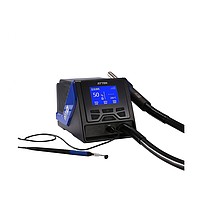
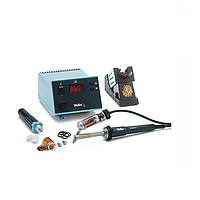
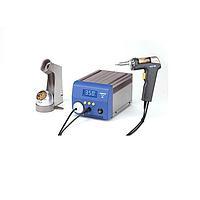
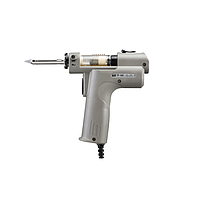
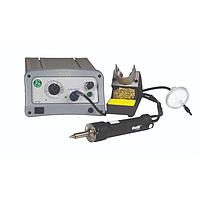
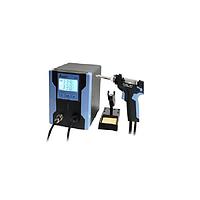
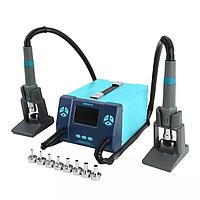
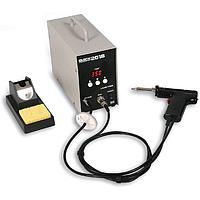
Desoldering stations Repair Service
When a desoldering station starts losing suction, overheating, or failing to remove solder cleanly, rework quality drops quickly. In electronics production, maintenance labs, and repair benches, a reliable Desoldering stations Repair Service helps restore process stability, reduce PCB damage risk, and keep SMT or through-hole rework tasks running with fewer interruptions.
This category is intended for businesses and technical users who need service support for desoldering and solder removal equipment used in electronic circuit repair and assembly environments. It covers repair needs for common issues in professional stations, while also providing a useful reference point for teams working across broader soldering and rework workflows.
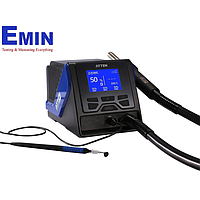
Why desoldering station repair matters in electronics work
Desoldering stations are critical where components must be removed cleanly without excessive thermal stress or pad lifting. In practice, even small faults in the heating system, vacuum path, handpiece, or control section can lead to incomplete solder extraction, longer cycle times, and inconsistent repair results.
For B2B users, repair service is not only about fixing a failed unit. It is also about recovering stable desoldering performance, improving operator efficiency, and extending the usable life of equipment that supports ongoing board repair, prototyping, and rework operations.
Typical service needs for desoldering equipment
A repair request often begins when the station no longer heats correctly, struggles to maintain temperature, or loses vacuum strength during solder removal. Other common symptoms include blocked suction paths, worn handpiece assemblies, intermittent control behavior, and reduced responsiveness during repeated rework cycles.
Because these systems combine heat, airflow or vacuum, and electronic control, diagnosis should consider the full operating chain rather than a single visible symptom. A professional service process helps identify whether the issue is related to the station body, the desoldering tool, internal consumable paths, or supporting electrical components.
For operations that also rely on standard soldering tools, related support may be useful alongside soldering station repair service when multiple workstations are managed within the same production or maintenance environment.
Supported brands and service examples
This category includes service references for major manufacturers commonly used in professional electronics work. Examples include HAKKO, GOOT, PACEWORLDWIDE, Proskit, and WELLER, all of which are recognized in soldering and desoldering applications across industrial and repair settings.
Representative service items in this category include HAKKO Solder Removal Rework Station Repair Service, GOOT Solder Removal Rework Station Repair Service, PACEWORLDWIDE Solder Removal Rework Station Repair Service, Proskit Solder Removal Rework Station Repair Service, and WELLER Solder Removal Rework Station Repair Service. These examples help illustrate the scope of supported repair work without implying that every unit shares the same fault pattern or service procedure.
What to consider before requesting repair
Before sending a station for service, it is helpful to record the actual operating symptom as clearly as possible. Useful observations may include whether the unit powers on, whether the tip or nozzle heats up, whether suction is present, whether performance degrades after warm-up, and whether the issue appears continuously or only under load.
It is also practical to note the equipment brand, product name, and any behavior linked to the handpiece or control panel. Clear symptom reporting can shorten troubleshooting time and make repair handling more efficient, especially for technical teams managing several similar workstations.
In some environments, desoldering equipment is only one part of a broader rework line. If your process also involves integrated bench systems, reviewing repair support for assembly and repair stations may help align service planning across the full workstation setup.
How repair service supports process continuity
In electronics manufacturing and service operations, downtime often affects more than one device. A malfunctioning desoldering station can slow component replacement, inspection, touch-up, and failure analysis work, especially where boards need careful rework rather than simple removal.
Using a dedicated repair service for desoldering stations can support better continuity by restoring equipment that technicians already know how to operate. This is often more practical than changing tools or workflows unexpectedly, particularly when teams are trained around a specific station family or manufacturer ecosystem.
Where repair demand extends to adjacent equipment in the same rework process, businesses may also compare needs with lead cutter repair service or other specialized repair categories to keep the full line operational.
Brand ecosystems and compatibility awareness
Many companies standardize around a preferred equipment brand for consistency in operation, training, and maintenance. In that context, a repair category covering names such as HAKKO, GOOT, PACEWORLDWIDE, Proskit, and WELLER is useful for buyers and maintenance coordinators who want a clearer view of available support across their installed base.
At the same time, repair requirements should always be assessed by the actual station condition rather than by brand alone. Two units from the same manufacturer may present very different service needs depending on age, usage frequency, contamination level, and the type of rework being performed.
Choosing the right service path for your application
The right approach depends on how the station is used in your workflow. Bench-level repair environments may prioritize precision and repeatability during component removal, while production support teams may focus more on uptime, service coordination, and minimizing disruption to downstream inspection or assembly tasks.
When evaluating service options, it helps to think in terms of application fit, symptom clarity, and equipment role in the process. A desoldering station used occasionally for maintenance has different support priorities than one used daily in a high-turnover rework cell.
If your operation includes automated joining equipment in addition to manual soldering and rework tools, related categories such as welding robot repair service may also become relevant within the wider maintenance plan.
Final considerations
Reliable desoldering performance is essential for clean component removal, controlled rework, and protection of sensitive PCBs. A focused service category for desoldering station repair makes it easier to identify support options for commonly used brands and align repair activity with the real needs of electronics production, repair, and maintenance teams.
Whether you are managing a single workstation or a broader rework environment, this category provides a practical starting point for restoring equipment condition and planning service around the tools that matter most in day-to-day solder removal work.
Get exclusive volume discounts, bulk pricing updates, and new product alerts delivered directly to your inbox.
By subscribing, you agree to our Terms of Service and Privacy Policy.
Direct access to our certified experts