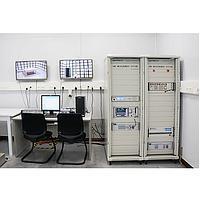
EMC and EMI Tester Repair Service
When EMC and EMI test equipment starts producing unstable readings, unexpected failures, or inconsistent pre-compliance results, it can quickly affect troubleshooting, validation schedules, and product development timelines. A reliable EMC and EMI Tester Repair Service helps restore measurement confidence while extending the usable life of specialized instruments used in laboratories, service centers, and industrial test environments.
This category is intended for organizations that need repair support for equipment used in electromagnetic compatibility and electromagnetic interference testing. It covers service needs across different parts of the test chain, from signal conditioning and disturbance generation to supporting power and isolation equipment that help maintain a controlled test setup.
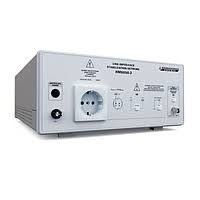
Why repair matters for EMC and EMI test systems
EMC and EMI instruments often operate in demanding conditions where repeatability is critical. Even small faults in internal circuits, connectors, power sections, or control paths can lead to unreliable results, making it difficult to distinguish between an actual product issue and a test system problem. In this context, repair service is not only about fixing a fault, but also about helping restore stable operation for ongoing engineering work.
These systems are frequently part of a broader measurement workflow. A faulty pre-compliance set, disturbance generator, amplifier, or isolated power accessory can affect multiple stages of diagnosis. Companies that also maintain related RF and telecom test assets may benefit from reviewing nearby service categories such as vector network analyzer repair service when the same lab supports wider signal integrity and compatibility testing tasks.
Typical equipment covered in this category
This service category is focused on repair support for instruments used in EMC and EMI evaluation, including pre-compliance systems, conducted disturbance test platforms, dynamic range amplifiers, and supporting electrical infrastructure used around the test bench. Depending on the setup, these devices may be used for troubleshooting emissions behavior, simulating disturbances, or providing cleaner and safer power conditions during measurement work.
Representative examples in this category include the Tekbox Dynamic Range Amplifier Repair Service, Rohde & Schwarz EMC Precompliance Set Repair Service, KIKUSUI EMI and EMC Test System Repair Service, Schloeder Generator & Conducted Disturbances Test System Repair Service, TTI Low Distortion Power Source Repair Service, and GW INSTEK Isolated Transformer Repair Service. These examples illustrate that the category is not limited to one device type, but instead supports the broader EMC test ecosystem required for dependable bench and lab operation.
Common signs that an EMC or EMI tester may need repair
Service is often required when operators notice behavior that cannot be explained by the device under test or by a normal test setup change. Typical warning signs include unstable output, intermittent operation, abnormal noise, failed startup, unresponsive controls, communication issues, or readings that no longer align with expected reference behavior. For pre-compliance and disturbance testing, even a subtle fault can undermine comparison over time.
In many cases, symptoms appear gradually rather than as a total failure. An amplifier may lose consistency, a power source may no longer maintain expected output quality, or an isolated transformer may behave unpredictably under load. When these problems appear alongside issues in adjacent instruments, it may also be useful to evaluate related service needs such as RF and microwave power meter repair for labs that verify signal levels across connected test equipment.
Repair considerations across different device roles
Not every unit in an EMC bench performs the same function, so repair priorities often depend on where the problem occurs in the workflow. A dynamic range amplifier supports signal handling and may affect sensitivity or measurement margin. A pre-compliance set typically supports emissions troubleshooting and therefore needs dependable operation to preserve comparative testing. Disturbance generators and conducted disturbance systems must also operate consistently to support repeatable immunity-related evaluation.
Supporting devices such as low distortion power sources and isolated transformers play a different but equally important role. They help create a controlled electrical environment around the test setup, reducing uncertainty introduced by unstable supply conditions. When these supporting devices drift or fail, the resulting test instability may look like an EMC problem when it is actually a power quality or isolation issue.
Manufacturer familiarity and service context
Repair work in this category may involve equipment from established brands such as Rohde & Schwarz, KIKUSUI, TTI, Schloeder, Tekbox, and GW INSTEK. Different manufacturers design their systems for different use cases, but the repair objective remains similar: restore dependable operation so the instrument can return to practical use in diagnostics, validation, or maintenance workflows.
For users managing mixed-brand labs, service planning is often easier when equipment is viewed by function rather than by brand alone. An EMC bench may include core compatibility tools together with RF measurement devices, wave test instruments, and auxiliary analyzers. In that kind of environment, related categories such as audio analyzer repair service may also be relevant where conducted noise, distortion, or signal behavior must be assessed across multiple test domains.
How to choose the right repair service request
For efficient processing, it helps to identify the device role, fault symptoms, and operating context before submitting a repair inquiry. Useful details typically include whether the issue is related to power-up, output stability, control response, display behavior, signal path performance, or intermittent operation. If the instrument is part of a larger bench, noting how the failure affects the overall setup can also help clarify the likely service path.
It is also practical to match the request to the actual equipment type rather than using a broad description. For example, a Rohde & Schwarz EMC Precompliance Set Repair Service request is different in context from a GW INSTEK Isolated Transformer Repair Service or a TTI Low Distortion Power Source Repair Service, even if the user experiences similar symptoms such as unstable performance. Clear categorization helps reduce delays and improves service coordination for specialized equipment.
Supporting long-term test reliability
EMC and EMI equipment is often used to investigate problems that are already difficult to isolate, so dependable instrument behavior is essential. A repair-focused approach allows companies to maintain critical assets, reduce disruption in engineering workflows, and avoid unnecessary replacement of instruments that still have strong operational value. This is especially important for test environments that rely on a combination of core analyzers, disturbance generators, signal accessories, and controlled power devices.
If your lab or service team relies on compatibility test equipment for troubleshooting, pre-compliance work, or disturbance analysis, this category provides a practical path to restore functionality across those systems. Choosing the right EMI and EMC repair support starts with understanding the instrument’s role in the measurement chain and addressing faults before they compromise test confidence further.
Get exclusive volume discounts, bulk pricing updates, and new product alerts delivered directly to your inbox.
By subscribing, you agree to our Terms of Service and Privacy Policy.
Direct access to our certified experts