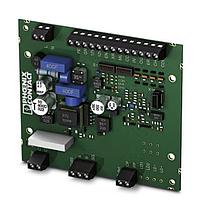
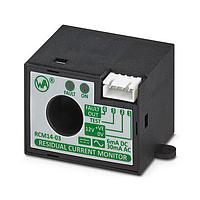
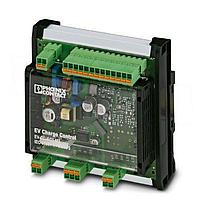
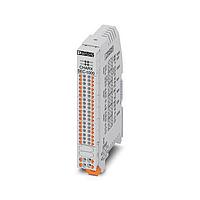
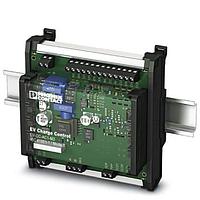
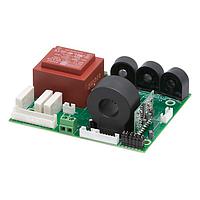
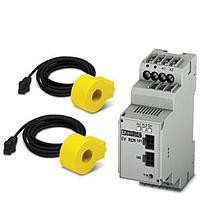
Charge Controllers
Reliable charging starts long before power reaches the vehicle. In EV infrastructure, the controller is the part that coordinates communication, manages charging logic, and helps ensure the station operates safely and predictably within the wider system. For OEMs, panel builders, and integrators, choosing the right charge controller affects not only charger performance, but also interoperability, diagnostics, and long-term maintenance.
This category is intended for buyers who are building or specifying charging equipment for commercial, industrial, or embedded e-mobility applications. Whether the priority is system integration, control architecture, or dependable operation in the field, charge controllers play a central role in how a charging point behaves under real operating conditions.
What charge controllers do in an EV charging system
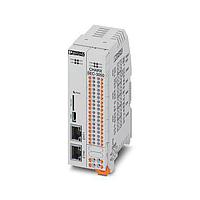
A charge controller acts as the intelligence layer inside a charging station. It typically manages the charging sequence, handles communication between the charger and the vehicle, and supports the control decisions required for safe energy transfer. In practice, this means the controller helps coordinate when charging starts, how it is monitored, and how the station responds to status changes or fault conditions.
In many projects, the controller also serves as a bridge between the power section, user interface, and higher-level system functions. That makes it an important component in both standalone chargers and more connected installations where reporting, access control, or integration with broader energy systems may be required.
Why controller selection matters for B2B projects
For industrial and commercial deployments, the controller should be evaluated as part of the overall charger architecture rather than as an isolated part. A well-matched controller can simplify engineering work, support consistent charger behavior, and reduce friction during commissioning. This is especially important when building scalable charger platforms or adapting one design across multiple installation types.
Selection also affects serviceability over time. Integrators often look for solutions that fit clearly into existing control concepts, allow straightforward diagnostics, and support dependable operation in demanding environments. If the wider project includes complete charging hardware, it may also be useful to review related EV charger solutions to align the controller choice with the finished station design.
Typical application scenarios
Charge controllers are used across a broad range of EV charging equipment, from compact integrated charging points to more complex installations with multiple functional subsystems. In OEM design, they are often selected early because they influence enclosure layout, signal routing, and control strategy. In retrofit or upgrade work, they may be chosen to support modernization of charger logic without redesigning the entire installation.
They are also relevant where charging infrastructure must fit into a larger automation environment. In these cases, engineers may need to think beyond the charging point itself and consider coordination with monitoring, protection, or power management elements. Supporting components from the wider EV charger accessories ecosystem can also affect how the controller is deployed in the final assembly.
Key evaluation points when comparing charge controllers
Not every project has the same technical priorities, so comparison usually starts with the intended charger type, required control functions, and expected integration depth. Buyers often assess how well a controller fits the communication and control concept of the station, how easily it can be incorporated into the product design, and whether it supports the operational behavior expected by the end application.
Another practical consideration is the surrounding electrical and protection concept. A controller does not operate alone; it works alongside sensing, switching, and protective elements that influence system safety and reliability. In more advanced charging architectures, engineers may also compare the controller’s role against dedicated charging control components already used in similar designs to maintain consistency across platforms.
Manufacturer landscape in this category
This category includes solutions from established suppliers in industrial connectivity and charging system technology. PHOENIX CONTACT is widely recognized in automation and e-mobility environments, making it a relevant option for projects that value compatibility with broader industrial electrical systems. Western Automation is also represented, offering additional context for buyers evaluating control-related components within EV charging infrastructure.
When comparing manufacturers, it helps to look at the broader application fit rather than focusing only on the device itself. In B2B procurement, long-term availability, integration approach, and how the product aligns with the charger architecture are often just as important as the controller’s core function.
How charge controllers fit into the broader charging ecosystem
A controller should be viewed as one part of a complete charging system. It works together with the power stage, connection hardware, user interface, and supporting electrical components to create a usable and safe charging point. Because of this, controller selection is often tied to decisions about enclosure design, interface layout, and the expected level of communication within the station.
For teams building a complete solution, it can be helpful to evaluate the controller in relation to the full charging workflow, from installation and commissioning to operation and maintenance. This broader perspective usually leads to better design choices than selecting on isolated criteria alone, especially in projects where uptime and service access matter.
Choosing the right option for your project
The best fit usually depends on how the charging equipment will be built, deployed, and maintained. OEMs may prioritize integration flexibility and design consistency, while system integrators may focus more on commissioning logic, compatibility, and support for reliable field operation. In either case, the controller should match the technical intent of the charger and the practical realities of the installation.
Exploring this category with those requirements in mind makes it easier to narrow down suitable options for commercial and industrial EV charging applications. A well-chosen controller platform supports smoother engineering, clearer system behavior, and a more robust foundation for scalable e-mobility infrastructure.
Get exclusive volume discounts, bulk pricing updates, and new product alerts delivered directly to your inbox.
By subscribing, you agree to our Terms of Service and Privacy Policy.
Direct access to our certified experts