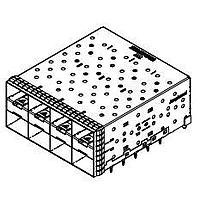
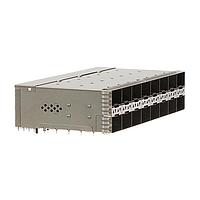
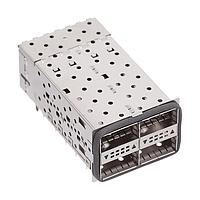
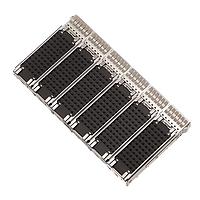
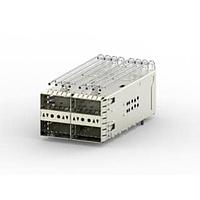
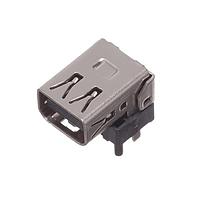
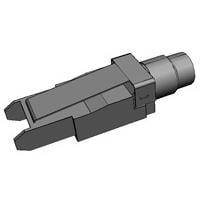
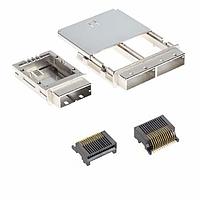
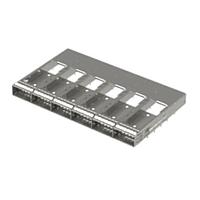
I/O Connectors
Reliable signal and power interfaces are essential anywhere equipment needs to connect cleanly to sensors, controllers, panels, drives, or peripheral devices. In industrial systems, connector choice affects not only fit and compatibility, but also uptime, serviceability, and long-term stability under vibration, repeated mating, and demanding installation environments.
I/O Connectors are used to create these practical connection points between devices and subsystems. Within industrial automation and electronic integration, this category supports a wide range of applications, from machine control wiring and interface ports to communication links and compact equipment interconnects where consistency and mechanical reliability matter.
Where I/O connectors fit in industrial systems
In day-to-day automation work, I/O connectors are typically selected when a system needs a defined interface for input, output, control, or data exchange. They help simplify assembly, support faster replacement during maintenance, and provide a more organized alternative to permanent hardwiring in applications that require modularity or periodic servicing.
Depending on the equipment architecture, these connectors may appear on control cabinets, embedded electronics, instrumentation assemblies, operator interfaces, or machine subassemblies. The exact format can vary, but the common purpose is the same: to provide a dependable connection point between functional parts of a larger system.
Key selection factors before choosing a connector
Connector selection usually starts with the electrical and mechanical requirements of the interface. Buyers and engineers often look at contact count, mounting style, mating cycles, available space, and whether the connector is intended for signal transmission, low-power control lines, or mixed interface duties. Environmental conditions such as vibration, dust exposure, and handling frequency also play an important role.
It is also important to consider the broader system layout. In some projects, an interface may need to work alongside I/O modules or connect back to a board-level subsystem. In more compact electronic assemblies, designers may compare alternatives such as FFC & FPC connectors when low-profile cable routing is a better fit. Choosing the right category early can reduce redesign work later in the project.
Common application scenarios
Industrial I/O interfaces are used across a broad range of equipment types. They are commonly found in factory automation panels, test setups, embedded controllers, communication interfaces, and machine assemblies that need detachable connections for field wiring, service access, or subsystem replacement.
They are also relevant in systems where consistent mating and clear interface definition improve maintenance efficiency. When technicians can quickly identify and reconnect the correct interface, downtime is easier to manage. This is especially valuable in production environments where equipment availability and replacement speed are operational priorities.
How connector families differ by design intent
Not all I/O connectors are chosen for the same reason. Some are prioritized for compact size and board-level density, while others are preferred for more rugged mechanical engagement or easier handling during installation. In industrial settings, the best option is often the one that balances electrical performance with practical maintenance requirements.
There are also cases where the interface needs to support higher current paths or more robust mechanical coupling than a general-purpose signal connector can provide. In those situations, engineers may evaluate related options such as heavy duty power connectors for the power side of the design, while using I/O connectors for control or communication functions. Treating the connector system as part of the full equipment architecture usually leads to better results than selecting each part in isolation.
Manufacturer ecosystems and compatibility considerations
Many buyers prefer to work within established connector ecosystems from well-known suppliers because documentation, availability, and mating compatibility are easier to manage over the life of the equipment. Brands such as Amphenol, 3M, AMP Connectors - TE Connectivity, and Amphenol FCI are often considered when sourcing interconnect components for industrial and electronic applications.
Compatibility planning matters just as much as brand preference. Before standardizing on a connector family, it is worth checking mating interface style, panel or PCB integration requirements, cable termination method, and service access constraints. For OEM builds and maintenance stock planning, consistency across product lines can make procurement and support more straightforward.
Integration with broader interconnect strategies
I/O connectors are rarely selected as standalone items without reference to the rest of the system. They often sit alongside internal board interconnects, cable assemblies, or specialized connectors used in more demanding environments. For example, applications with stringent environmental or defense-style requirements may require a different solution class, such as fiber optic MIL spec connectors, rather than a conventional electrical I/O interface.
System-level thinking helps ensure that connector choices support installation, maintenance, and future expansion. A connector that works well electrically but is difficult to access, terminate, or replace may create avoidable service challenges later. For this reason, many engineering teams evaluate connector selection together with enclosure layout, cable routing, and field maintenance procedures.
What to look for when browsing this category
When reviewing available options in this category, it helps to begin with the intended interface role: signal, control, communication, or mixed-use interconnection. From there, narrow the selection based on form factor, mounting approach, and the type of equipment the connector will integrate with. This is usually more effective than filtering only by general connector appearance.
It is also useful to think about installation and lifecycle needs. Questions such as how often the connector will be mated, whether field replacement is expected, and how much room is available around the connection point can quickly eliminate unsuitable options. A practical shortlist should support both the design requirement and the realities of assembly and service.
Choosing the right I/O connector for long-term reliability
The right connector supports more than a simple electrical connection. It contributes to maintainability, cleaner integration, and predictable performance across the life of the machine or device. That is why connector selection is often a small decision with broad impact on production continuity and service efficiency.
As you compare products in this I/O Connectors category, focus on interface purpose, mechanical fit, and how the connection will be used in the real application. A well-matched choice can simplify installation today and reduce troubleshooting and replacement effort later.
Get exclusive volume discounts, bulk pricing updates, and new product alerts delivered directly to your inbox.
By subscribing, you agree to our Terms of Service and Privacy Policy.
Direct access to our certified experts