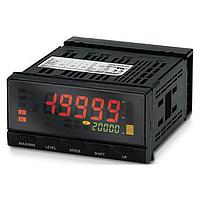
Process Controllers
Stable process performance depends on more than a sensor and a setpoint. In many industrial systems, operators also need clear indication, reliable panel control, and consistent response to changing input signals such as temperature, current, voltage, or other process values. That is where Process Controllers play an important role across machine panels, control cabinets, and production lines.
This category brings together panel-mounted devices used to monitor, indicate, and control process variables in industrial environments. Whether the requirement is a compact process meter, a process indicator, or a controller integrated into a broader automation architecture, the selection here supports practical needs in manufacturing, utilities, packaging, and general machine building.
Where process controllers fit in industrial automation
A process controller is typically used where a measured variable must be displayed, tracked, or controlled in a predictable way. Depending on the application, the device may receive an analog input, scale the signal for display, trigger outputs based on thresholds, or support a more advanced control loop. In practice, these units are often installed on operator panels to provide immediate visibility of a live process value.
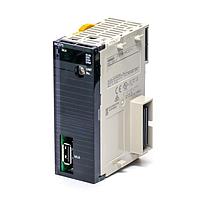
Compared with broader automation platforms, process controllers are often selected for their direct, focused function. They can be used as standalone panel instruments or as part of a larger control system that may also include programmable controllers for machine logic and communication. This makes them useful in both simple retrofit projects and more integrated production systems.
Common device types within this category
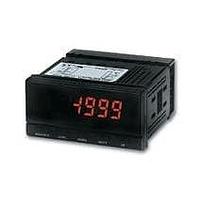
This category includes several closely related device roles. Some models function primarily as a process meter, giving operators a readable display of the measured signal. Others act as a process indicator for current or voltage inputs, helping users monitor field data without adding unnecessary complexity to the control panel.
There are also controllers designed for more active regulation tasks. In applications where loop behavior matters, users may compare these products with PID controllers to determine whether simple indication and output control are sufficient or whether tighter closed-loop control is required. The right choice depends on the process variable, the control objective, and the level of tuning needed.
Representative products and manufacturers
Within this range, Omron Automation and Safety is strongly represented with panel-mount process meters and indicators such as the K3MA-J series and K3HB series. Examples in this category include the K3MA-J-A2 24VAC/VDC, K3MA-J 100-240VAC, K3MA-J 24VAC/VDC, K3HB-XAD 24VAC/VDC, and K3HB-XVD-A1 24VAC/VDC. These products illustrate common selection points such as supply voltage, display style, and input type.
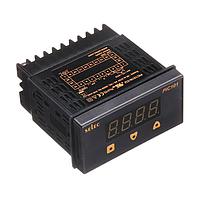
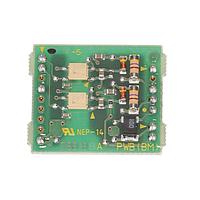
Altech also appears in the category with models such as PIC152N-B-2-CU, PIC101N-CU, and PIC152N-A-CU, which fit typical panel control and indication needs. In addition to complete units, the category may include supporting items such as the Omron E53-AKB event input board or modules used within a wider control ecosystem. That is useful for buyers who are maintaining an installed base rather than sourcing only standalone front-panel devices.
How to choose the right process controller
The first step is to confirm the nature of the input signal and the role of the device in the system. Some applications need only local display, while others need alarms, switching, signal conditioning, or integration into a larger automation strategy. Input compatibility, display readability, mounting method, and available power supply options are often the most practical starting points.
It is also important to consider the operator environment. Many industrial users prefer a panel-mount format with a clear digital display for quick status checks during normal operation or troubleshooting. If the process requires specialized control behavior for a specific variable, it may be helpful to review adjacent solutions such as a level controller or a humidity controller, where the control objective is tied to a more defined application.
Typical applications in the field
Process controllers are used in a wide range of industrial settings where live values must be made visible and actionable. Common examples include monitoring analog signals in utility panels, displaying process values on packaging lines, supervising tank or dosing signals, and supporting machine operators with clear numeric feedback. Even a simple local display can improve setup accuracy and reduce response time when process conditions change.
In some installations, these devices serve as dedicated front-end instruments while a central controller manages logic and communication. In others, they are selected because a compact, focused controller is more practical than implementing a larger automation platform. This flexibility makes them relevant in both new equipment design and maintenance or upgrade projects.
What matters in a B2B purchasing context
For engineering teams, maintenance departments, and procurement buyers, selection usually goes beyond basic functionality. Power supply range, panel cutout compatibility, display type, and replacement fit are often critical when standardizing spare parts or upgrading installed equipment. When replacing an existing unit, even seemingly small details such as front dimensions or terminal style can affect installation time and downtime risk.
It is also common for B2B buyers to source process controllers alongside related control hardware. In applications involving energy regulation or driven loads, users may also evaluate a power controller for the broader control architecture. Looking at the full system context helps ensure the selected device supports both immediate operating needs and long-term maintenance planning.
Supporting reliable monitoring and control
The value of a good process controller is not only in control action, but also in process visibility. A readable display, suitable power input, and the right signal handling can make a measurable difference in daily operation. For many industrial panels, these devices provide the practical link between field measurement and operator decision-making.
When comparing options in this category, focus on the process variable, control intent, installation format, and compatibility with the rest of the system. A well-matched selection can simplify panel design, support maintenance, and improve confidence in day-to-day process monitoring.
Get exclusive volume discounts, bulk pricing updates, and new product alerts delivered directly to your inbox.
By subscribing, you agree to our Terms of Service and Privacy Policy.
Direct access to our certified experts