LED Displays
Clear visual indication is still essential in many industrial and embedded systems, especially where information must remain readable at a glance. From simple numeric readouts to compact matrix indicators, LED Displays are widely used for status feedback, counters, process values, and operator-facing visual outputs in equipment that demands reliability and straightforward integration.
Within industrial and electronic design environments, this category supports applications ranging from panel-mounted indicators to compact display modules for instruments, control boards, and prototype systems. Compared with other display technologies, LED-based modules are often selected for their visibility, familiar drive methods, and suitability for simple alphanumeric or numeric presentation.
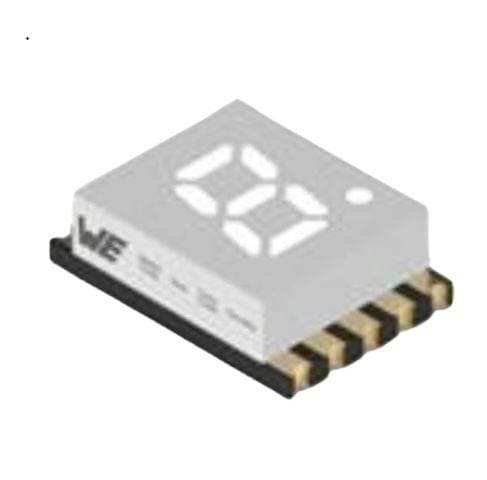
Where LED display modules fit in real-world systems
LED display modules are commonly chosen when a device needs to show values or symbols continuously without the complexity of a graphic interface. Typical use cases include counters, measurement instruments, timer boards, industrial control panels, test fixtures, and compact HMI elements where brightness and quick recognition matter more than advanced graphics.
This category includes both dot matrix displays and multi-digit panel-style modules. Dot matrix formats are useful when a design needs flexible characters, symbols, or small message areas, while digit-based modules are often preferred for direct numeric presentation such as setpoints, channel readings, or operating status.
Common display formats in this category
One of the practical strengths of LED displays is the range of form factors available. Engineers may choose a single-digit module for a compact local readout, a multi-digit panel for instrument-style interfaces, or a matrix display for more flexible character generation. The right choice usually depends on how much information must be shown and how the user will interact with the equipment.
Examples in this category illustrate that variety well. The Broadcom 5082-7651-DE000 is a 1-digit LED module format suited to direct numeric indication, while products such as the Lite-On LTC-2621B and Lite-On LTC-4627P support multi-digit display requirements. For matrix-based designs, parts like the HPE HDSP-2133, HPE HLCP-E100, Lite-On LTC-4724JF, Lite-On LTP-747KY, Lite-On LTP-2157AKR, Lite-On LTP-2157AKA, and ams OSRAM DLO1414-21 show the breadth of available dot matrix options.
Selection factors that matter in engineering design
Choosing an LED display is rarely just about size. In practical design work, engineers usually review the required number of digits or matrix points, display color, mounting style, drive configuration, and viewing conditions. Electrical interface details such as common anode or common cathode arrangement can also influence compatibility with the intended driver circuit or controller architecture.
Mechanical integration is equally important. Pin count, package style, board space, and front-panel layout all affect whether a display module fits smoothly into a new design or a replacement scenario. A compact DIP-style module may work well for through-hole assemblies and legacy layouts, while more specialized matrix modules may be better suited to custom embedded interfaces.
If the application eventually needs a different viewing style or richer visual output, related technologies such as LCD numeric display modules or OLED displays may also be worth comparing during early design evaluation.
Representative manufacturers and product examples
Several well-known suppliers appear in this category, covering both industrial-grade display components and maker-oriented modules. Lite-On is strongly represented with multiple dot matrix and panel display options, making it relevant for designers looking for established LED indication formats across different digit counts and layouts.
Broadcom contributes compact numeric display modules such as the 5082-7651-DE000 and 5082-7663-D0B00, which are suitable examples of classic LED digit displays used in instrumentation and board-level indication. HPE and ams OSRAM also appear with dot matrix products aimed at applications where flexible visual patterns or character-style output are needed. For development, prototyping, or educational builds, the Adafruit 3162 LED Charlieplexed Matrix - 9x16 LEDs - Warm White highlights a different style of LED matrix implementation that can support creative embedded display concepts.
LED displays in the broader display ecosystem
LED modules are often the preferred option when the display task is simple, direct, and expected to remain readable under varied ambient lighting. They are especially practical for numeric values, limited symbols, and concise machine feedback. In many cases, they offer a good balance between readability and implementation simplicity for embedded electronics.
That said, not every project has the same display requirements. If a design needs full-color graphics, larger user interfaces, or more advanced visual layers, it may be more appropriate to review TFT displays and accessories. For straightforward visual indication, however, LED modules remain a highly relevant and proven choice.
What to review before ordering
Before selecting a part, it helps to define the display task clearly: numeric-only, limited symbols, or matrix-driven output. Then review the intended supply and drive scheme, board mounting constraints, available space on the front panel, and the required color or visual contrast for the operating environment. These factors usually narrow the options quickly and reduce redesign risk later in the project.
It is also worth checking whether the module is being used in a new design, a service replacement, or a functionally similar retrofit. In replacement scenarios, package footprint, pin arrangement, and display format often matter just as much as the visual characteristics. In new designs, flexibility for driver selection and firmware control may be a stronger priority.
Choosing the right LED display for your application
This category brings together practical LED display formats for equipment builders, electronics designers, and industrial buyers who need clear, dependable visual indication. Whether the requirement is a compact single-digit readout, a multi-digit panel module, or a dot matrix display for more flexible output, the available range supports both legacy-style designs and newer embedded systems.
A careful match between display format, electrical interface, mechanical footprint, and viewing needs will usually lead to a better result than focusing on appearance alone. For projects that rely on clear status presentation and efficient integration, LED display modules remain a dependable building block across many industrial and electronic applications.
Get exclusive volume discounts, bulk pricing updates, and new product alerts delivered directly to your inbox.
By subscribing, you agree to our Terms of Service and Privacy Policy.
Direct access to our certified experts