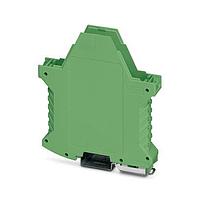
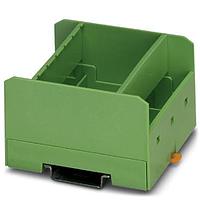
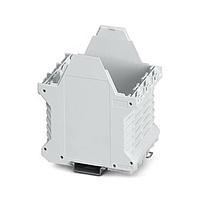
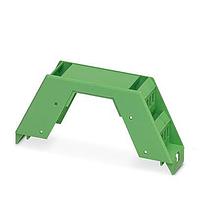
Industrial Automation Enclosures
Protecting control hardware is not just about putting electronics inside a box. In production lines, machine cells, and industrial IT environments, enclosure design directly affects uptime, maintenance access, thermal stability, and long-term reliability. That is why Industrial Automation Enclosures are selected with close attention to installation format, internal layout, operating conditions, and the devices they are meant to house.
This category supports applications where controllers, industrial PCs, power distribution components, interface devices, and related hardware need a structured and durable housing solution. Depending on the project, that may mean a rackmount chassis for industrial computing, a cabinet-style solution for control integration, or a broader enclosure system designed for organized cable routing and service access.
Where industrial automation enclosures fit in real systems
In automation projects, the enclosure is part of the system architecture rather than an afterthought. It helps separate sensitive equipment from dust, accidental contact, vibration, and routine plant-floor wear, while also providing a defined space for mounting, wiring, cooling, and front access. This becomes especially important when the installation includes industrial PCs, data acquisition hardware, communication devices, or power-related components.
Many buyers reviewing this category are looking for housings that support dependable operation in manufacturing, process control, equipment integration, and industrial monitoring. If your application also requires broader housing formats beyond this specific range, it may be useful to compare related electrical enclosures for other panel-based or protective installation needs.
Rackmount solutions for industrial computing and control
A significant part of this category is relevant to users building around rackmount industrial platforms. These are common in control rooms, factory servers, machine vision systems, test stations, and industrial data processing setups where standardized rack installation simplifies deployment and maintenance. Rackmount designs also make it easier to manage front access, status indication, fan placement, and drive bay organization.
Examples in this range include the Advantech IPC-610-H 4U Rackmount Chassis and related IPC-610 variants such as the IPC-610MB-30HD, IPC-610BP-30HD, IPC-610MB-00HD, and IPC-610BP-00HD. These products illustrate a typical industrial 4U chassis approach, with multiple drive bay positions, integrated cooling fans, front I/O access, and operational features that support deployment in controlled industrial environments rather than standard office IT use.
Key selection points when choosing an enclosure
The right enclosure usually depends on more than external dimensions. Buyers should look at form factor compatibility, available mounting space, cooling strategy, front and rear accessibility, and whether the layout supports future maintenance without major disassembly. For industrial automation, practical details such as airflow path, indicator visibility, and room for cable management can have as much impact as the enclosure footprint itself.
It is also important to match the housing style to the equipment role. A compact control assembly may need a different solution than a rack-based industrial computer. Projects with expansion cards, storage devices, and interface hardware often benefit from a chassis layout that supports modular service and predictable internal organization. When a full rack environment is part of the plan, users often review compatible rack cabinets at the same time to make sure the final installation is mechanically consistent.
Environmental and operational considerations
Industrial settings can expose enclosure systems to dust, heat buildup, vibration, and variable maintenance practices. A suitable enclosure helps manage these risks by supporting stable internal conditions and protecting installed hardware from avoidable stress. In rackmount designs, features such as fan integration, air filters, and status indicators can contribute to easier monitoring and more predictable service intervals.
The Advantech IPC-610 series products listed in this category reflect those priorities. Their 4U rackmount format, front interface access, built-in fan arrangement, and operating temperature guidance make them relevant for users who need a structured chassis for industrial computing hardware. Rather than focusing on raw specifications alone, it is better to evaluate how those features support the actual duty cycle, access requirements, and environmental conditions of the installation.
Supporting serviceability and system expansion
An enclosure should make the system easier to maintain over time, not harder. Technicians often need quick access to internal components for upgrades, drive replacement, cleaning, inspection, or troubleshooting. Enclosures designed for serviceability can reduce downtime by simplifying those routine tasks and keeping internal hardware organized.
This matters even more in automation systems that evolve after commissioning. Additional I/O, storage, communication modules, or power-related hardware may be introduced later, so enclosure selection should account for realistic expansion needs. For builds where mounting hardware, cable entry parts, brackets, or other supporting items are required, related electrical enclosure accessories can help complete the installation without compromising layout quality.
How this category relates to broader enclosure planning
Industrial automation projects rarely involve one isolated component. The enclosure must work with the overall mechanical and electrical design, including racks, cable paths, access zones, and system protection strategy. That is why buyers often evaluate this category together with other enclosure formats depending on whether the priority is panel integration, rack installation, or mixed equipment housing.
For applications that extend beyond a single chassis or require a wider infrastructure view, it can be useful to review racks and accessories alongside the enclosure itself. Taking that wider approach can help avoid issues later with mounting compatibility, layout constraints, or service access around installed automation equipment.
Typical use cases for industrial automation enclosures
Industrial automation enclosures are commonly considered for industrial PCs, control system integration, production data systems, machine-level computing, and monitoring applications where hardware needs structured mechanical protection. They are also relevant in environments where standard commercial PC housings are not appropriate due to service expectations, airflow demands, or operational durability requirements.
In practice, buyers may choose a 4U rackmount chassis when they need a familiar rack form factor with room for drives, cooling, and front-panel access. Products such as the Advantech IPC-610-H and other IPC-610 configurations are useful examples of how enclosure design supports industrial deployment: not by replacing the control system itself, but by providing the physical framework that keeps computing and interface hardware protected, organized, and maintainable.
Choosing with the full application in mind
The most effective enclosure choice comes from working backward from the real installation: what hardware will be mounted, how it will be serviced, what environmental conditions it will face, and how the system may expand later. Looking at the enclosure as part of the automation architecture helps narrow the options more effectively than comparing dimensions alone.
If you are evaluating housing options for industrial PCs, control assemblies, or rack-based automation equipment, this category provides a focused starting point. By matching the enclosure format to your operating environment, maintenance needs, and mounting strategy, you can build a more reliable and easier-to-support automation system over the long term.
Get exclusive volume discounts, bulk pricing updates, and new product alerts delivered directly to your inbox.
By subscribing, you agree to our Terms of Service and Privacy Policy.
Direct access to our certified experts