Image Sensors
Machine vision starts with the quality of the signal coming off the sensor. In industrial inspection, embedded imaging, security devices, and automated equipment, the right imaging component affects detection reliability, processing load, lighting requirements, and overall system performance. This is why selecting Image Sensors is not only about resolution, but also about how the device fits the application environment and the rest of the electronics stack.
This category brings together image sensing components used in industrial and embedded systems where stable image capture matters. Whether the goal is object detection, visual inspection, barcode reading, position verification, or compact camera integration, the range includes devices suited to different optical, mechanical, and processing requirements.
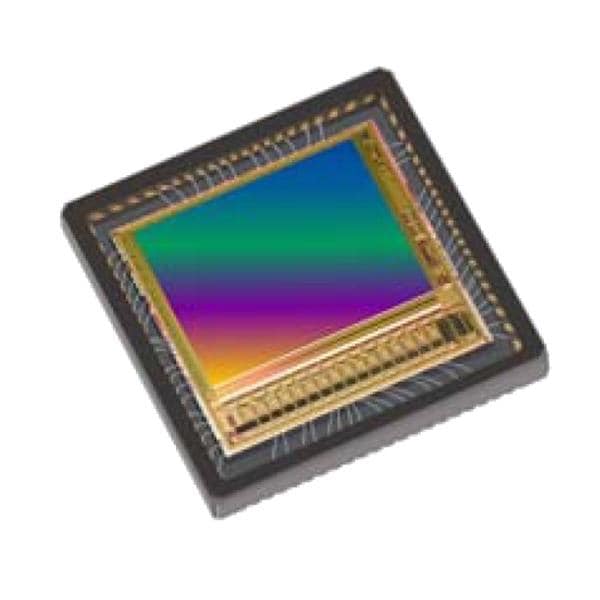
Where image sensors are used in industrial and embedded systems
In practical deployments, image sensors are found in equipment that needs to convert optical information into usable digital data. Typical use cases include inspection stations on production lines, compact industrial cameras, robotics vision modules, access control devices, and embedded systems that need to capture still images or video for analysis.
Compared with simpler optical devices, imaging components can support richer data capture for pattern recognition, defect detection, dimensional checks, or scene monitoring. In some systems, they work alongside other sensing technologies such as color sensors or ambient light sensors when the design requires both detailed imaging and contextual light measurement.
Key characteristics that influence sensor selection
The most important starting points are usually sensor type, image resolution, color or monochrome output, package style, and interface compatibility with the host design. CMOS devices are widely used because they support compact integration and are well suited to many modern embedded and industrial imaging tasks. Depending on the application, developers may prioritize high pixel count, lower latency, or better suitability for controlled lighting environments.
Voltage requirements and board-level integration also matter. For example, the onsemi NOII5SC1300A-QDC is listed as a color CMOS image sensor with 1280x1024 pixel output and a 3.3 V supply, which illustrates the kind of specification engineers review when matching a sensor to a processing board, power design, and target image quality. Mechanical constraints such as package footprint, thermal design, and lens or module compatibility are equally important during product development.
Representative product options in this category
This range includes products from established imaging suppliers such as ams OSRAM, onsemi, and OmniVision. Each can serve different project priorities, from compact embedded vision to larger-format industrial imaging and camera-oriented designs.
Examples include the ams OSRAM CMV300-4E7C1WP industrial camera device and the ams OSRAM CMV50000-1E3M1PA image sensor for applications that need dedicated imaging performance within industrial environments. From onsemi, options such as the MT9F002I12STCVD ES, AR0821CSSC18SMEA0-DPBR1, and AR0220AT3C00XUEA0-DRBR show the breadth of devices available for machine vision or embedded camera integration. OmniVision devices including OV07739-A34A, OS05B10-A45A-001A, OV09734-GA5A, OV10642-N79B-1F, and OV07221-V28A provide additional choices for compact video and digital camera solutions.
Rather than choosing by part number alone, it is usually better to compare products by intended operating context: required field of view, illumination method, frame handling strategy, processing bandwidth, enclosure limits, and the need for color versus monochrome capture.
Color, monochrome, and application fit
One of the most common decisions is whether the application truly needs color imaging. In some inspection systems, color data is essential for identifying markings, labels, or product variations. In others, monochrome output can be more practical when contrast, edge sharpness, or repeatable grayscale analysis matters more than full-color reproduction.
This distinction can also influence downstream processing. A system designed for presence detection, alignment verification, or OCR under controlled lighting may prioritize clean luminance information over color detail. By contrast, product sorting, packaging verification, or human-facing camera functions may benefit from color sensors that preserve more visual information for software analysis.
How image sensors fit into a larger sensing architecture
Image sensors are often only one part of a broader control and measurement system. In automated machinery, the imaging path may work together with trigger inputs, encoders, lighting controllers, and environmental sensors to improve repeatability. For example, airflow, dust, or enclosure conditions can affect long-term stability in optical systems, which is why some projects also review related technologies such as air quality sensors during overall equipment design.
In mobile or mechanically dynamic systems, camera data may also be complemented by orientation or motion information. Where installation angle or platform tilt affects image interpretation, devices from categories such as inclinometer-based sensing can support more reliable calibration and positioning logic. The right architecture depends on whether the image sensor is being used for monitoring, control feedback, or full machine vision analysis.
Practical buying considerations for engineers and OEM teams
For B2B sourcing, the best approach is to align the sensor with the full design requirement instead of optimizing around a single headline spec. Resolution alone does not guarantee system performance. Engineers should review image size, electrical compatibility, package format, intended camera architecture, software support needs, and production lifecycle considerations.
It is also useful to think early about integration risk. A compact sensor may simplify board layout but require more attention to optics and thermal management. A higher-resolution device may improve inspection detail while increasing memory bandwidth and processing requirements. In industrial and embedded projects, the most suitable part is often the one that balances image quality, integration effort, and long-term maintainability.
Choosing the right category options for your project
If you are comparing devices for a new camera design, an embedded vision module, or an industrial inspection platform, this category provides a focused starting point for evaluating image capture components from recognized manufacturers. Reviewing a shortlist by output type, form factor, and application environment is usually more effective than filtering by model family alone.
As requirements become clearer, you can narrow the range to sensors that match your optical setup, host processor, and operating conditions. A well-chosen image sensor helps reduce design compromises later, especially in systems where accuracy, repeatability, and dependable visual data are essential.
Get exclusive volume discounts, bulk pricing updates, and new product alerts delivered directly to your inbox.
By subscribing, you agree to our Terms of Service and Privacy Policy.
Direct access to our certified experts