Industrial Sensors
Reliable sensing is at the core of modern automation. Whether the goal is machine vision, motion feedback, environmental monitoring, or process control, choosing the right Industrial Sensors helps improve visibility into equipment status and supports more stable, repeatable operation across industrial systems.
This category brings together sensing technologies used in manufacturing, equipment design, and embedded industrial applications. From image-based detection to position measurement and other process-oriented sensing tasks, the range is suited to engineers, system integrators, maintenance teams, and OEM buyers looking for components that fit into a broader automation architecture.
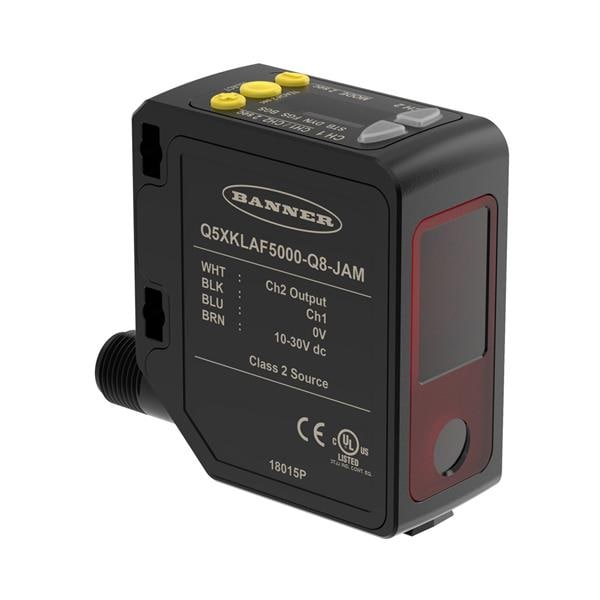
Where industrial sensors fit in automation systems
In practical terms, sensors convert physical conditions into usable electrical data for control, monitoring, and analysis. That data may be used by PLCs, edge devices, inspection systems, or higher-level platforms to trigger actions, confirm product quality, or identify abnormal operating conditions before they become failures.
Because of that role, sensor selection is rarely isolated. It often depends on the control platform, signal handling requirements, mounting constraints, and the speed of the application. In many projects, sensors are deployed alongside industrial controllers to turn field-level measurements into real-time decisions and machine logic.
Broad sensing tasks covered in this category
This category spans a wide set of industrial measurement and detection needs. It includes solutions for optical detection, image capture, temperature and pressure feedback, position tracking, proximity detection, vibration monitoring, current measurement, and environmental sensing such as humidity or air quality.
That breadth matters because industrial environments rarely rely on one sensing principle alone. A single machine may combine a vision-based check, a position sensor for actuator feedback, a temperature sensor for thermal control, and a proximity device for presence detection. For applications with visual inspection or image-based detection, it can also be useful to explore related cameras and accessories when building a complete vision setup.
Optical and image-based sensing for inspection and detection
Optical sensing is especially important where systems need to detect contrast, shape, movement, alignment, or surface characteristics. In these cases, image sensors and industrial camera components provide the basis for machine vision systems used in inspection stations, automated assembly, and material handling lines.
Examples in this category include devices from ams OSRAM, such as the CMV300-4E7C1WP, CMV50000-1E3M1PA, CMV4000-3E12M1CA, and CMV12000-1E5M1PA. These product examples illustrate the range from image sensor devices to industrial camera-oriented components used where resolution, frame handling, or optical capture capability is central to the application. In practice, selection depends on the inspection task, lighting conditions, integration method, and the processing chain used downstream.
Position and motion feedback in machinery
For moving assemblies, operator interfaces, and mechanism feedback, position sensing remains one of the most common requirements. Angle and linear measurement support tasks such as actuator position confirmation, lever or shaft tracking, and mechanical displacement feedback in industrial equipment.
Products such as the Alps Alpine RDC401D07A, RDC1014A0D, and RDC1014A0C are representative of resistive position sensing approaches within this broader ecosystem. These types of components are often chosen when designers need a straightforward sensing method for rotational or linear movement. In larger automation systems, they may work alongside speed monitoring, proximity detection, and counting functions, especially in equipment that also uses counters and tachometers for runtime or rotational feedback.
How to choose the right sensor for an industrial application
A good selection process starts with the measured variable and the operating environment. Engineers typically define what must be detected, how fast the response needs to be, what level of accuracy is required, and how the signal will be interpreted by the rest of the system. Mounting space, cable routing, contamination risk, and exposure to vibration or temperature variation also affect long-term performance.
It is also important to consider integration details early. Output type, interface expectations, mechanical packaging, and compatibility with the control cabinet or machine architecture can strongly influence the final choice. In electrically demanding installations, sensor deployment should also be reviewed together with circuit protection strategy to help safeguard control and sensing electronics.
Manufacturer context and component sourcing considerations
This category includes products from recognized suppliers serving industrial and embedded design workflows. Within the provided range, ams OSRAM is especially relevant for image-related sensing examples, while Alps Alpine appears in position sensing applications. Different manufacturers often contribute strength in specific sensing principles, package styles, or integration paths.
For B2B purchasing, it is useful to evaluate not only the sensing function itself but also product continuity, application fit, and how the component aligns with the overall bill of materials. Buyers supporting OEM production, prototyping, or maintenance replacement typically need a category structure that makes it easier to compare sensing approaches without losing sight of the broader automation system.
Supporting system performance with the right sensor mix
Industrial sensing is rarely about one standalone part. A well-designed system combines the right sensor type with appropriate control logic, signal handling, and mechanical installation. When these pieces are aligned, the result is better process visibility, more dependable machine behavior, and cleaner data for control or diagnostics.
As sensor requirements become more specialized, this category helps narrow the search by application intent rather than by generic component labels alone. That makes it easier to move from concept to implementation, whether the project involves machine vision, motion feedback, environmental monitoring, or condition-based sensing across industrial equipment.
For teams selecting components for new designs or replacement needs, a focused review of sensing principle, installation conditions, and system compatibility will usually lead to a better outcome than choosing on part name alone. This category is intended to support that process with a practical starting point for finding industrial sensing components that match real automation requirements.
Get exclusive volume discounts, bulk pricing updates, and new product alerts delivered directly to your inbox.
By subscribing, you agree to our Terms of Service and Privacy Policy.
Direct access to our certified experts