Infrared Detectors
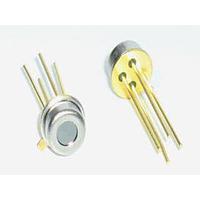
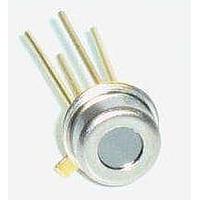
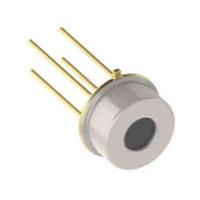
Reliable motion and presence detection often starts with the right sensing technology. In applications where contactless response, low power operation, and compact integration matter, Infrared Detectors are widely used to identify changes in thermal radiation and support automation, monitoring, and control tasks across commercial and industrial environments.
Within industrial sensor portfolios, this category is especially relevant for designers looking for passive infrared sensing for occupancy detection, equipment activation, energy-saving controls, and embedded electronic systems. The range typically suits OEM development, building automation, smart devices, and compact electronic assemblies where simple motion-triggered logic is required.
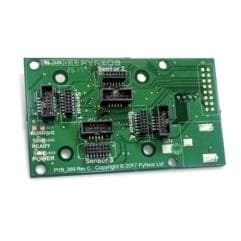
Where infrared detectors fit in sensing systems
Infrared detectors are commonly selected when a system needs to respond to the presence or movement of people or warm objects without physical contact. In practice, they are often used in lighting control, security devices, occupancy sensing, automatic switching, and battery-powered equipment where a low-energy detection method is preferred.
Compared with other sensing approaches, infrared-based detection is often chosen for its simplicity and practical integration into compact products. Depending on the application, engineers may also evaluate related technologies such as ambient light sensors when a design must react to both occupancy and surrounding illumination conditions.
How passive infrared sensing works
Most products highlighted in this category are passive infrared (PIR) sensors. Rather than emitting energy, a PIR device detects changes in infrared radiation from its surroundings. When a person or other heat source moves across the sensor’s field of view, the change in thermal pattern can be converted into an electrical signal for further processing.
This operating principle makes PIR devices suitable for motion-triggered systems, especially where continuous active emission is unnecessary. In many electronic designs, the sensor is paired with control circuitry, timing logic, or a microcontroller to determine how the output should trigger alarms, lighting, HVAC functions, or wake-up events.
Typical applications for infrared detectors
Infrared detectors are used in a broad range of products and installations. Common examples include occupancy-based lighting, intruder detection, room usage monitoring, smart building controls, touchless activation, and compact consumer or industrial devices that need basic motion awareness.
In wider sensing architectures, they may work alongside other sensor categories depending on the detection goal. For example, environmental platforms may combine PIR motion detection with air quality sensors for room automation, while process or equipment systems may rely on different technologies altogether, such as flow or position monitoring.
Representative products in this category
This selection includes several PANASONIC devices used as examples of compact PIR sensing solutions. Models such as PANASONIC AMBA310206 Passive Infrared (PIR) Sensors, PANASONIC AMBA340207, PANASONIC AMBA315204, and PANASONIC AMBA310917 illustrate the kind of components engineers may consider for embedded motion detection or presence sensing designs.
Other listed options, including PANASONIC AMBA345914, PANASONIC AMBA345912, and PANASONIC AMBA340919, further reflect the variety available within PIR sensor families. For applications that require compact digital motion sensing, devices such as PANASONIC EKMB1204111 Motion Sensor Digital 2-Pin White and PANASONIC EKMB1310112K PIR Sensor are also relevant references in this category.
What to consider when selecting an infrared detector
The right choice usually depends on the detection range, mounting concept, field of view, power budget, and output requirements of the target system. Engineers should also think about the installation environment, expected motion patterns, enclosure design, and whether the detector is intended for continuous mains-powered operation or battery-powered equipment.
Another important point is how the sensor will interact with the rest of the system. Output type, signal conditioning needs, and integration with the controller or communication hardware can affect development effort. In some projects, it is also helpful to compare infrared sensing with other sensor types such as color sensors or optical solutions when the application is focused on object characteristics rather than motion or thermal change.
Manufacturer landscape and sourcing context
This category sits within a broader industrial sensor ecosystem that includes established component suppliers such as Broadcom, Honeywell, KEMET, Murata, onsemi, PANASONIC, STMicroelectronics, TE Connectivity, TE CONNECTIVITY SENSORS, and Vishay. Actual product suitability depends on the sensing principle, packaging style, electrical interface, and end-use environment rather than brand name alone.
For many buyers, the goal is not simply to find a matching part number, but to identify a detector that fits the mechanical layout and performance expectations of the final design. A well-structured category page helps narrow down options more efficiently, especially when comparing multiple PIR devices for prototyping, production, or replacement sourcing.
Using infrared detectors in practical design workflows
For OEMs, system integrators, and product developers, infrared detectors are often evaluated early in the design cycle because sensor placement strongly influences performance. Lens arrangement, housing geometry, coverage area, and installation height can all affect detection behavior in real-world use.
It is also useful to validate the detector under realistic ambient conditions. Temperature variation, background heat sources, and movement direction may influence response, so application testing remains essential before final part approval. This is particularly important in building automation, occupancy control, and compact electronics where false triggering or missed detection can affect the user experience.
Choosing the right category for your project
If your application depends on motion detection, occupancy awareness, or thermal-change sensing, this category is a practical starting point for narrowing down suitable PIR-based components. Reviewing representative parts and comparing integration needs can help shorten the path from concept to implementation.
Infrared detectors are rarely selected in isolation; they are part of a broader sensing strategy that may include environmental, optical, or application-specific sensors. By focusing on the intended use case, electrical compatibility, and installation conditions, buyers and engineers can identify a more appropriate solution for reliable long-term operation.
Get exclusive volume discounts, bulk pricing updates, and new product alerts delivered directly to your inbox.
By subscribing, you agree to our Terms of Service and Privacy Policy.
Direct access to our certified experts