Industrial Switches
Reliable machine control starts with the right switching interface. In production lines, control panels, safety circuits, and compact sensing assemblies, switches do far more than simply open or close a circuit—they help operators interact with equipment, provide position feedback, and support repeatable automation logic across many types of installations.
Industrial Switches cover a broad range of devices used for manual control, machine status detection, safety functions, and application-specific switching. This category is relevant for panel builders, OEMs, maintenance teams, and system integrators that need dependable components for both new equipment and retrofit work.
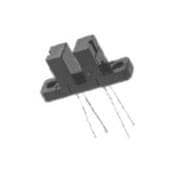
Where industrial switches fit in automation systems
In an industrial environment, switches are used at multiple levels of a system. Some are operator-facing devices mounted on enclosures or HMIs, while others are installed directly on machinery to detect motion, position, access state, or abnormal conditions. Their role can range from a simple user command to a critical input within a control sequence.
Because of that, switch selection is usually tied to the wider automation architecture. A signal from a switch may be processed by industrial controllers, counted in repetitive motion applications, or combined with protective devices in more demanding electrical environments. The right choice depends on how the switch will be actuated, what kind of output the control system expects, and how often the device will be used.
Different switching roles across the category
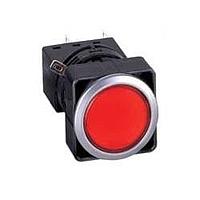
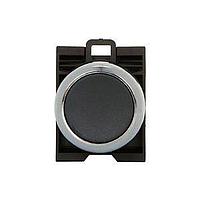
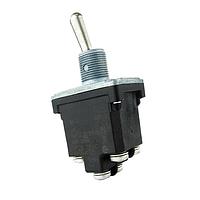
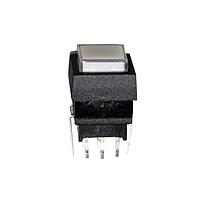
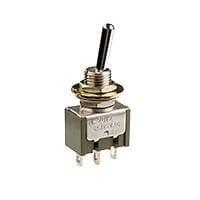
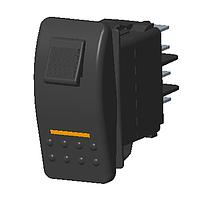
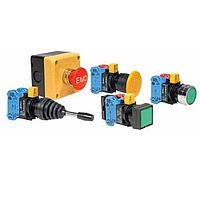
This category includes many switch types designed for different jobs. Manual control devices are commonly chosen for operator commands, machine start and stop functions, or mode selection. Other designs are intended for safety-related use, such as access monitoring or emergency intervention, where switching behavior must be clear and consistent.
There are also application-driven options for position detection and compact object sensing. For example, optical switching is useful when mechanical contact is not ideal, while other switch styles may be better suited for direct physical actuation, sealed operation, or panel-mounted control interfaces. That breadth makes the category suitable for everything from simple machine panels to more integrated automation assemblies.
Key considerations when choosing an industrial switch
A practical selection process usually starts with the application rather than the switch style itself. Consider whether the device will be used for operator input, safety isolation, machine guarding, motion detection, or non-contact sensing. From there, it becomes easier to narrow down the most appropriate construction, mounting approach, and switching principle.
Electrical and environmental requirements are equally important. Buyers often compare output type, operating temperature range, mounting style, and expected switching speed, especially when integrating devices into compact electronics or fast-response systems. In many installations, the surrounding ecosystem also matters, including access to circuit protection and compatible wiring, connectors, or panel hardware.
Optical switches for compact detection tasks
Within this category, optical switches are especially relevant when a design calls for non-contact or reflective detection. These devices are commonly used where space is limited, where wear from repeated mechanical actuation should be minimized, or where a fast optical response is preferred over a conventional contact mechanism.
Representative parts in this range include the ams OSRAM SFH 9206 family, such as SFH 9206, SFH 9206-5/6, and SFH 9206-6/7. Based on the provided product data, these reflective sensors use a phototransistor output, operate at 940 nm, and are designed for short sensing distances in compact assemblies. Their SMT mounting style and automotive-oriented qualification context can make them relevant for space-conscious electronic designs that need repeatable reflective sensing behavior.
Manufacturers and sourcing context
This category brings together components from recognized suppliers used in industrial and electronic design workflows. Depending on the application, buyers may evaluate offerings from manufacturers such as Autonics, Advantech, Alps Alpine, ams OSRAM, and others listed for this range. Each brand may align differently with panel control, sensing integration, or broader automation hardware requirements.
When comparing suppliers, it helps to look beyond brand familiarity and focus on fit: switching method, integration constraints, and service conditions. For panel-based systems, users may prioritize mechanical robustness and operator ergonomics, while for embedded sensing tasks they may focus more on package size, output characteristics, and response timing.
How industrial switches interact with adjacent automation products
Switches rarely work in isolation. In many systems, they provide input signals that are monitored, counted, or used to trigger logic in other automation devices. For example, machine pulses or repetitive operator actions may be paired with counters and tachometers, while visual verification and process observation may sit alongside switching and sensing hardware in systems that also use cameras.
This broader context is important for B2B buyers managing complete assemblies. A well-matched switch can simplify wiring, improve signal reliability, and support cleaner integration with PLCs, relays, power components, and safety devices. Looking at the surrounding control architecture often leads to better long-term results than selecting by form factor alone.
Typical buyer priorities for OEMs, panel builders, and maintenance teams
OEMs often look for consistency across product lines, especially when standardizing machine interfaces or building repeatable control cabinets. In those cases, availability, mounting compatibility, and electrical fit tend to matter just as much as the switching function itself. For maintenance teams, replacement speed and compatibility with installed equipment are usually central concerns.
Panel builders and integrators may also weigh installation practicality, especially where enclosure space is limited or multiple signal types must be handled within one control design. For sensor-like switching devices, response behavior and compact packaging may be more important than a traditional operator interface. The best choice is usually the one that fits the actual workflow, not simply the broadest-spec device.
Choosing the right switch category for your application
Whether the requirement is manual control, safety interaction, position feedback, or short-range reflective detection, this category supports a wide range of industrial use cases. The most effective approach is to define the switching task clearly, then compare device type, mounting constraints, electrical interface, and operating environment before narrowing to specific parts.
For teams sourcing components for automation projects, Industrial Switches provide the foundation for dependable machine interaction and signal input. Reviewing the intended use case—together with adjacent control and protection components—will help identify a switch that fits both the equipment design and the long-term maintenance strategy.
Get exclusive volume discounts, bulk pricing updates, and new product alerts delivered directly to your inbox.
By subscribing, you agree to our Terms of Service and Privacy Policy.
Direct access to our certified experts